
Coordinated Bomb Threats Disrupt 18 European Flights, No Explosives Found
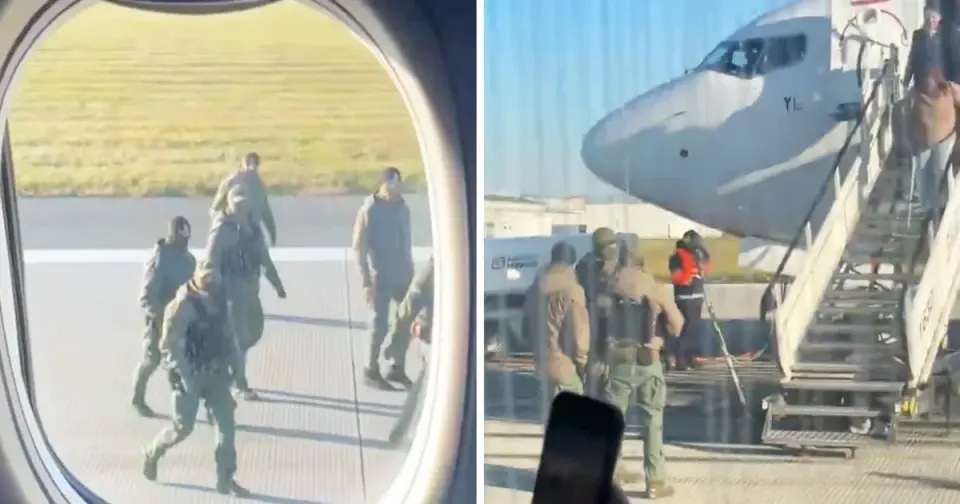
A wave of coordinated bomb threats disrupted 18 commercial flights across Europe on November 5, 2026, causing diversions to France, Bulgaria, and Austria. No explosives were found, and authorities are investigating the anonymous alerts.
Key points
- At least 18 flights were affected by bomb threats on November 5, 2026, with no explosives discovered during inspections.
- Aer Lingus flight EI402 from Dublin to Rome was diverted to Evreux Air Base in France, where 151 passengers and six crew were evacuated for inspection.
- Three Ryanair flights to Sofia, Bulgaria, were targeted; two landed as scheduled, while one from London was diverted to Plovdiv.
- Finnair flights from Helsinki to Rome and Vienna were escorted by military jets and cleared after bomb squad searches.
- Czech police assessed the credibility of four Prague-bound threats as low, but activated full security protocols.
- EU Transport Commissioner Apostolos Tzitzikostas stated it is too early to determine if the incidents are linked, emphasizing safety priorities.
Background
This incident follows a series of aviation security disruptions in Europe, including a United Airlines diversion in Las Vegas in October 2026 and a Flydubai emergency landing in Saudi Arabia in September 2026. On Tuesday, November 3, 2026, ten flights were targeted with hoax bomb threats, forcing a Warsaw airport closure and Italian air force deployment. A cruise ship bound for Israel also faced a bomb threat on Tuesday, though no explosives were found. These events highlight a rising pattern of hybrid attacks and security concerns in European aviation.
How outlets are covering it
NBC News and The Guardian reported a total of 18 affected flights, while RTE.ie cited 14, with discrepancies likely due to timing of updates. RTE.ie noted Ryanair was the most targeted airline with at least seven incidents this week. The Guardian highlighted that threats were sent via anonymous emails, including one in Italian to Rome airport authorities. Yahoo reported that Austrian police described the threat to a Milan-bound flight as 'abstract' and noted no danger was detected. French Prime Minister Sebastien Lecornu’s office confirmed the Aer Lingus diversion as a security precaution, while Bulgarian authorities confirmed no issues were found on Ryanair flights. Czech police assessed the credibility of threats as low but maintained security measures. EU Commissioner Tzitzikostas emphasized that it is too early to link the incidents, while French officials noted a rise in hybrid attacks in Europe, sometimes linked to Russia or Iran, though no specific attribution was made for these threats.
Why it matters
The coordinated nature of the bomb threats across multiple European countries raises concerns about aviation security and the potential for hybrid attacks. The diversions and security sweeps caused significant disruptions to air travel, impacting thousands of passengers. The lack of explosives found suggests the threats may be hoaxes, but the pattern of incidents highlights vulnerabilities in European aviation security. Authorities are investigating the anonymous alerts, and the EU is monitoring the situation closely to ensure the safety of civilians and the stability of air travel.
What to watch
Investigations into the bomb threats are ongoing, with Czech police’s National Center Against Terrorism, Extremism, and Cybercrime (NCTEKK) leading the inquiry. Airlines are working to reaccommodate passengers affected by diversions. EU authorities are in contact with affected member states and the European Aviation Safety Agency to coordinate responses. No claims of responsibility have been made, and it is unclear if the incidents are linked. Further updates may emerge as investigations progress and security measures are reviewed.
- Series of bomb threats cause flight disruptions across Europe NBC News
- New wave of bomb threats hits passenger flights across Europe Reuters
- Aer Lingus plane among 14 flights hit by bomb threats RTE.ie
- Multiple planes diverted as bomb threats to commercial flights reported across Europe – live The Guardian
- Fresh bomb threats disrupt several passenger flights across Europe Yahoo
Want the full story? Read the original reporting
Read on NBC News