
Deadliest War Attack: 40 Dead in Russian Strike on Zaporizhzhia Aid Hub
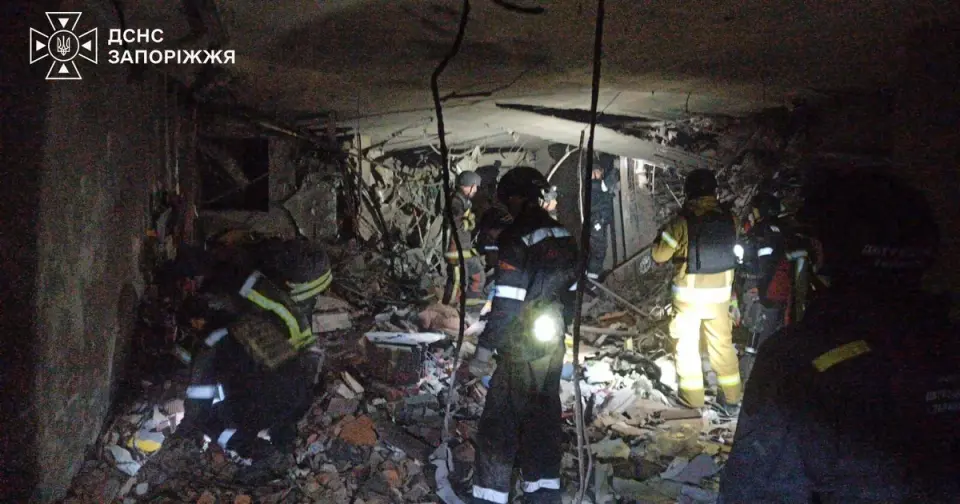
Russian airstrikes on a humanitarian aid center in Komyshuvakha, Zaporizhzhia, killed at least 40 people and left over 30 missing. President Zelenskyy called it an 'insane attack' and one of the deadliest of the war, urging immediate air defense support. The strike used heavy bombs on a reinforced shelter, killing first responders in a second wave. This occurred alongside massive energy infrastructure attacks and ahead of US-brokered peace talks.
Key points
- At least 40 people are confirmed dead, with over 30 still missing under rubble in Komyshuvakha, Zaporizhzhia, following a Monday strike.
- Zelenskyy described the attack as 'insane' and among the deadliest of the war, noting that nine bombs targeted a school used for humanitarian aid distribution.
- The strike killed first responders and police in a second wave, with bodycam footage showing residents entering a shelter moments before it was hit.
- Russia denied targeting civilians, claiming the strike hit military targets, while Ukraine and the UN cited violations of international humanitarian law.
- Zelenskyy renewed pleas for air defense support, coinciding with major Russian attacks on energy infrastructure across ten regions.
- US First Lady Melania Trump is set to host Russian and Ukrainian representatives at the White House to discuss a temporary ceasefire in Oleshky.
Background
This incident follows a pattern of escalating Russian aerial attacks on Ukrainian civilian infrastructure, including previous strikes on buses in Kramatorsk and an ammunition depot near Kyiv. It occurs amid ongoing efforts to bolster Ukraine's air defense, including recent deployments of automated turrets and F-16 fighter jets, as well as diplomatic initiatives involving US envoys and European leaders to secure peace and military aid.
How outlets are covering it
CBS News and The Guardian emphasized the scale of the tragedy and Zelenskyy's plea for international response, highlighting the 'insane' nature of the attack. CNN provided detailed technical analysis, noting the use of heavy FAB-3000 bombs designed to destroy fortifications, and highlighted the 'double-tap' tactic where first responders were targeted after the initial strike. BBC focused on the visual evidence, releasing bodycam footage that confirmed the timing of the second strike. The UN Human Rights Monitoring Mission criticized the attack for violating fundamental principles of international humanitarian law, noting the well-publicized nature of the aid distribution. Russian officials, via the Defense Ministry, claimed the strike targeted military assets and denied deliberate civilian targeting, a stance contradicted by Ukrainian and international observers.
Why it matters
The attack underscores the continued risk to civilian infrastructure and humanitarian operations in the war, challenging claims of de-escalation. It highlights the critical need for enhanced air defense systems, as Zelenskyy's plea for interceptors suggests current defenses are insufficient against heavy aerial bombs. The timing, coinciding with US midterm elections and peace talks, raises questions about the impact of political cycles on military support and diplomatic progress. The 'double-tap' tactic and use of heavy weapons against reinforced shelters indicate a strategic shift in Russian targeting, potentially signaling a disregard for international norms and increasing the urgency for international intervention and aid.
What to watch
Search and rescue operations are ongoing, with the potential for the death toll to rise as more than 30 people remain missing. Zelenskyy has promised a response to the attack, likely involving military or diplomatic measures. The White House meeting with Russian and Ukrainian representatives, brokered by Melania Trump, will focus on the temporary ceasefire in Oleshky and humanitarian aid. Ukraine is expected to continue seeking air defense support from international partners, particularly in the wake of the energy infrastructure attacks. The UN and international bodies may investigate the attack for potential war crimes, given the violations of humanitarian law cited by the UN Human Rights Monitoring Mission.
- Ukraine's leader says Russian "insane attack" on aid center may have killed 70 people, pleads for air defenses CBS News
- Russian bombing of Ukrainian aid center is one of the war’s ‘deadliest attacks,’ Zelensky says CNN
- Ukraine says bodycam video shows deadly Russian double-tap bombing BBC
- Zelenskyy says 40 now confirmed dead after ‘insane’ Russian attack on school – as it happened The Guardian
- Dozens dead and missing after Russian strike on Ukrainian aid centre, officials say Reuters
Want the full story? Read the original reporting
Read on CBS News