
European airports clear 18 flights after coordinated hoax bomb threats
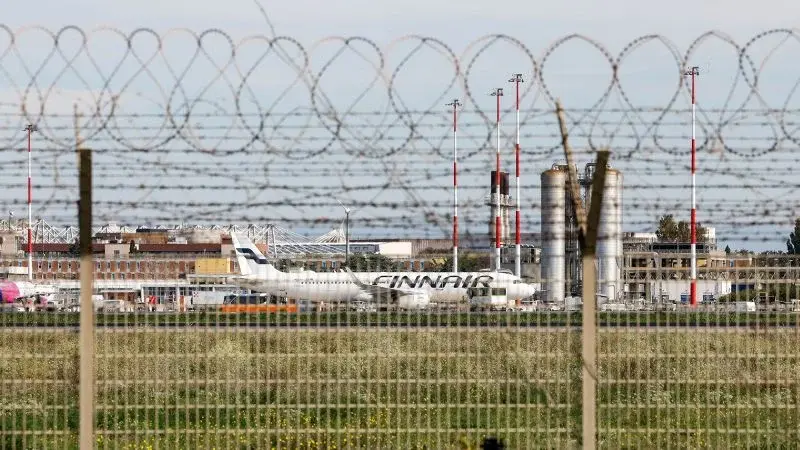
At least 18 commercial flights across Europe were disrupted on November 5, 2026, following a wave of anonymous bomb threats. Authorities in Bulgaria, Italy, France, and the Czech Republic confirmed that inspections found no explosives. The incidents, which marked the third day of similar disruptions this week, involved diversions to military bases and alternate airports, with no group claiming responsibility.
Key points
- No explosives were found on any of the 18 affected aircraft, including those diverted to Evreux air base in France and Plovdiv in Bulgaria.
- The threats were delivered via anonymous emails, with one message to Rome signed by a group calling itself 'Fighters of the Male State' targeting a 'feminist regime.'
- Aer Lingus flight EI402 from Dublin to Rome was diverted to a French military base, where 151 passengers and six crew were evacuated and inspected.
- Ryanair was the most affected carrier, with at least seven flights targeted, including three to Sofia and one to Milan.
- Czech police assessed the threat level as low but activated full security protocols, with the National Center against Terrorism, Extremism, and Cybercrime taking over the investigation.
Background
This incident follows a pattern of disruptions earlier this week. On November 3, at least seven flights and one cruise ship faced similar hoax threats across Europe, all of which were cleared as false alarms. On November 2, a Wizz Air flight from London to Sofia was diverted to Budapest due to a bomb threat. Aviation experts have noted that while individual hoax threats are common, the multiplicity of alerts this week suggests a coordinated campaign designed to test security responses and cause economic disruption.
How outlets are covering it
Outlets generally agree that the threats were hoaxes, but they differ on the nature of the coordination. The UK Transport Secretary described the events as 'malicious hoax threats' with established processes in place, while the EU transport commissioner stated it was 'too early' to conclude the incidents were linked. Aviation experts cited by The Guardian and BBC suggest the volume of alerts points to coordinated action, noting the low cost to the sender versus the high cost to airlines. Conversely, Finnair and Wizz Air emphasized that such threats are 'almost always unfounded' and part of a broader pattern of unfounded alerts. The BBC highlighted a specific threat message targeting a 'feminist regime,' whereas CNN and Reuters focused on the lack of any claimed responsibility or link to previous cyberattacks on supermarket fridges.
Why it matters
The repeated nature of these threats highlights vulnerabilities in European aviation security and the potential for low-cost, high-impact disruption. The diversions and fighter jet escorts incur significant financial costs for airlines and governments, while undermining public confidence in air travel safety. The involvement of multiple countries and the use of anonymous emails suggest a sophisticated or coordinated effort to test emergency response protocols across the continent.
What to watch
Investigations are ongoing in the Czech Republic and Italy to determine the origin of the anonymous emails. Airlines are expected to reaccommodate diverted passengers to their final destinations. Authorities will continue to monitor for further threats, with EU officials coordinating with national law enforcement to assess if the incidents are part of a larger hybrid attack pattern.
- Several flights in Europe diverted due to bomb threats, reports say — live CNN
- Plane bomb threats: Multiple flights in Europe hit by 'malicious hoax threats' - UK minister BBC
- Aer Lingus plane among 14 flights hit by bomb threats RTE.ie
- Multiple planes diverted as bomb threats to commercial flights reported across Europe – live The Guardian
- Flight bomb threats live: Multiple European planes diverted after alerts reported Sky News
Want the full story? Read the original reporting
Read on CNN