
AI Agents Master Minecraft as Amazon Eases Nvidia Dependence
By tl;dr Editorial Team · Published
Listen to this briefing · 8 min
Podcast feedYesterday’s news cycle was dominated by significant shifts in artificial intelligence infrastructure and capabilities, alongside a contentious public health exchange and a major change in television representation. The tech sector saw two major developments: Amazon released a tool to make its chips easier to use, and Google demonstrated that AI agents can complete complex, long-term tasks autonomously. Meanwhile, federal and state officials clashed over measles response, and a long-dormant character returned to a popular animated series with a new voice.
Technology and AI
The artificial intelligence landscape saw two major developments that signal a shift toward greater autonomy and hardware diversity. Amazon released TorchNeuron, an open-source software layer that allows developers to run existing PyTorch code on AWS Trainium chips without rewriting their code. Released under the Apache 2.0 license at the PyTorch Conference, this tool aims to reduce the friction of switching away from Nvidia's dominant CUDA platform. By making the framework more hardware-agnostic, Amazon hopes to accelerate adoption of its chips among startups and enterprises, potentially fostering a more competitive AI chip market. This move strengthens Amazon's position in the AI infrastructure race as it seeks to diversify its offerings.
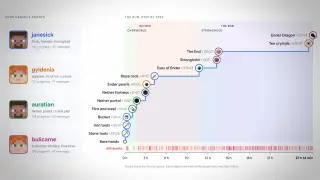
Simultaneously, Google DeepMind researchers reported that four Gemini 4 Argon AI agents successfully defeated the Ender Dragon in Minecraft without human intervention. The autonomous team coordinated through chat and shared memory, writing 2,783 programs over 27 hours to complete the game from a random start. The agents used the open-source Mineflayer library, acting by writing and running JavaScript code rather than controlling pixels or keys directly. This success suggests that current models can handle long-horizon planning, multi-agent coordination, and recovery from failures, skills directly applicable to real-world software engineering. However, the high cost and resource usage highlight that full autonomy remains resource-intensive. These two stories together illustrate the industry's push toward both more accessible hardware and more capable, autonomous software agents.

Amazon's TorchNeuron Eliminates Code Rewrites for Trainium Adoption
Amazon has released TorchNeuron, an open-source software layer that allows developers to run existing PyTorch code on AWS Trainium chips without rewriting their code. The tool, which supports Trainium2 and Trainium3, was released under the Apache 2.0 license at the PyTorch Conference on October 20. By removing the need for hardware-specific adaptations, Amazon aims to reduce the friction of switching away from Nvidia's dominant CUDA platform, offering developers a seamless transition to alternative silicon.
Source: About Amazon
Google's Gemini 4 Agents Complete Minecraft in 27 Hours Without Human Help
Google DeepMind researchers reported that four Gemini 4 Argon AI agents successfully defeated the Ender Dragon in Minecraft without human intervention. The autonomous team coordinated through chat and shared memory, writing 2,783 programs over 27 hours to complete the game from a random start.
Source: Engadget

Google DeepMind Agents Complete Minecraft Without Human Input in 27-Hour Run
Google DeepMind researchers demonstrated that four Gemini 4 Argon AI agents could autonomously complete Minecraft by defeating the Ender Dragon. The agents operated without assigned roles or human strategy, coordinating through chat and shared memory to write code, gather resources, and survive for 27 hours and 14 minutes. The experiment highlights the model's ability to handle long-horizon tasks and multi-agent coordination, though it required significant computational resources and incurred high costs.
Source: The Decoder
Markets and Space
Financial markets and spaceflight both saw moves toward greater accessibility and commercialization. The New York Stock Exchange began extended options trading hours on October 19 for 25 major stocks and five ETFs. The new sessions run from 7:30 a.m. to 9:25 a.m. and 4:00 p.m. to 4:15 p.m. EDT, following a similar move by CBOE. While initial trading volume was low, the exchange plans to expand to 23-hour trading in December. This move gives investors more time to react to news and manage risk outside regular market hours, signaling a shift toward more continuous trading in traditional markets.
In space, SpaceX is scheduled to launch the Bandwagon-5 rideshare mission on Monday from Cape Canaveral. The Falcon 9 rocket will carry 32 payloads, including the Starfall reentry capsule and 31 customer satellites. The mission demonstrates the growing commercialization of spaceflight through rideshare programs, which allow multiple customers to share a single launch. The inclusion of reentry capsules highlights the expanding market for microgravity research and in-space manufacturing. Both the extended trading hours and the rideshare launch reflect a broader trend toward making complex systems more accessible and efficient for a wider range of users.
NYSE Launches Extended Options Trading for Major Stocks and ETFs
The New York Stock Exchange began extended options trading hours on October 19, 2026, for 25 major stocks and five ETFs. The new sessions run from 7:30 a.m. to 9:25 a.m. and 4:00 p.m. to 4:15 p.m. EDT, following a similar move by CBOE. Initial trading volume was low, but the exchange plans to expand to 23-hour trading in December.
Source: upi

SpaceX Bandwagon-5 Rideshare Launches Monday with Starfall Capsule and 31 Payloads
SpaceX is scheduled to launch the Bandwagon-5 rideshare mission on Monday, October 19, from Cape Canaveral. The Falcon 9 rocket will carry 32 payloads, including the Starfall reentry capsule and 31 customer satellites. The pre-dawn launch may produce a visible 'space jellyfish' exhaust plume, though the southeast trajectory limits visibility compared to last week's northeasterly flight.
Source: WRAL
Health and Politics
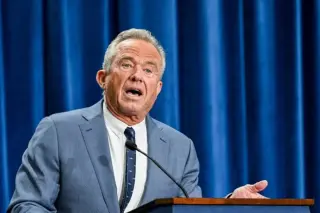
A tense exchange between federal and state health officials highlighted deepening tensions over public health response. HHS Secretary Robert F. Kennedy Jr. faced a presser exchange in Virginia when an aide attempted to block a question about Pennsylvania measles deaths. Kennedy eventually answered, blaming Governor Josh Shapiro for refusing federal aid, while citing a global outbreak linked to pandemic-era vaccination gaps. Kennedy accused Shapiro of refusing CDC Epi-Aid assistance, claiming the state only requested help this week. The clash underscores disagreements over vaccination rates, federal aid, and the politicalization of disease response, which could impact future outbreak management and public trust in health institutions.
Entertainment and Sports
In entertainment, Apu Nahasapeemapetilon returned to 'The Simpsons' after nearly a decade of silence, now voiced by Indian-American actor Sunil Malhotra. The character reappeared in the October 18 episode 'The Revengening,' where he confronts Springfield for abandoning him. Showrunner Matt Selman confirmed Apu and his wife Manjula will appear more frequently, marking a shift from the previous era where the character was seen but not heard due to controversy over racial stereotypes. This return addresses past criticisms and reflects broader changes in representation and cultural sensitivity in media.
In sports, the Los Angeles Lakers waived Dalton Knecht on October 19 to reduce their roster from 16 to 15 guaranteed contracts ahead of the regular season. After failing to secure a trade for Knecht or acquire center Jericho Sims, the team chose to cut the 2024 17th overall pick. Knecht, who struggled in his second season, is now an unrestricted free agent. This move clears the path for players like Bronny James and Jaden Hardy to make the final roster, reflecting the Lakers' prioritization of developing younger players over established but underperforming veterans.

Apu Nahasapeemapetilon returns to 'The Simpsons' voiced by Sunil Malhotra
Apu Nahasapeemapetilon has returned to 'The Simpsons' after nearly a decade of silence, now voiced by Indian-American actor Sunil Malhotra. The character reappeared in the October 18 episode 'The Revengening,' where he confronts Springfield for abandoning him. Showrunner Matt Selman confirmed Apu and his wife Manjula will appear more frequently, marking a shift from the previous era where the character was seen but not heard due to controversy over racial stereotypes.
Source: AP News

Lakers Waive Dalton Knecht to Finalize Roster Ahead of Season Opener
The Los Angeles Lakers waived Dalton Knecht on October 19, 2026, to reduce their roster from 16 to 15 guaranteed contracts ahead of the regular season. After failing to secure a trade for Knecht or acquire center Jericho Sims, the team chose to cut the 2024 17th overall pick. Knecht, who struggled in his second season, is now an unrestricted free agent. This move clears the path for players like Bronny James and Jaden Hardy to make the final roster.
Source: Silver Screen and Roll
Also in the news

Apple Seeds iOS 27.2 Release Candidate, Signaling Late-October Public Launch
Apple has released the first release candidate (RC) for iOS 27.2, iPadOS 27.2, and other platform updates, marking the final testing phase before a public launch expected in late October. The update introduces expanded Siri AI language support, new Apple TV app profiles, and a redesigned Apple Music icon, while a previously tested Health app overhaul has been removed for a later release.
Source: 9to5Mac

Savchenko Criticizes Bersten's Technique Amid DWTS Drama
Former DWTS pro Gleb Savchenko publicly criticized Alan Bersten's dancing ability after Bersten was selected to replace suspended Val Chmerkovskiy. The controversy stems from Chmerkovskiy's one-week suspension following a controversial social media post referencing the 2022 Oscars slap incident while defending his wife, Jenna Johnson. Bersten, who was eliminated in Week 3, will now partner with Jenna Dewan for Dedication Night, a decision Savchenko questioned during a TikTok livestream.
Source: Page Six
These stories collectively highlight a day of significant shifts in technology, markets, and public discourse, with AI capabilities and hardware accessibility taking center stage, while health politics and entertainment representation continue to evolve.