
AI Sector Turbulence and Measles Crisis Define a Volatile Week
By tl;dr Editorial Team · Published
Listen to this briefing · 7 min
Podcast feedYesterday’s news cycle was dominated by sharp corrections in the technology sector, a major public health warning, and significant advancements in both hardware and military capabilities. While investors grappled with valuation concerns and governance scandals, health officials faced a potential loss of a critical status, and engineers pushed the boundaries of server performance and software security.
Markets and Tech
The technology sector experienced a broad sell-off, with the Nasdaq Composite dropping 3.1% and the S&P 500 falling 2.6% since Wednesday. This decline was driven by fears regarding AI infrastructure spending and post-election policy uncertainty, but specific corporate events exacerbated the drop. Nvidia shares hit a seven-month low near $168, marking a 30% decline from its recent peak. This fall was triggered by a scandal involving CEO Jensen Huang, who admitted to an affair with an executive at Megaspeed International, a company previously examined by U.S. authorities for potential chip diversion to China. While the company denies any compromise of trade secrets, the incident has triggered a board investigation and heightened scrutiny over export controls.
In contrast, Micron Technology shares dropped approximately 29% to 30% over the past month, reaching a forward price-to-earnings ratio of 4.2x. Despite this plunge, analysts from Goldman Sachs and KeyBanc argue the stock is undervalued, citing strong free cash flow and committed demand through 2030. KeyBanc set a target of $2,500, implying 241% upside, while the average analyst target is $1,561.91. Meanwhile, Anthropic’s upcoming IPO valuation jumped to $1.5tn or more, up from $1.4tn, due to strong investor demand. The AI firm plans to raise over $100bn, including a $26bn private placement from tech giants like Google, Nvidia, and Microsoft. This move signals continued investor confidence in the AI sector despite market volatility, though it raises questions about the sustainability of the boom.

Micron’s 30% Plunge Sparks Bullish Valuation Calls as Memory Sector Sells Off
Micron Technology shares dropped approximately 29% to 30% in the past month, reaching a forward price-to-earnings ratio of 4.2x. Despite the sharp decline, analysts from Goldman Sachs and KeyBanc argue the stock is undervalued relative to its fundamentals, citing strong free cash flow and committed demand. The selloff, which affected the broader memory sector, was driven by fears regarding AI infrastructure spending and post-election policy uncertainty.
Source: Yahoo Finance

Anthropic IPO Valuation Jumps to $1.5tn as Demand Surges
Anthropic’s bankers are raising the target valuation for its upcoming IPO to $1.5tn or more, up from $1.4tn, due to strong investor demand. The AI firm plans to raise over $100bn, including a $26bn private placement from tech giants, despite recent market volatility and concerns over its massive infrastructure spending.
Source: Financial Times
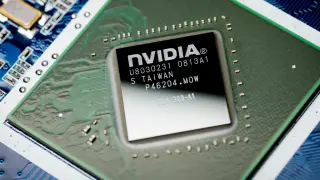
Nvidia shares hit 7-month low as Huang scandal and tech sell-off collide
Nvidia stock has fallen 30% from its 52-week high, reaching a seven-month low near $168, driven by a broader tech sell-off and a scandal involving CEO Jensen Huang. Huang admitted to an affair with Alice Huang, an executive at Megaspeed International whom U.S. officials allege is a Chinese intelligence asset. While the company denies any compromise of trade secrets, the incident has triggered a board investigation and heightened scrutiny over export controls. Analysts remain divided on the long-term impact, with some viewing the dip as a buying opportunity and others warning of significant governance risks.
Source: Seeking Alpha
Health
The United States faces a potential loss of its measles-free status as confirmed cases surge past 5,000 in 2026. A Pan American Health Organization committee is reviewing data to determine if the virus has become endemic, with a decision expected by November 17. The CDC reports over 5,000 confirmed cases, a significant increase from 2,289 in 2025, with at least nine deaths reported. Vaccination rates have fallen below the 95% herd immunity threshold in 75% of U.S. counties with available data. Losing this status would signal a return to endemic transmission, increasing the risk of severe complications, particularly among infants too young to be vaccinated. It would also place the U.S. alongside Canada as the only countries in the Americas without control of the virus, potentially impacting global health security and travel restrictions.

Technology and Innovation
Beyond the market turmoil, significant technological advancements were announced. AMD launched its 6th Gen EPYC 9006 'Venice' server processors, featuring the new Zen 6 architecture. The flagship EPYC 9996 offers 256 cores per socket, delivering a 27% average IPC uplift over Zen 5, with specific gains of 31% in AI tasks. This launch sets new benchmarks for server performance in HPC and AI workloads, potentially impacting data center efficiency and the competitive landscape against Intel and Nvidia.
In software security, Google DeepMind researchers used a new AI framework called AlphaProof Code to mathematically verify key security guarantees of the Signal protocol in just four weeks. The work validates the post-quantum handshake and Triple Ratchet but does not cover the entire app. While the project found no new vulnerabilities, it highlights the potential for AI to scale formal verification, a process previously too costly for widespread use. This could allow banks and other high-stakes organizations to mathematically prove the correctness of their code, reducing the risk of critical vulnerabilities.
In gaming, Nintendo closed the Switch 2 jailbreak gap with firmware 23.5.0, neutralizing the first known exploit that allowed users to dump games and run homebrew software. The update patches the OS vulnerability, restoring the console's security posture. Meanwhile, Warhammer Survivors launched on Game Pass, but critics cited slow pacing and a lack of innovation, describing it as a derivative expansion that fails to capture the immediate power fantasy of its inspiration, Vampire Survivors.

Nintendo Closes Switch 2 Jailbreak Gap with Firmware 23.5.0
Nintendo has released firmware update 23.5.0 for the Switch 2, effectively neutralizing the first known jailbreak exploit. The update patches the operating system vulnerability that allowed users to dump games and run homebrew software, though some game-specific exploits remain. This move ends a brief window of hacking activity that began in late October, restoring the console's security posture.
Source: Wccftech

Warhammer Survivors Launches on Game Pass, but Critics Cite Slow Pacing and Lack of Innovation
Warhammer Survivors launched on November 10, 2026, as an officially licensed bullet-heaven roguelite developed by Auroch Digital in partnership with Poncle. The game features over 40 characters from the Warhammer 40,000 and Age of Sigmar universes, available on PC, PlayStation, Xbox, Switch, and mobile. While it offers day-one access on Xbox Game Pass, reviews highlight a significant disparity between its ambitious scope and execution. Critics praise the detailed pixel art and unique enemy mechanics but criticize the game for being slower and more grind-heavy than its inspiration, Vampire Survivors. Many outlets describe it as a high-quality but derivative expansion that fails to capture the immediate power fantasy of the original, resulting in a frustrating early-game experience despite eventual satisfaction.
Source: Eurogamer.net
AMD EPYC 9996 Launches With 256 Zen 6 Cores, Setting New Server Performance Benchmarks
AMD has launched its 6th Gen EPYC 9006 'Venice' server processors, featuring the new Zen 6 architecture. The flagship EPYC 9996 offers 256 cores per socket, delivering significant performance gains in HPC and AI workloads. Independent benchmarks confirm substantial improvements over previous generations and competitors.
Source: Phoronix

Google DeepMind’s AlphaProof Code formally verifies Signal’s encryption in four weeks
Google DeepMind researchers used a new AI framework called AlphaProof Code to mathematically verify key security guarantees of the Signal protocol in just four weeks. The work validates the post-quantum handshake and Triple Ratchet but does not cover the entire app. While the project found no new vulnerabilities, it highlights the potential for AI to scale formal verification, a process previously too costly for widespread use.
Source: WIRED
World and Science
On the global stage, China revealed new details of its GJ-11 'Xuanlong' stealth unmanned combat aerial vehicle ahead of the PLA Air Force's 77th anniversary. The footage shows internal weapons bays and sensor details, and Chinese state media claims the drone completed its first live-fire strike. This release highlights the aircraft's role in manned-unmanned teaming with J-20 and J-16 fighters, potentially closing the gap with U.S. programs that have stalled.
In science, Earth’s temporary mini-moon 2026 QQ8 was confirmed as a natural asteroid after months of observation. Captured in April 2026, the 1-2 meter asteroid will remain in orbit until December before escaping in 2027. Initially mistaken for space debris, its natural origin was verified by the Minor Planet Center in October 2026 using solar radiation pressure data. This confirmation provides insight into the dynamics of Earth’s gravitational field and the temporary capture of small asteroids.

Earth’s temporary mini-moon 2026 QQ8 confirmed as natural asteroid after months of observation
A 1-2 meter asteroid, designated 2026 QQ8, has been confirmed as a temporary mini-moon of Earth. Captured in April 2026, it will remain in orbit until December before escaping in 2027. Initially mistaken for space debris, its natural origin was verified by the Minor Planet Center in October 2026 using solar radiation pressure data.
Source: Yahoo
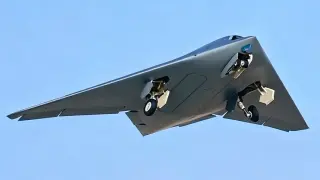
China Reveals GJ-11 Stealth Drone Details and Claims First Live-Fire Strike
China released new footage of the GJ-11 'Xuanlong' stealth unmanned combat aerial vehicle (UCAV) ahead of the PLA Air Force's 77th anniversary. The video reveals internal weapons bays, landing gear, and sensor details. Chinese state media claims the drone completed its first live-fire strike, with female operators scoring a hit. The release highlights the aircraft's role in manned-unmanned teaming with J-20 and J-16 fighters.
Source: TWZ
As the week closes, the juxtaposition of AI market volatility, health crises, and technological breakthroughs underscores the complex interplay between innovation, regulation, and public safety.