biochemistry96.795 min read Mitochondrial l-2-hydroxyglutarate: a normal cellular signaling metabolite shaping gene regulation
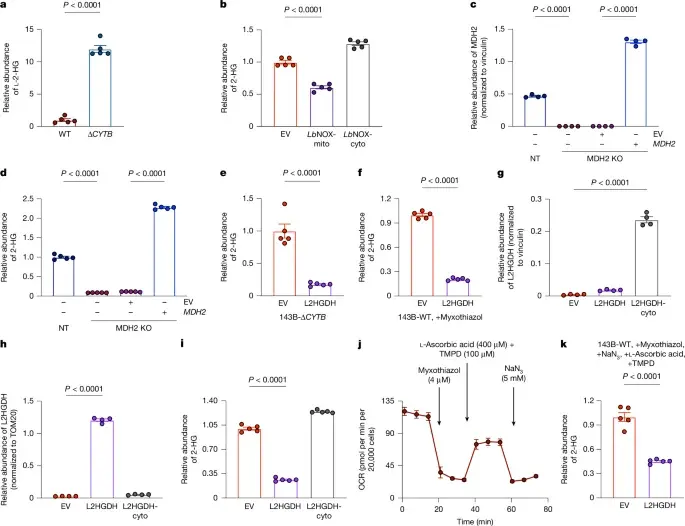
A Nature study shows mitochondrial l-2-hydroxyglutarate (l-2-HG) acts as a physiological signaling metabolite rather than a mere toxin. An elevated mitochondrial NADH/NAD+ ratio drives MDH2 to reduce 2-OG to l-2-HG; mitochondrial L2HGDH then oxidizes l-2-HG back to 2-OG without requiring a functional electron transport chain. Proteome-wide assays identify the KDM4 family of H3K9 demethylases as l-2-HG targets, linking the metabolite to repression of specific nascent transcripts and increased H3K9me3 at particular loci in mouse embryonic stem cells. In vivo, forcing L2HGDH expression lowers l-2-HG, impairs postnatal growth, increases mortality, and reveals selective renal vulnerabilities; in kidneys, reduced l-2-HG correlates with loss of H3K9me3 at L1MdTf retrotransposons and activation of stress/inflammation pathways. Together, these results establish mitochondrial l-2-HG as a regulated signaling metabolite with tangible physiological and epigenetic effects.
4 months ago•Source: Nature