space10 min read
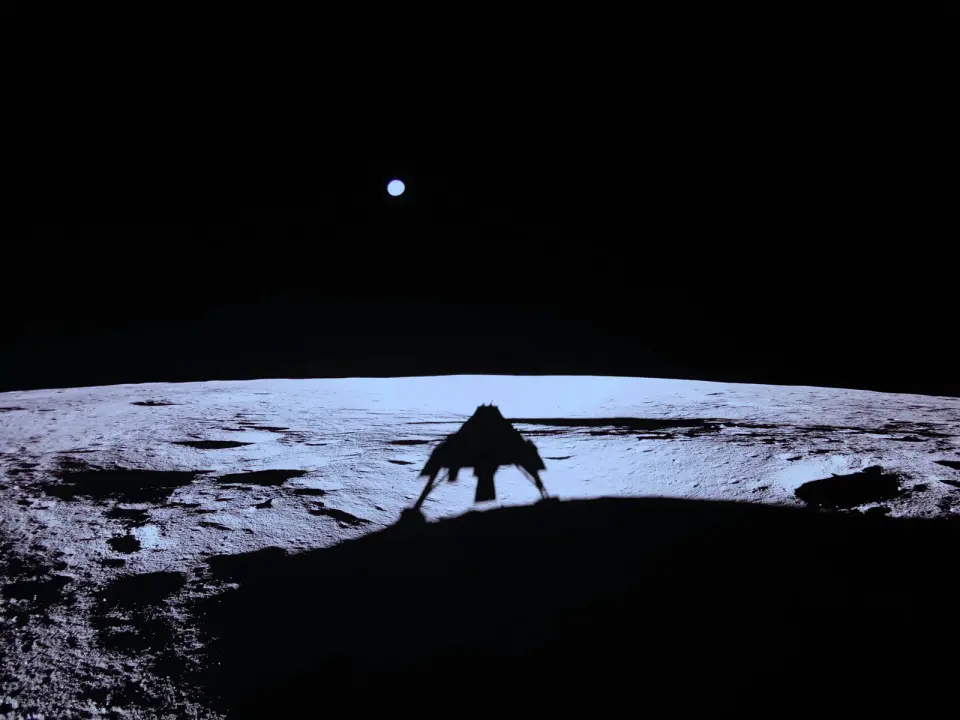
Commercial Lunar Lander Firms Plan Precision Demonstrations for NASA Base
5 minutes ago•Source: SpaceNews
View original source
Research, space, climate, and discoveries, explained with background so the findings make sense even if you missed the last chapter.

A new review in the journal Alcheringa highlights that microbialites, Earth’s oldest visible evidence of life, are critically vulnerable. While Western Australia preserves records spanning 3.5 billion years, living and fossil sites face damage from tourism, climate change, and poor geoheritage protection.

Nature•6 hours ago

Two biomedical engineers are advancing healthcare through novel material and imaging techniques. Xinyu Dong at the National University of Singapore has developed tougher, conductive hydrogels using a modified freeze-casting method, enabling wearable sensors that monitor vital signs. James Eills at the Jülich Research Centre in Germany is improving MRI capabilities by developing new hyperpolarization methods to strengthen weak magnetic signals from metabolites, potentially allowing real-time monitoring of drug responses in human tissue.
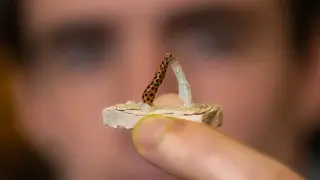
Stanford researchers discovered that bleached corals can fully recover within seven weeks when physically fused with healthy clones. The process relies on tissue fusion to transfer beneficial algae, offering a potential rapid restoration method despite current scalability limits.

A new study in Science reveals that large dogs age faster due to accelerated loss of DNA methylation, particularly in 'jumping genes' called LINE1s. This molecular instability correlates with higher mortality risks, offering a biological explanation for why big breeds die younger than small ones.

A study by University of Warwick researchers reveals that white dwarfs can appear green, pink, or yellow due to dense atmospheres altering light absorption. The team identified WD J1330+6435 as the first known green star and WD J1011+2845 as the reddest recorded, challenging the assumption that stellar color is determined solely by temperature.
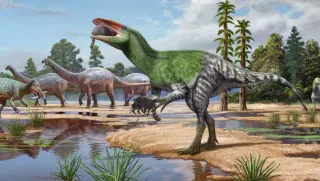
A fossil braincase stored in London for 100 years has been identified as Invictibellatrix amberina, a small, feathered predator from the Early Cretaceous. This discovery marks the first confirmed megaraptoran in Europe, suggesting the group originated in Asia and spread globally before diversifying in size.

Steven Endres, a candidate for Merrimack County Attorney, was fired from his solicitor position in April 2025 following a misconduct investigation. The probe, triggered by a Valentine's Day text message regarding a colleague's attire, revealed a pattern of inappropriate comments and sexual jokes directed at female legal secretaries. Although Endres denied many allegations and claimed no power imbalance existed, County Attorney Paul Halvorsen terminated his employment, citing detrimental conduct. Endres subsequently switched from Republican to Democrat to run for the office he previously supported Halvorsen to win.

NASA is accelerating the development of the SkyFall mission, which will deploy three identical helicopters to Mars in 2028. These aerial vehicles will ride aboard the SR-1 Freedom spacecraft, the agency's first fission nuclear-powered interplanetary craft. The mission aims to explore regions inaccessible to ground rovers, building on the success of the Ingenuity helicopter. A workshop next year will determine specific landing sites and flight paths, focusing on scientific value and human exploration preparation.
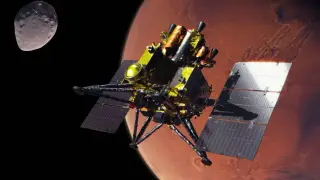
The Martian Moons eXploration (MMX) mission, led by Japan’s JAXA with key contributions from NASA, is scheduled to launch on October 19, 2026, from Tanegashima Space Center. The spacecraft aims to orbit Mars, land on the moon Phobos, and return a sample to Earth by 2031. This mission seeks to determine the origin of Mars’ moons, which are believed to be either captured asteroids or debris from a giant impact. NASA provided the MEGANE spectrometer and Deep Space Network support, while ESA, CNES, and DLR also contributed to the international effort.
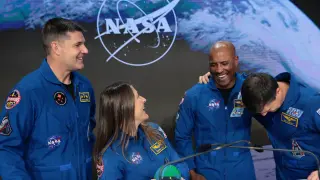
All four astronauts from the April 2026 Artemis II lunar flyby have officially stepped away from active spaceflight duties. Christina Koch is taking over as NASA's acting deputy chief engineer, while Reid Wiseman and Victor Glover assume emeritus roles. Canadian astronaut Jeremy Hansen has retired from the Canadian Space Agency. The crew, which completed a 10-day mission around the Moon, is now pursuing new professional paths, marking the end of their active astronaut careers.

Researchers at Penn State University have used modal analysis on a 20th-century replica to reconstruct the acoustic properties of the Liberty Bell, which has not been rung in 180 years. The study, published in Physics Today, identifies specific natural frequencies and mode shapes, offering a scientific approximation of the bell's sound for the nation's 250th anniversary.