
2027 VW Atlas Redesign: A Polished Evolution with Familiar Trade-offs
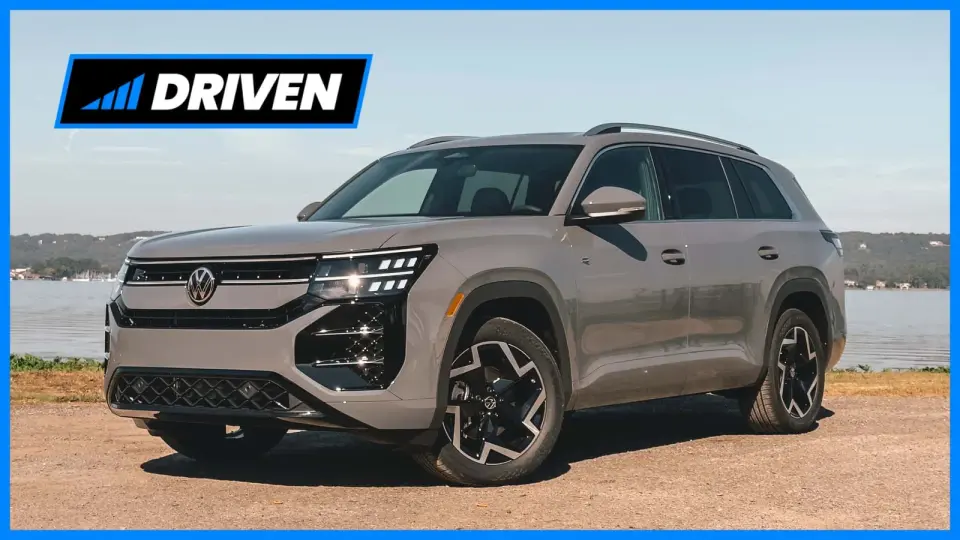
The 2027 Volkswagen Atlas arrives as a significant refresh of the brand’s best-selling US SUV, featuring a new exterior, a more upscale cabin, and a slightly more powerful 2.0-liter turbocharged engine. While the interior gains premium materials and larger screens, reviewers note that driving dynamics remain comfortable rather than sporty, and the lack of a hybrid option lags behind competitors. The vehicle is priced higher than rivals but offers improved fuel efficiency and a refined, quiet ride.
Key points
- The 2027 Atlas is built on the updated MQB Evo platform, retaining the same wheelbase and dimensions as the outgoing model to preserve interior space.
- The standard 2.0-liter turbocharged four-cylinder engine now produces 282 horsepower and 258 pound-feet of torque, paired with an eight-speed automatic transmission.
- The cabin features a new design with real wood trim, a 12.9-inch or 15.0-inch touchscreen, and capacitive controls for climate and volume, though some reviewers criticize the lack of physical knobs.
- Fuel economy improves slightly, with front-wheel-drive models achieving 22/29/25 mpg and all-wheel-drive models at 20/27/23 mpg, despite the power increase.
- The base SE trim starts at $43,135 including destination, while the top SEL Premium R-Line 4Motion is priced at $56,610 to $58,135 depending on the source.
Background
The Atlas has been a cornerstone of Volkswagen’s US sales, accounting for roughly one-third of the brand’s volume. This redesign follows a period where VW shifted its electric strategy, replacing the ID.4 with the ID. Tiguan in 2027 to improve range and add physical controls. The new Atlas aims to recapture momentum in the traditional internal combustion market by modernizing its flagship SUV without a full platform overhaul.
How outlets are covering it
Motor1 and Detroit Free Press praise the Atlas’s refined ride, quiet cabin, and premium interior materials, with the latter comparing it favorably to luxury brands like Lexus. However, MotorTrend and Car and Driver note that the driving experience remains familiar, with a soft ride that can feel unsettled on rough roads and acceleration times that are actually slower than the previous model due to increased weight and reduced torque. All sources agree that the lack of a hybrid powertrain is a significant drawback compared to competitors like the Toyota Grand Highlander and Hyundai Palisade. While Motor1 highlights the punchy engine, MotorTrend points out that the 0-60 mph time of 8.0 seconds is slower than the 2024 model’s 7.5 seconds. There is consensus that the capacitive controls, while improved with raised ridges, remain a point of contention for some users.
Why it matters
The 2027 Atlas represents a critical update for Volkswagen’s US market presence, as the model is a major sales driver. The redesign aims to address aging technology and interior materials while maintaining the vehicle’s core strengths of space and comfort. However, the absence of a hybrid option and higher pricing compared to competitors like the Ford Explorer and Chevrolet Traverse may limit its appeal in a market increasingly focused on efficiency and value. The success of this refresh will likely determine VW’s strategy for future SUV updates and its ability to compete against Japanese and Korean rivals in the three-row segment.
What to watch
Volkswagen has indicated that a hybrid powertrain for the Atlas is planned for a mid-cycle refresh in three to four years. A two-row variant, the Atlas Cross Sport, is expected to arrive in early 2027 with similar features but a sportier design. The company will likely monitor sales data and consumer feedback on the capacitive controls and interior materials to inform future updates.
- The 2027 Volkswagen Atlas Fixes What Wasn't Broken: Driven Motor1.com
- Tested: 2027 Volkswagen Atlas Gets a Glow-Up Car and Driver
- Tested: The 2027 Volkswagen Atlas Got the Makeover It Needed. Did VW Go Far Enough? MotorTrend
- This VW SUV could leave its competitors behind, except for 1 thing Detroit Free Press
- Review: Is the 2027 Volkswagen Atlas a Good 3-Row SUV? 4 Pros, 3 Cons Cars.com
Want the full story? Read the original reporting
Read on Motor1.com