
Porsche Cayenne EV Hits 16-Minute Charge Time, But 400-kW Infrastructure Lags
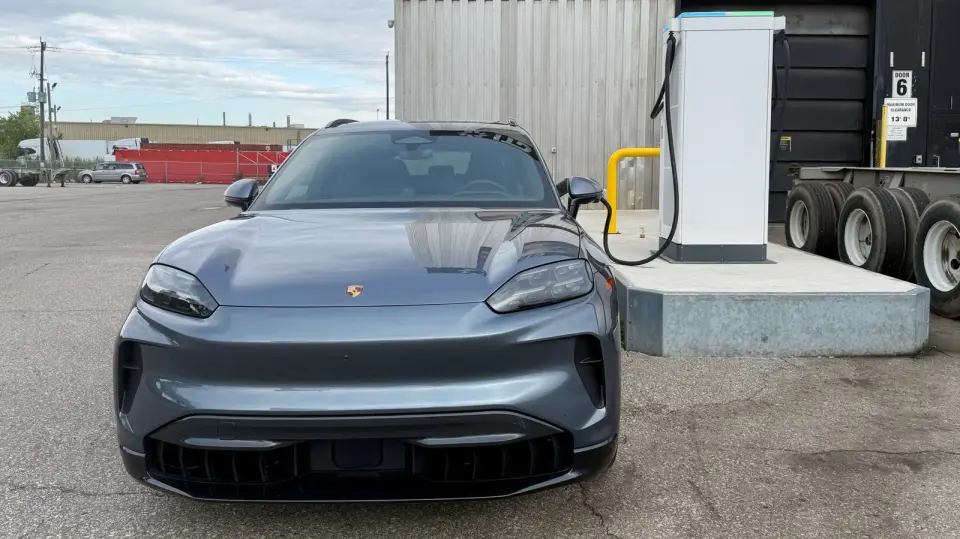
Jalopnik tested the new Porsche Cayenne EV and confirmed a 16-minute charge time from 13% to 80%, validating Porsche's claims despite not reaching the theoretical 400-kW peak. The vehicle features a 113-kWh battery and double-sided cooling, but real-world charging speeds plateau around 350 kW. While the car is fast, 400-kW public chargers remain rare in North America, limiting the practical benefit of this technology.
Key points
- Jalopnik's Chris Tsui tested a base model Cayenne EV and achieved a 13% to 80% charge in exactly 16 minutes, matching Porsche's official claim.
- The vehicle's actual maximum DC charging rate is 390 kW, not the 400 kW cited in marketing, though it remains among the fastest-charging EVs available.
- During the test, charging speed peaked at 349 kW within 22 seconds, then dropped to approximately 270 kW as the battery reached 50% state of charge.
- The Cayenne EV uses a 113-kWh battery with double-sided cooling, described as having the capacity of 100 household refrigerators, to manage heat during rapid charging.
- A full charge from 13% to 83% cost $68.16 CAD (approx. $50 USD) at a premium rate of $0.80 CAD per kWh, which is still cheaper per mile than the gas-powered Cayenne S.
Background
The Cayenne EV joins a growing list of high-performance electric SUVs, including the Tesla Model X Plaid and Ferrari Purosangue, which have recently dominated straight-line speed benchmarks. Meanwhile, infrastructure expansion is accelerating; Walmart recently launched a 100-site, 400-kW charging network across 20 US states, though most current EVs cannot yet utilize that full power output. This highlights the gap between vehicle capability and available charging infrastructure.
How outlets are covering it
Jalopnik provides a detailed, hands-on technical analysis, focusing on the discrepancy between marketing claims (400 kW) and spec sheet reality (390 kW), and the practical limitations of current charging networks. Autocar frames the story as a broader industry question about whether electric super-SUVs can match the versatility and 'aura' of their combustion counterparts. News is My Business offers a brief regional update on the vehicle's unveiling in Puerto Rico, noting its 1,156-hp output, but lacks the technical depth of the other sources. The sources generally agree on the car's performance but differ in emphasis: Jalopnik focuses on charging feasibility, while Autocar questions the overall market appeal of electric luxury SUVs.
Why it matters
The Cayenne EV's ability to charge in 16 minutes addresses a key barrier to EV adoption: range anxiety. However, the scarcity of 400-kW chargers in North America means this benefit is currently limited to a few locations. As infrastructure expands, such as Walmart's new network, these high-speed charging capabilities will become more accessible, potentially shifting consumer preferences toward electric luxury vehicles.
What to watch
Porsche claims the 16-minute charge time will hold up in extreme temperatures, but real-world performance in cold or hot conditions remains untested in this report. The availability of 400-kW chargers is expected to grow, with companies like Walmart planning to expand to thousands of sites by 2030. The upcoming Bentley Torcal, a platform sibling to the Cayenne, is also expected to feature 400-kW charging, suggesting a broader industry trend toward faster charging standards.
- I Tested The New Porsche Cayenne EV's 400-kW Charging, And Even Without Reaching The Peak It's Fast As Hell Jalopnik
- The Porsche Cayenne Turbo EV is Quiet, Composed and Terrifyingly Fast WSJ
- Super-SUV showdown: why the electric Porsche Cayenne smashes its rivals Autocar
- First Drive: 2026 Porsche Cayenne Turbo Electric duPont REGISTRY News
- Porsche unveils 1,156-hp electric Cayenne in Puerto Rico News is My Business
Want the full story? Read the original reporting
Read on Jalopnik