
NTSB Report Details Fatal Amazon Cargo Crash: Pilots Ignored Warnings, Controller Missed Wind Alert
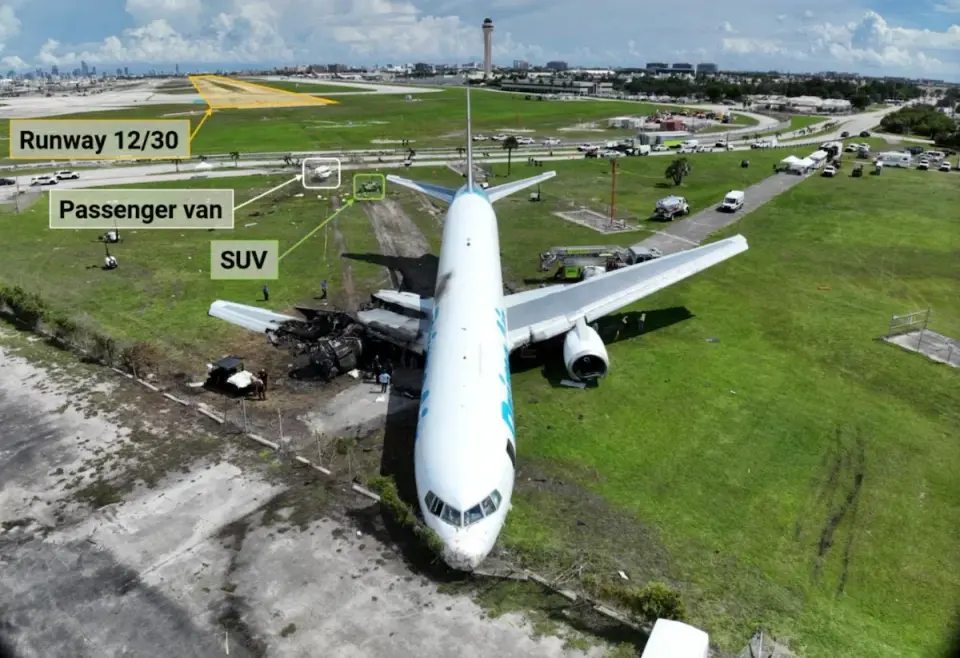
The NTSB preliminary report on the September 6, 2026, crash of an Amazon Air Boeing 767 at Miami International Airport confirms the aircraft overshot the runway by nearly 40% before striking vehicles and killing five people. The report highlights that the captain ignored repeated speed warnings from the first officer, failed to deploy critical braking systems, and hesitated on a go-around. Additionally, the air traffic controller failed to provide required wind information, though the NTSB notes this was likely not a primary cause.
Key points
- The Boeing 767-33A, operated by 21 Air for Amazon, crossed the runway threshold at over 203 mph and 105 feet above the ground, touching down 3,750 feet past the start of the 9,360-foot runway.
- The first officer repeatedly warned the captain about excessive speed, but the captain did not provide consistent verbal responses, and the aircraft triggered multiple 'sink rate' and 'too low terrain' warnings.
- The captain attempted a go-around with only 930 feet of runway remaining, then aborted the maneuver, failing to deploy speed brakes or thrust reversers, resulting in a loss of only 47 knots of speed during the rollout.
- The air traffic controller did not inform the pilots of wind conditions (190° at 19 knots, gusting to 22) as required by FAA regulations, though similar data was available via ATIS.
- The crash killed five people in a van and critically injured the driver of an SUV; the two pilots sustained minor injuries. The captain and first officer had never flown together before this flight.
Background
Amazon suspended its contract with 21 Air following the crash, citing safety concerns. Previous NTSB updates had already indicated excessive speed and a failed go-around attempt. The Miami Herald reported that former 21 Air pilots had previously raised safety concerns regarding the carrier's operations.
How outlets are covering it
One Mile at a Time emphasizes the 'avoidable' nature of the disaster, citing the captain's indecision and the first officer's ignored warnings. The Miami Herald highlights the lack of prior experience between the two pilots and the history of safety complaints against 21 Air. CNN focuses on the specific failure of the controller to provide wind data and the physical trajectory of the plane. The New York Times notes that while the controller failed to provide wind warnings, the NTSB did not conclude this was a primary cause, as the pilots had other warnings and ATIS data.
Why it matters
The incident underscores critical failures in pilot decision-making and air traffic control procedures, leading to a fatal crash and significant legal and regulatory scrutiny of cargo aviation safety standards.
What to watch
The NTSB will release a final report, which typically takes over a year, to determine the definitive cause and assign no criminal liability. Multiple lawsuits have been filed against 21 Air, Amazon, and the pilots by families of the victims and survivors.
- NTSB’s Preliminary Report On Amazon Air 767 Crash Confirms It Was An Avoidable Mess One Mile at a Time
- NTSB releases first report into deadly Amazon plane crash at Miami airport Miami Herald
- Amazon Air cargo plane flew past nearly half of Miami runway before deadly landing, NTSB says CNN
- Wind Warnings Were Never Given to Pilots in Miami Crash, Federal Report Says The New York Times
- First officer warned that Amazon cargo plane was coming in too fast before deadly Miami crash, NTSB says cbsnews.com
Want the full story? Read the original reporting
Read on One Mile at a Time