
Saudi Arabia Unveils Ceer Exobot EVs in Vision 2030 Push
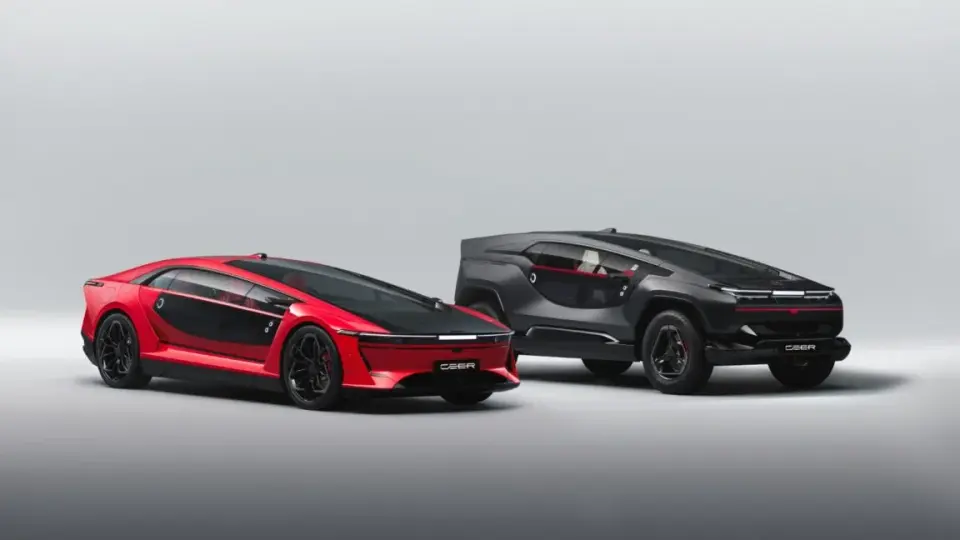
Saudi Arabia’s Public Investment Fund and Foxconn have launched Ceer, the Kingdom’s first domestic automaker, unveiling the Exobot sedan and SUV. These flagship electric vehicles feature 1,111 horsepower, 800V architecture, and unique design elements, aiming to diversify the economy away from oil. While production is set for late 2026, no prices or sales dates have been announced, raising questions about commercial viability against established global brands.
Key points
- Ceer, a joint venture between Saudi Arabia’s Public Investment Fund (PIF) and Foxconn, revealed its first two vehicles, the Exobot sedan and SUV, on September 11, 2026.
- The vehicles feature a tri-motor setup with 1,111 horsepower, achieving 0-62 mph in under 2 seconds, and utilize an 800V electric architecture with a 112-kWh battery pack.
- Design highlights include 'Shahin Wing' falcon doors with electrochromatic glass, a 48-inch digital dashboard, and 32 light elements referencing the year 1932, the founding of the Kingdom.
- Ceer plans to launch seven models by 2030, including hybrids, with production at the King Abdullah Economic City complex expected to create 35,000 jobs by 2034.
- The company has not released pricing, ordering details, or specific production start dates, though CEO James DeLuca previously indicated the first vehicle would roll off the line in late 2026.
Background
Ceer was announced in November 2022 as part of Saudi Arabia’s Vision 2030 initiative to diversify its economy beyond oil. The company is one of three PIF-linked vehicle projects in the region, alongside Lucid and a Hyundai plant. Previous coverage noted that Saudi Arabia had never had a domestic automaker before this venture, making Ceer a symbolic and economic milestone for the Kingdom’s industrial strategy.
How outlets are covering it
Ars Technica emphasizes the technical specifications and design flair of the Exobot, comparing its performance to luxury brands like BMW and Mercedes, while questioning its long-term success against Chinese competitors. Eletric-vehicles.com highlights the lack of commercial details, noting that Ceer withheld pricing and production timelines, and points out the shift from a 30,000 to 35,000 job target. Arabian Gulf Business Insight focuses on the economic impact, citing the $8 billion GDP contribution and the strategic partnerships with BMW and Hyundai Transys, framing the launch as a critical step in Saudi industrialization.
Why it matters
The launch of Ceer marks a pivotal moment for Saudi Arabia’s economic diversification, aiming to reduce reliance on oil by creating a domestic automotive industry. Success could stimulate local manufacturing, create thousands of jobs, and position Saudi Arabia as a regional hub for EV production, though challenges remain in competing with established global and Chinese brands.
What to watch
Ceer is expected to begin production in late 2026, with the first vehicles rolling off the line at the King Abdullah Economic City plant. The company plans to expand its lineup to seven models by 2030, including midsize and compact vehicles with various propulsion options. Future developments will hinge on pricing strategies, market reception, and the ability to compete with Chinese EVs in the GCC region.
- Saudi Arabia wants a car industry, launches Ceer with two EVs Ars Technica
- Saudi's Ceer unveils first EVs in bid to build regional auto powerhouse Reuters
- Saudi Crown Prince Unveils Ceer’s First EVs, Exobot Sedan and SUV eletric-vehicles.com
- Saudi Arabia’s Ceer launches flagship electric vehicles Arabian Gulf Business Insight | AGBI
- PIF Says Saudi Crown Prince Reveales EXOBOT, The Flagship Electric Vehicles From CEER TradingView
Want the full story? Read the original reporting
Read on Ars Technica