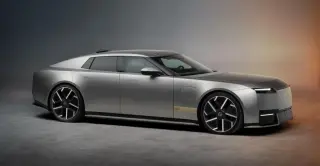
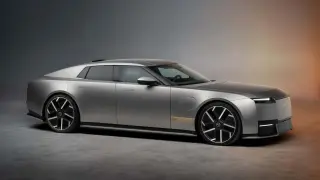
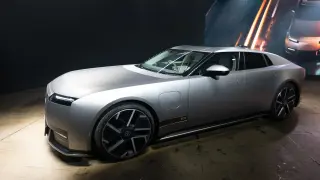
Italy’s Salvini and other political and industry figures slam Ferrari’s first all-electric five-seat model Luce, calling it overpriced and un-Ferrari; the controversy, along with about an 8% stock drop, highlights tensions involving the Agnelli-Elkann family as the car—co-designed by Jony Ive—strays from Ferrari’s traditional design ethos.
Ferrari unveiled the Luce, its first electric five-seater, a $645K model touted for rapid performance (0-60 mph in about 2.5 seconds, 192 mph) but criticized for its look, which some say resembles a Nissan Leaf. The backlash coincided with a roughly 5% drop in Ferrari’s stock, as critics questioned demand for such an expensive, non-traditional Ferrari design. Ferrari defends the concept and notes plans to shift customers from combustion/hybrids to EVs, while market context shows rivals pausing EV plans and the broader luxury EV segment facing price sensitivity. The Luce is produced at Ferrari’s Italian plant and will hit the market in Q4, with an external sound system to mimic traditional engine roars.
Ferrari unveils the Luce, its first fully electric hypercar, delivering over 1,000 hp from four motors, a 122 kWh battery with up to 350 kW charging, 329+ miles of range, a 2.5-second 0–62 mph time, and a 192 mph top speed. Designed with LoveFrom under Jony Ive and Marc Newson, it features a glass-heavy exterior and Apple-inspired cabin. Production starts late 2026 at roughly $640,000, with Ferrari signaling it’s a new design direction rather than a pivot from combustion as it pursues a 2030 mix of EV/hybrid/ICE sales.
Ford plans a five‑model European rollout for 2026–2029 to refresh its lineup after discontinuing the Fiesta and Focus, including two small EVs, two crossovers with multiple powertrains, and a Europe‑specific Bronco. The small cars will ride Renault’s AMPR platform while Ford explores multiple partnerships to gain scale and reduce costs, reflecting slower EV adoption in Europe and a push to preserve Ford’s rally‑bred DNA across platforms. The company hasn’t finalized partnerships or exact specs, and questions remain about resurrecting legacy names.
Stellantis announced a 60 billion euro global turnaround to refresh its U.S. lineup with 11 new models and several sub-$30,000 crossovers, add high‑performance Ram variants and a Dodge Copperhead, and lift North American sales to about 1.9 million while cutting costs by $7 billion annually by 2028; in Europe, it will lean on LeapMotor and Dongfeng for 60 new vehicles on shared platforms as part of the FaSTLAne 2030 plan.
Stellantis announced FaSTLAne 2030, a €60 billion, five-year plan unveiled at Investor Day to accelerate growth and profitability through six pillars: sharper brand portfolio management, investment in global platforms/powertrains/technology, strategic partnerships, optimized manufacturing, execution excellence, and empowered regions. The plan envisions 60+ new launches/refreshes (including 29 BEVs) focused on Jeep, Ram, Peugeot and Fiat, about €24 billion in platforms and tech, and the rollout of new technologies (STLA One, STLA Brain, STLA SmartCockpit, STLA AutoDrive) by 2027–2030. It also targets higher capacity utilization (Europe to 80%, US to 80%), regional growth targets, and €6 billion/year in cost savings from 2028, with regional teams empowered to tailor plans and partnerships with external players.
Stellantis unveiled a €60 billion five-year plan led by CEO Antonio Filosa, aiming for €6 billion in annual cost savings and positive free cash flow by 2028. About €36 billion will fund brand initiatives to launch more than 60 new vehicles and refresh 50 models (EVs, hybrids and ICE), with €24 billion allocated to platforms and new technologies. The company will keep its 14 brands but fold DS into Citroën and Lancia into Fiat; Fiat is a global brand alongside Jeep, Ram Trucks and Peugeot. The plan, dubbed FASTLANE 2030, was unveiled at an investor day at Stellantis’ North American HQ near Detroit.
NIO posted RMB25.5B in total revenues for Q1 2026 and delivered 83,465 vehicles (up 98.3% YoY), with vehicle margin at 18.8% and gross margin at 19.0%; GAAP net loss was RMB332.1M, while cash and equivalents stood at RMB48.2B. The company expects Q2 deliveries of 110k–115k and total revenues of RMB32.8–34.4B as it advances launches across its NIO, ONVO, and FIREFLY brands, including the ES9 and ONVO L80.
Mercedes‑AMG’s GT 4‑Door abandons the V8 for a fully electric powertrain, delivering up to 1,153 hp (GT63) and 1,475 lb‑ft, 0–60 mph in 2.0 s, and an estimated 435 miles WLTP range with 600 kW charging. It introduces a new design language inspired by the GT XX concept, adds a frunk, and features a refreshed interior with a dual-screen infotainment setup; GT55/GT63 trims arrive by late 2026, with pricing still undisclosed.
Tesla raised prices on higher-end Model Y trims in the U.S. for the first time in two years: Premium RWD and Premium AWD each +$1,000, and the Performance variant +$500, while entry-level trims stay at $39,990 and $41,990. The move aligns with a shift toward higher margins as demand stabilizes and comes alongside new paint colors and signals for a future Model Y L three-row version.
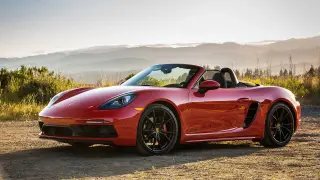
Porsche’s list of its 12 most powerful factory cars spans 670 hp to 1,139 hp, highlighting a rapid shift from pure internal-combustion power to electrified performance. Highlights include the 1,139 hp Cayenne Turbo Electric, 1,019 hp Taycan Turbo GT, 938 hp Taycan Turbo S, 874 hp 918 Spyder (hybrid), and the lone non-electrified road car—the 2013–2015 GT2 RS—while numerous models rely on hybrids or fully electric drivetrains to push performance to blistering levels, underscoring Porsche’s electrified horsepower surge.
A Lancet-backed study finds the RTS,S malaria vaccine reduced infant deaths in Ghana, Kenya and Malawi; AI tools may detect pancreatic cancer earlier; a Dutch court rules bottom trawling in a protected area unlawful; Virginia passes up to 12 weeks paid medical leave; France offers universal €1 meals for university students; Gazan sisters win the Earth Prize for turning rubble into reusable blocks; electric-truck sales soar in China, while the UK moves to ban new North Sea oil and gas licenses; Libraro awards its first winner and Earth Photo shortlists celebrate environmental storytelling.
Facing a 28% drop in US EV sales and a $9 billion write-down that marked Honda’s first annual loss, the automaker plans a major pivot to hybrids, reallocating resources, retooling plants for hybrid production, and launching 15 hybrid models by 2030—most aimed at North America—while restructuring battery plans and regional strategies.
Elon Musk was photographed taking a selfie with Lei Jun, the rival Chinese EV billionaire and founder of Xiaomi, at a recent event. The moment circulated online, highlighting the high-profile competition between Tesla and Xiaomi’s EV ambitions while also signaling a cordial, high-profile meeting between two tech titans in the electric-vehicle space.
Volkswagen confirms the ID.Buzz will return for 2027 with two trims: Tourer 4Motion (camping-oriented, based on the European Good Night Package) featuring a fold-out mattress, blinds, ventilation panels, stowable table and chairs, plus Overnight Mode; Pro S 4Motion adds a retractable tow hitch, captain’s chairs, electrochromic roof glass and 20-inch wheels. Other updates include one-pedal driving, refreshed ID.S 6 software with a faster navigation and easier settings, a free one-year In-Vehicle Premium trial, a native NACS charging port, and simplified two-tone paint options. VW did not yet announce price or range changes.