
NYC Launches 17 Modular Public Bathrooms in $4M Pilot, Sparking Debate Over Access and 10-Minute Limits
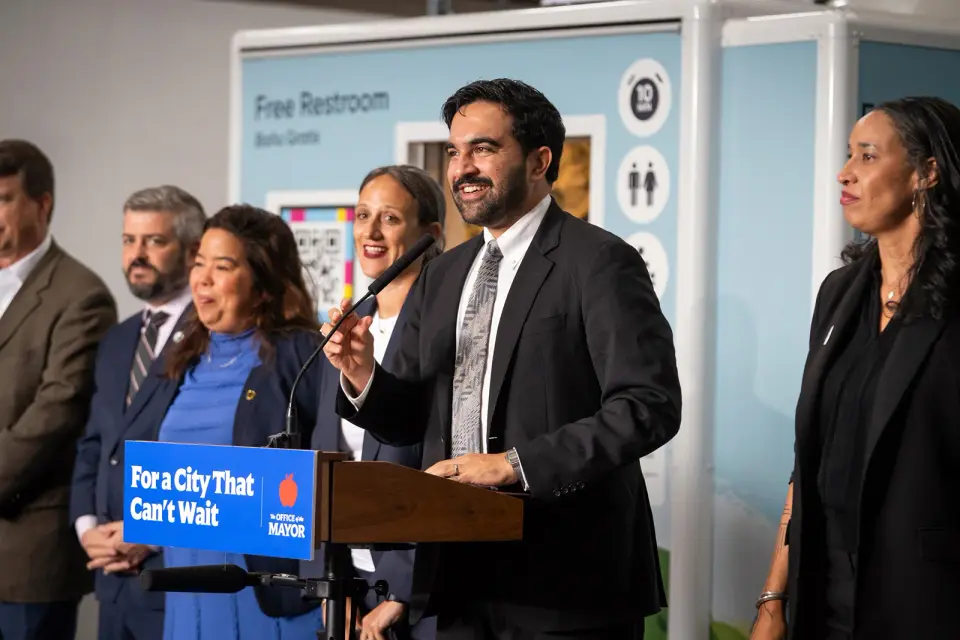
Mayor Zohran Mamdani launched a $4 million pilot installing 17 modular public bathrooms across New York City to address the city’s severe restroom shortage. Operated by Throne Labs, the self-contained units feature touchless entry, climate control, and a strict 10-minute usage limit. While the initiative aims to improve dignity and accessibility, advocates warn that digital entry requirements may exclude homeless individuals, and critics note the pilot does not replace the need for a comprehensive citywide bathroom strategy.
Key points
- Mayor Mamdani announced the installation of 17 free, ADA-accessible modular bathrooms across all five boroughs, beginning in September 2026.
- The $4 million pilot is operated by Throne Labs, which was selected by the NYC Economic Development Corporation in June 2026.
- Each unit includes a running-water sink, flushing toilet, climate control, and a baby-changing station, operating daily from 7 a.m. to 10 p.m.
- Entry requires a smartphone text, QR code, app access, or a physical tap card distributed by community partners.
- Users face a strict 10-minute time limit, with automated audio warnings and automatic door opening to prevent loitering.
- The 17 units are spread across high-traffic areas, including Yankee Stadium, Columbus Park, Cooper Square, and the North Shore Esplanade.
Background
New York City has long struggled with a severe shortage of public restrooms, with only about 1,000 available citywide, most located in parks. In January 2026, Mayor Mamdani announced a $4 million pilot program to address this gap. The initiative follows years of advocacy by groups like the Free to Pee Coalition and the passage of Local Law 58 in 2025, which mandated a comprehensive public bathroom strategy. Previous attempts, such as the 2008 coin-operated stalls in Madison Square Park, highlighted the challenges of expanding access. The current pilot aims to test modular solutions before committing to a broader network, with the city planning to release its first strategic plan in November 2026.
How outlets are covering it
The NYC government and Throne Labs emphasized the pilot’s efficiency, accessibility, and cost-effectiveness, noting that the 17 units cost roughly the same as one traditional restroom. They highlighted features like touchless entry, real-time cleanliness ratings, and the ability to relocate units as needs change. However, the Free to Pee Coalition and other advocates criticized the digital entry requirements, arguing that reliance on smartphones or tap cards could exclude homeless individuals and those without reliable access to technology. They also pointed out that the limited number of units and operating hours do not address the broader imbalance in bathroom access. Council members supported the pilot as a step forward but stressed the need for a comprehensive strategy by 2035. Some residents praised the cleanliness and modern design, while others expressed concern about the 10-minute limit and the potential for exclusion.
Why it matters
The pilot addresses a critical urban infrastructure gap, aiming to improve public health, dignity, and accessibility for New Yorkers. It tests a scalable, cost-effective model that could be expanded citywide if successful. However, the debate over digital entry highlights the tension between innovation and inclusivity, raising questions about how to ensure equitable access for all residents, including vulnerable populations. The outcome of this pilot will influence future policy and investment in public bathroom infrastructure across New York City.
What to watch
The city will monitor the pilot’s performance over the next year, evaluating usage, cleanliness, and community feedback. Throne Labs will maintain the units, with real-time data guiding cleaning schedules and issue resolution. The city plans to release its first comprehensive public bathroom strategy in November 2026, as required by Local Law 58. If the pilot is successful, the city may expand the network, potentially doubling the number of public restrooms by 2035. Advocates will continue to push for inclusive access and broader coverage, while the city will assess whether to adopt additional models, such as automated toilets, to meet diverse community needs.
- Mayor Mamdani Brings 17 New Public Bathrooms to Neighborhoods Across New York City NYC.gov
- New York City’s newest bathrooms will have a 10-minute time limit NewsNation
- NYC deploys robotoilets. The public bathrooms have a strict 10-minute time limit. Gothamist
- ‘Not a place to scroll': NYC's new public bathrooms auto-open door after 10 minutes NBC New York
- Game of ‘Thrones’: NYC is getting 17 new public bathrooms, with digital entry and a 10-minute limit amNewYork
Want the full story? Read the original reporting
Read on NYC.gov