
Navy Expands Autonomous Fleet with Massive Drone Submarine Order and New Surface Vessel Contracts
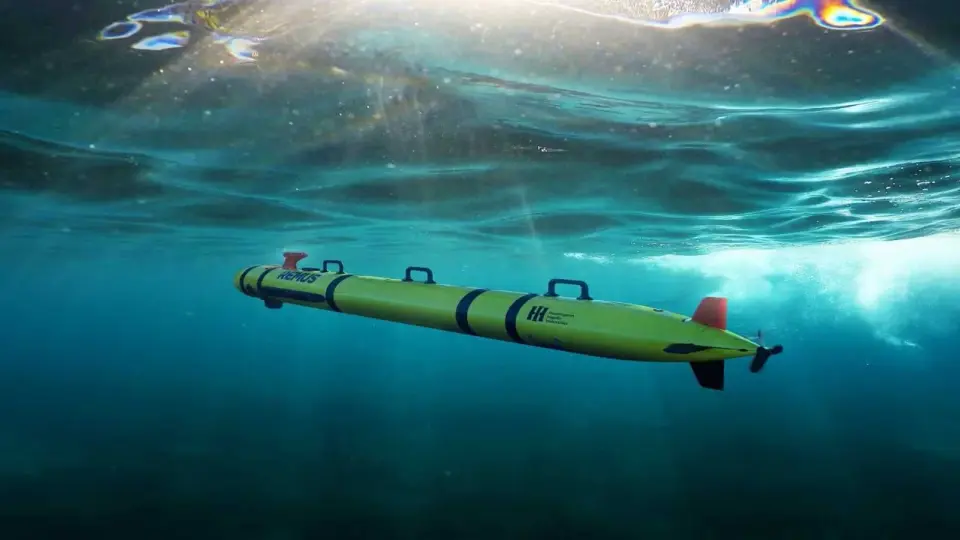
The U.S. Navy has accelerated its shift toward autonomous maritime systems by awarding HII a $123.4 million contract for the Lionfish underwater drone and securing production deals for 30 medium unmanned surface vessels (MUSVs) from three Louisiana-based shipyards. The Lionfish order, the largest in the program's history, expands the fleet toward a potential 200 vehicles, while the MUSV awards mark the first production phase of a new marketplace initiative.
Key points
- The Navy awarded HII a $123.4 million contract on September 24, 2026, for additional Lionfish underwater drones, with deliveries scheduled through December 2027.
- The Lionfish program, based on HII's REMUS 300 design, has a contractual ceiling of 200 vehicles over five years, with a maximum value exceeding $347 million.
- 42 Lionfish hulls have been built so far, with the first two delivered in April 2025.
- The Navy awarded production contracts for 30 MUSVs to Saronic, HII, and Galliano Marine Service, with each company building 10 vessels at an average cost of $40 million per hull.
- The MUSV awards were based on successful at-sea testing, with deliveries expected as early as the fourth quarter of Fiscal Year 2027.
- HII expanded its Pocasset, Massachusetts manufacturing facility by 10,000 square feet two days before the Lionfish contract was awarded, increasing total capacity to 50,000 square feet.
Background
The Navy has been transitioning from experimental prototypes to full-scale production of autonomous systems, with the Lionfish program being the first to graduate from Other Transaction Authority (OTA) prototyping into a production contract. The REMUS family of underwater vehicles has been in service for 25 years, with HII reporting over 750 vehicles delivered to more than 30 countries. The Navy's MUSV program aims to rapidly field unmanned surface vessels using commercial-ready technology, with phase two solicitation already underway to broaden the industrial base.
How outlets are covering it
AutoNotion emphasizes the fiscal urgency of the Lionfish order, noting that $1.85 million of the funding would have expired within a week if not awarded before the September 30 fiscal year-end. USNI News and Naval News focus on the competitive nature of the MUSV program, highlighting the at-sea testing that determined the three production winners. HII's own release stresses its shipbuilding expertise and the distributed production model for ROMULUS USVs, while AutoNotion notes emerging competition from startups in the drone submarine market. All sources agree on the strategic importance of autonomous systems but differ in emphasis: AutoNotion on procurement mechanics, USNI/Naval News on competitive testing, and HII on production capacity and technology integration.
Why it matters
The simultaneous expansion of both underwater and surface autonomous fleets signals a major shift in the Navy's approach to maritime operations, reducing reliance on crewed vessels for dangerous missions like mine countermeasures and intelligence gathering. The rapid scaling of production, supported by expanded manufacturing capacity and new industrial partnerships, reflects the Navy's urgency to field autonomous capabilities at scale, potentially reshaping naval strategy and procurement models.
What to watch
Deliveries of the new Lionfish drones are scheduled through December 2027, with the Navy holding options to expand the fleet to 200 vehicles. MUSV production will begin immediately, with deliveries starting as early as the fourth quarter of Fiscal Year 2027. The Navy has already issued a solicitation for phase two of the MUSV program, with testing evaluations set to begin as early as November 16, 2026, to broaden the industrial base and incorporate more vessel types.
- A 155-pound drone submarine that two people can carry and toss off the edge of a dock dives 1,000 feet and works 30-hour missions hunting sea mines, and the Navy just placed its biggest order of them yet, with options that run the fleet to 200 vehicles Autonocion.com
- 3 Louisiana Shipyards to Build 30 Drone Ships in $1.2B Navy MUSV Deal USNI News
- Saronic Awarded Production Contract for Marauder Under U.S. Navy’s MUSV Marketplace navalnews.com
- HII Wins U.S. Navy Contract for 10 ROMULUS USVs, Accelerating Deployment of Proven Autonomous Capability HII
- Unmanned Craft News Roundup | October 2 – Australian 3D-printed boat, Indian Navy USV conversion project and more Baird Maritime
Want the full story? Read the original reporting
Read on Autonocion.com