
Bittar Conviction Quashed: Last Major Rate-Rigging Prisoner Frees
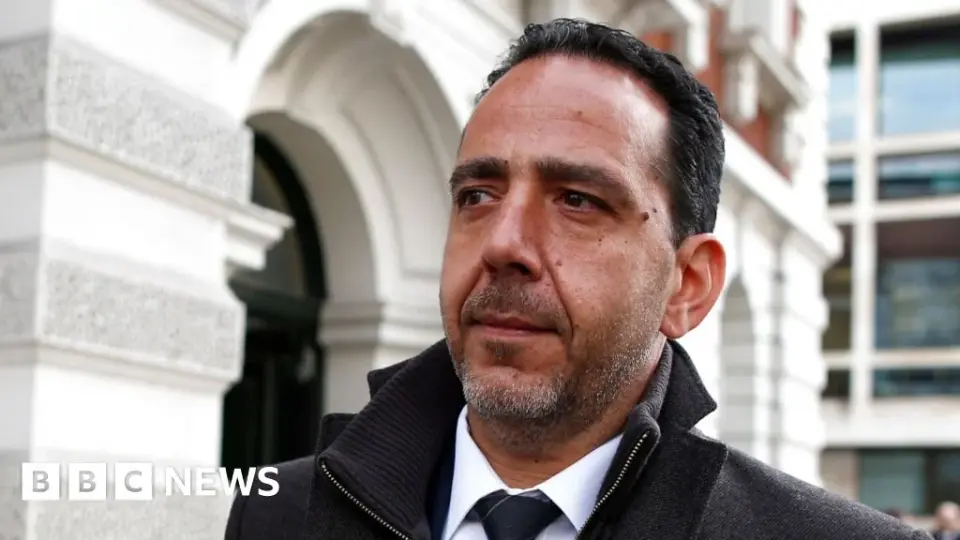
The Court of Appeal has overturned the conviction of Christian Bittar, a former Deutsche Bank trader jailed in 2018 for manipulating the Euribor interest rate. This decision follows the quashing of five Barclays bankers' convictions earlier this week, leaving only one former trader, Peter Johnson, with a standing conviction globally. The rulings stem from a 2025 Supreme Court finding that trial judges incorrectly instructed juries on the legality of rate manipulation. While the Serious Fraud Office opposed Bittar's appeal, arguing his conviction was safe, the court ruled otherwise. This development has intensified calls for the Bank of England and Treasury to release records regarding central bank involvement in rate-setting during the 2008 crisis.
Key points
- Christian Bittar, a former Deutsche Bank trader, had his conviction for manipulating Euribor quashed by the UK Court of Appeal, ending his 2018 prison sentence.
- This follows the quashing of convictions for five Barclays bankers (Merchant, Mathew, Moryoussef, Pabon, Bermingham) earlier in the week, all of whom were jailed between 2016 and 2019.
- The rulings are based on a July 2025 Supreme Court decision that overturned convictions for Tom Hayes and Carlo Palombo, ruling that trial judges gave 'inaccurate and unfair' instructions to juries regarding the legality of influencing rates.
- Bittar, who watched proceedings via video link from Switzerland, stated he had waited a long time for this outcome, while his wife noted the family lost 15 years to the injustice.
- The Serious Fraud Office (SFO) opposed Bittar's appeal, arguing his conviction was safe, but did not contest the appeals of the five Barclays traders, stating it was not in the public interest to seek retrials.
- Only one former trader, Peter Johnson, remains convicted globally; he has also applied to appeal his conviction, which was based on a guilty plea.
Background
The interest rate rigging scandal emerged in 2012, revealing that banks manipulated Libor and Euribor benchmarks during the 2008 financial crisis to boost profits and mask difficulties. Between 2015 and 2019, 19 traders were convicted in the UK and US. The 2025 Supreme Court ruling marked a turning point, finding that judges had erroneously decided as a matter of law that influencing rates was unlawful, rather than leaving it to juries to decide based on facts. This led to the overturning of multiple convictions, including those in the US in 2022. The current rulings are part of a broader legal battle to correct what many view as a miscarriage of justice, with some arguing that central banks and governments also engaged in rate manipulation to rescue the economy.
How outlets are covering it
The BBC and The Guardian both report the quashing of Bittar's and the five Barclays bankers' convictions, but differ in emphasis. The BBC highlights the political fallout, noting calls from politicians like David Davis for the Bank of England and Treasury to release records, and frames the case as part of a 'scapegoating exercise' by the government. The Guardian focuses more on the legal and procedural aspects, detailing the SFO's role in not contesting the appeals and the specific timeline of the cases, from the 2016-2019 convictions to the 2025 Supreme Court ruling. Both sources agree on the core facts but differ in their framing of the broader implications, with the BBC emphasizing potential state involvement and the Guardian focusing on the justice system's correction of errors.
Why it matters
The quashing of these convictions undermines the credibility of the SFO's high-profile prosecutions and raises questions about the fairness of the original trials. It also intensifies scrutiny of the role of central banks and governments in interest rate manipulation during the financial crisis. The outcome may lead to further appeals, including by Peter Johnson, and could result in compensation claims, as seen with Tom Hayes. Additionally, the calls for the release of records by the Bank of England and Treasury could reveal new information about the extent of state involvement in rate-setting, potentially impacting public trust in financial institutions and regulatory bodies.
What to watch
Peter Johnson, the last remaining convicted trader, has applied to appeal his conviction. The SFO may face further legal challenges and reputational damage as more convictions are overturned. Politicians and lawyers are expected to continue pressing for the release of records from the Bank of England and Treasury. There may be compensation claims from the exonerated traders, similar to Tom Hayes' claim against UBS. The outcome of these appeals and the release of records could have significant implications for the financial sector and public trust in regulatory bodies.
- Ex-Deutsche Bank trader jailed for rigging rates has conviction overturned BBC
- Former Deutsche Bank star trader has rate-rigging conviction quashed Financial Times
- Five more UK rate-rigging convictions quashed as SFO prosecutions unravel Reuters
- Ex-Barclays traders jailed for rigging interest rates have convictions quashed The Guardian
- Deutsche Bank’s most legendary trader has a big day coming eFinancialCareers
Want the full story? Read the original reporting
Read on BBC