
California High-Speed Rail Faces Funding Collapse by 2027 Amid Cost Explosion
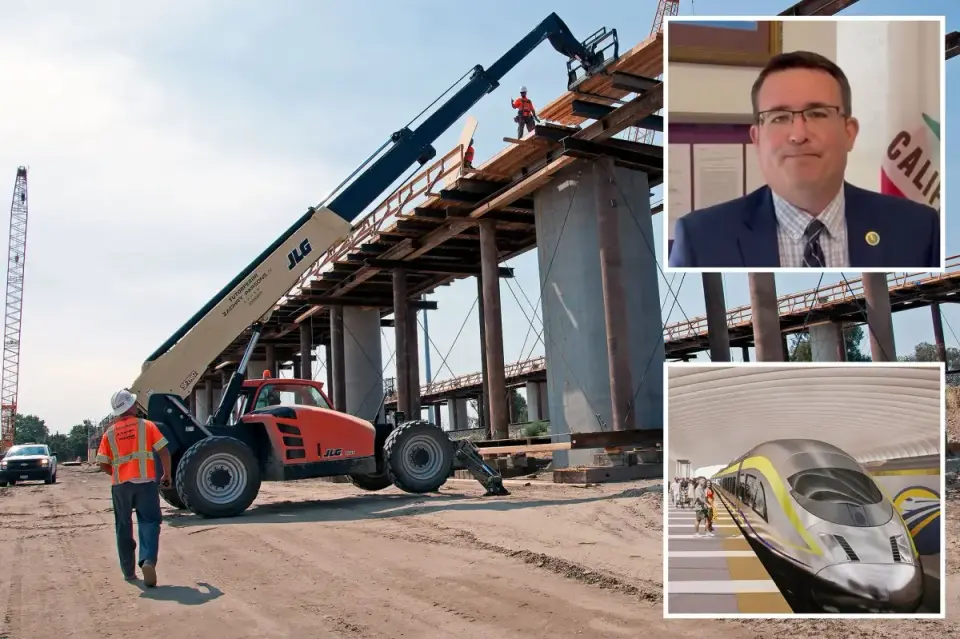
California’s high-speed rail project faces a critical funding shortfall, with the Inspector General warning that cash reserves may run out by late 2027. The total cost has ballooned to $231 billion, pushing completion to 2039. While the state has committed $1 billion annually for two decades, the authority requires an immediate $2.2 billion for the next fiscal year to maintain construction on the Central Valley segment. Critics cite massive cost overruns and regulatory delays, while officials blame environmental review processes and early planning errors.
Key points
- The California High-Speed Rail Authority’s Inspector General, Benjamin Belnap, warned that the project could run out of money by December 2027.
- The total estimated cost for the system has risen to $231 billion, with completion now projected for 2039.
- The authority requires an additional $2.2 billion in financing for fiscal year 2027-28 to continue work on the Merced-to-Bakersfield segment.
- The project has incurred over $5.7 billion in delay and change-order fees, including a single $537 million payment to a contractor in February.
- Active construction is limited to a 119-mile stretch in the Central Valley, despite environmental clearance for the full 494-mile Phase 1 corridor.
Background
The project was approved by voters in 2008 with an initial estimate of $33.5 billion for the San Francisco to Los Angeles route. It was originally expected to be operational by 2020. Recent developments include a new business plan presented by CEO Ian Choudri, which outlines a $3.5 billion request for track construction. The state has agreed to provide $1 billion annually for the next 20 years to support the project.
How outlets are covering it
Inspector General Benjamin Belnap criticized the agency for obscuring facts and hindering legislative oversight, calling the business plan 'dramatically incomplete.' In contrast, CEO Ian Choudri blamed California’s environmental quality laws and regulatory red tape for the cost overruns and delays, arguing that the project is now a 'turning point' for infrastructure development. Republican lawmakers, including Rep. Kevin Kiley and Rep. David Tangipa, condemned the project as a historic failure, with Kiley noting that federal funding has been cut. Local residents and business owners, such as farmer Michael Dias, described the project as a 'complete fiasco' due to eminent domain seizures and construction disruptions. KCRA reported that while 62 of 90 necessary structures are completed, no tracks have been laid, and no rail cars are running.
Why it matters
The funding crisis threatens to halt construction on the only active segment of the high-speed rail network, potentially rendering the $231 billion investment obsolete. The project's failure to meet timelines or budgets has sparked intense political debate over public infrastructure management, regulatory efficiency, and the viability of large-scale transit projects in California. If funding runs out by 2027, the state may face a significant financial and reputational setback, further delaying a transportation system that was promised over a decade ago.
What to watch
The California High-Speed Rail Authority must secure the additional $2.2 billion required for the 2027-28 fiscal year to avoid a funding collapse. The state legislature will review the final 2026 Business Plan, which includes the $3.5 billion request for track construction. The authority is also evaluating a potential public-private partnership with Momentum Alliance Partners, though no commitments have been made. Construction will continue on the 119-mile Central Valley segment if funding is secured, while work on other segments remains limited to 'bookend projects' such as Caltrain electrification.
- Gavin Newsom warned California’s $231B bullet train could run out of cash New York Post
- Years Late, Billions Over Budget: California’s High-Speed Rail Hasn’t Laid a Track WSJ
- SkyLink Stalls Near Finish Los Angeles Business Journal
- California high-speed rail Inspector General says project could run out of money by 2027 KCRA
- Much like Los Angeles’s airport train, California needs to get back on track Monocle
Want the full story? Read the original reporting
Read on New York Post