
2nd Circuit Reverses NLRB, Upholding Starbucks' Right to Enforce Uniform Dress Codes
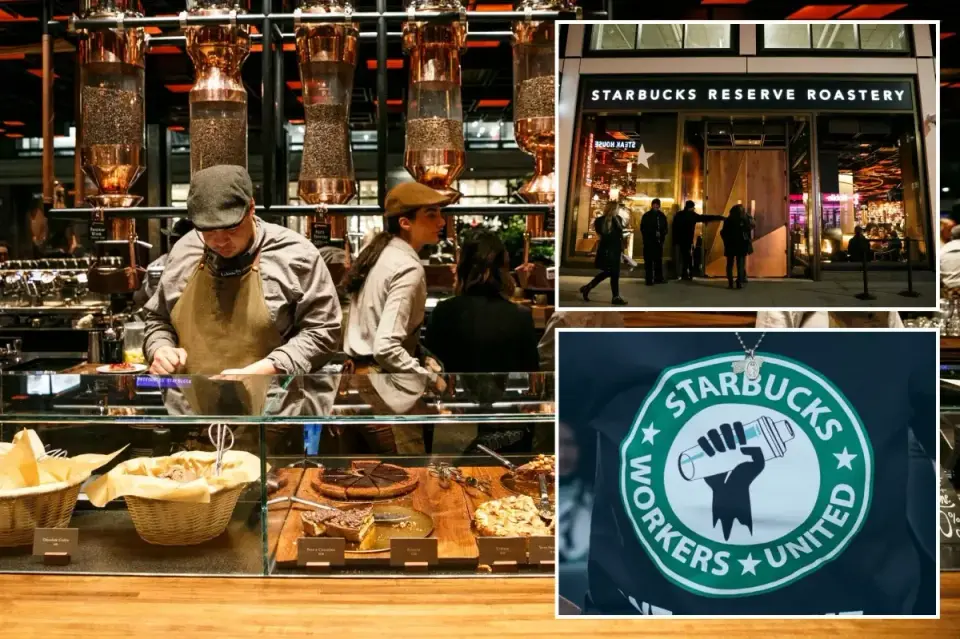
A federal appeals court has overturned a National Labor Relations Board ruling that deemed Starbucks' dress code at a flagship Manhattan store unlawful. The court rejected the NLRB's strict framework for evaluating uniform policies, sending the case back for a more balanced review of employer interests versus employee rights.
Key points
- The U.S. Court of Appeals for the Second Circuit reversed a 2024 NLRB decision that found Starbucks violated labor laws by restricting union shirts and pins at its 23,000-square-foot Reserve Roastery in Manhattan's Meatpacking District.
- The court rejected the NLRB's 'Tesla framework,' which presumed that any restriction on union insignia was unlawful unless the employer proved 'special circumstances' justified it. Instead, the court mandated a balancing test that weighs employer brand image and operational needs against employee expression.
- The NLRB had ruled that three specific policies were illegal: limiting employees to one non-Starbucks pin, banning pins for political or religious causes, and restricting unapproved shirts. The court upheld the one-pin restriction but sent the other two back for re-evaluation under the new balancing standard.
- The decision follows a broader trend of federal courts limiting NLRB authority, including recent rulings in favor of Home Depot and Tesla regarding workplace expression policies.
- The NLRB currently has a 3-1 Republican majority, a shift from the Democratic majority that issued the original 2024 ruling against Starbucks.
Background
This ruling occurs amid a surge in unionization efforts at Starbucks, with over 700 U.S. stores having voted to join unions since the flagship Manhattan location unionized in 2022. The case is part of a larger legal landscape where courts are increasingly scrutinizing NLRB interpretations following the Supreme Court's 2024 Loper Bright decision, which reduced deference to agency legal conclusions. While the NLRB had previously found that dress codes interfered with union organizing, the Second Circuit's decision signals a shift toward protecting employer discretion in maintaining brand consistency.
How outlets are covering it
The New York Post highlights the ruling as a victory for Starbucks and a limitation on NLRB overreach, emphasizing the court's rejection of the 'Tesla framework' that made common dress codes illegal. In contrast, the Employment Law Worldview, a legal analysis blog, frames the decision as a significant development for employers, noting that it provides a legal basis to defend facially neutral uniform policies. The blog also points out that the court did not explicitly rule the policies lawful but sent the case back for a 'more evenly measured balancing test,' suggesting that the outcome for the specific Starbucks policies remains uncertain. Both sources agree that the ruling reflects a broader judicial trend of curbing NLRB authority, but the legal blog places greater emphasis on the post-Loper Bright deference issues, while the Post focuses on the immediate impact on workplace dress code enforcement.
Why it matters
This decision could reshape how employers across the U.S. design and enforce dress codes and uniform policies. By rejecting the NLRB's strict presumption against restricting union insignia, the ruling gives companies more legal ground to maintain brand consistency and operational standards without facing automatic unfair labor practice charges. However, it also signals that employers must still ensure their policies are applied consistently and do not disproportionately infringe on protected concerted activity, requiring careful legal review to avoid future disputes.
What to watch
The case will be sent back to the NLRB for re-evaluation under the new balancing framework. The NLRB will need to determine whether Starbucks' specific restrictions on shirts and pins are lawful when weighed against the company's legitimate business interests. The outcome of this re-evaluation will likely set a precedent for how other employers can structure their dress code policies in the face of unionization efforts.
- Starbucks dress code didn’t violate NYC workers’ labor rights, appeals court rules New York Post
- Starbucks dress code didn’t violate NYC workers’ labor rights, court rules Maryland Daily Record
- Second Circuit Rejects Application of NLRB's Tesla Framework to Workplace Dress Code and Uniform Policies (US) Employment Law Worldview
- 2nd Circ. Faults NLRB's Dress Code Test In Starbucks Appeal Law360
Want the full story? Read the original reporting
Read on New York Post