
Indonesia Purges Concentrated Stocks from Jakarta Index to Avert MSCI Standalone Downgrade
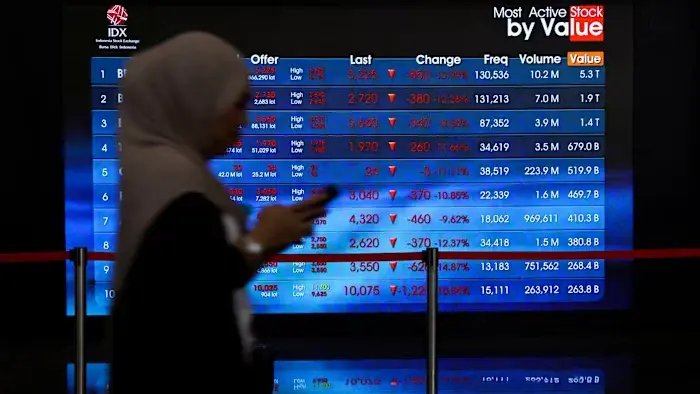
Indonesia’s stock exchange will remove companies with highly concentrated share ownership from the Jakarta Composite Index to address MSCI’s concerns over market investability. This move aims to prevent a downgrade to 'standalone market' status, which could trigger billions in capital outflows. The affected firms represent nearly 18% of the index’s value, including major entities like Dian Swastatika Sentosa and Barito Renewables Energy.
Key points
- The Indonesia Stock Exchange announced it will expel tightly held companies from the Jakarta Composite Index following a virtual meeting with MSCI officials.
- The excluded companies account for approximately 18% of the index’s combined market value, though the exchange has not specified when the removals will take effect.
- MSCI threatened to reclassify Indonesia as a 'standalone market' due to severe concerns regarding market accessibility, liquidity, and the treatment of minority shareholders.
- The Jakarta Composite Index rose 5% on Tuesday after the announcement, recovering from a 14% drop between Friday and Monday following the initial MSCI warning.
- Specific companies identified for expulsion include Dian Swastatika Sentosa and Barito Renewables Energy, both of which recently faced regulatory fines for violations during their initial public offerings.
Background
This development follows a severe market crash in mid-October 2026, where the Jakarta Composite fell over 11% to its lowest level since 1998 after MSCI signaled a potential downgrade from emerging to standalone status. The crisis triggered a $5 billion response from the state-backed Danantara fund and prompted Bank Indonesia to face pressure to raise interest rates to stabilize the rupiah, which weakened past 18,000 per dollar. Prior reforms included lowering the minimum stock trading price to Rp1 and doubling the minimum free float requirement to 15% to improve liquidity.
Why it matters
Avoiding a standalone classification is critical for Indonesia to maintain access to global passive funds. A downgrade would likely trigger multiple billions of dollars in outflows, exacerbating the country’s status as the world’s worst-performing stock market this year, which has already fallen 40% amid foreign investor withdrawals of nearly $5 billion.
What to watch
Analysts, including Yanuar Rizky of the Bright Institute, warn that removing stocks from the index may not fully resolve MSCI’s concerns, urging the exchange to focus on broader transparency reforms. The exchange has not disclosed a timeline for the expulsions, and MSCI will likely evaluate whether these measures sufficiently address issues of market opacity and insider trading.
- Indonesia expels tightly held companies from Jakarta index in bid to avoid MSCI downgrade Financial Times
- ‘A Ticking Time Bomb’: An Economic Crisis Looms in Indonesia The New York Times
- Indonesia’s Influencer Strategy Jars Investors Facing MSCI Risk Bloomberg.com
- Indonesia battles to stabilise market after MSCI expulsion threat Reuters
- Indonesia Stocks Log Worst Day Since 1998 on MSCI Downgrade Warning WSJ
Want the full story? Read the original reporting
Read on Financial Times