
Quant Funds Hit by Historic Momentum Crash Amid Treasury Bond Intervention
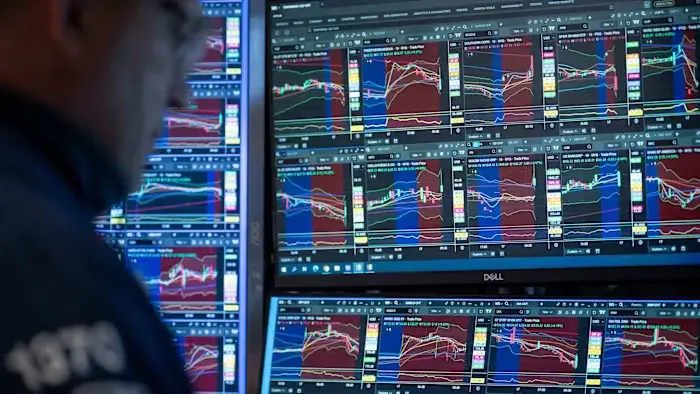
Systematic hedge funds recorded their worst single-day performance in over two years on Wednesday, driven by extreme volatility in momentum strategies. This sharp decline occurred despite a broader market rally, triggered by the US Treasury’s decision to double its long-term bond buybacks and a massive surge in Moderna shares following positive cancer trial results. While the S&P 500 rose, quant funds lost 1.4%, marking a historic divergence between systematic strategies and broad market indices. The event highlights ongoing instability in AI-related sectors and the fragility of current market correlations.
Key points
- Systematic long-short hedge funds fell 1.4% on Wednesday, their worst day in more than two years, according to Goldman Sachs.
- Morgan Stanley noted its 'pure momentum' index dropped over 4% while the S&P 500 rose, a divergence not seen in at least five years.
- The US Treasury announced it would at least double purchases of long-term government debt to stabilize the bond market.
- Moderna shares nearly tripled after announcing successful trial results for an experimental skin cancer therapy, triggering risk-off moves in quant portfolios.
- Goldman Sachs described the global momentum index as being 'well outside historical norms' during the session.
Background
This volatility follows a turbulent July, where AI-related stock sell-offs caused significant losses for hedge funds, including a $15bn loss for Jane Street linked to its bet on Situational Awareness. Earlier in August, the Treasury expanded its debt repurchase program to support long-term yields, which had previously pushed gold prices to a three-month high. The current instability is viewed as a continuation of the 'quant winter' dynamics seen in 2018, where automated strategies struggled with shifting market factors.
How outlets are covering it
Goldman Sachs emphasized the historic nature of the momentum factor's decline, noting it exceeded three standard deviations of daily volatility. Morgan Stanley highlighted the unprecedented divergence between momentum trades and the broader S&P 500 index. CNBC focused on the broader context of hedge fund underperformance in July, describing it as the worst in over 20 years relative to the S&P 500, and noted that funds have begun diversifying away from AI stocks. Futu/Trading Desk analysis suggested the volatility is driven by a 'liquidity trap' and panic selling rather than fundamental deterioration, while noting that AI investment logic is being reshaped due to falling inference costs and eroding competitive moats for compute providers.
Why it matters
The event signals a potential structural shift in market dynamics, where traditional momentum strategies are failing to align with broad market performance. It underscores the risks of concentrated AI exposure and the impact of Treasury interventions on market stability. For investors, it highlights the need for diversification away from crowded AI trades and the importance of monitoring volatility in systematic strategies.
What to watch
Investors should watch for continued volatility in momentum factors and AI-related sectors. The Treasury's expanded bond buybacks may continue to influence long-term yields and currency values. Goldman Sachs expects AI investment logic to be reshaped, with pressure on valuations for compute providers and upstream supply chains. Further market rotation and de-risking are likely as participants adjust to the new volatility regime.
- Quant hedge funds suffer worst day in 2 years as Treasury boosts buyback and Moderna shares leap Financial Times
- Goldman says hedge funds suffered worst underperformance vs S&P 500 in July in more than 20 years of data CNBC
- Rokos, Brevan Join Hedge Fund Peers Wrongfooted in July Havoc Bloomberg.com
- Hedge funds are doubling down on Big Tech even after summer volatility triggered a massive portfolio cleanup MarketWatch
- Goldman Sachs Trading Desk: The current U.S. equity market is exhibiting "extreme volatility," and the investment logic for AI is being reshaped. 富途牛牛
Want the full story? Read the original reporting
Read on Financial Times