
Wall Street Banks on Midterm Gridlock to Drive 2026 Stock Gains
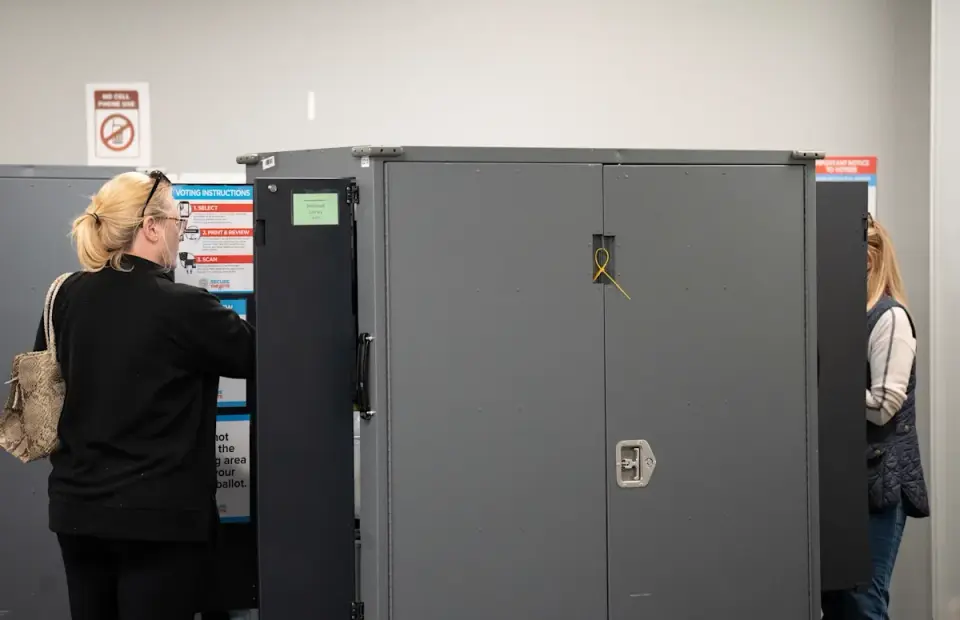
With the 2026 U.S. midterm elections approaching, major financial institutions are positioning portfolios around the likelihood of congressional gridlock. JPMorgan and Citi strategists suggest that a divided Congress, which has historically favored the S&P 500, may trigger a rally in healthcare and defense stocks. While prediction markets heavily favor a Democratic 'Blue Wave,' analysts note that even this outcome would likely result in only marginal policy shifts rather than a total reset. Investors are advised to focus on stock picking over broad sector bets, as the impact of election outcomes on equities is expected to be more nuanced than in previous cycles.
Key points
- JPMorgan strategist Dubravko Lakos-Bujas notes that gridlock has been associated with positive S&P 500 returns since 1950, with a 21% average gain on election dates compared to 18% for single-party control.
- Citi strategists Daniel Topp and Scott Kronert predict U.S. equities may decline ahead of the vote due to uncertainty, but expect this trend to reverse once the election concludes.
- Prediction markets on Polymarket assign an 88% probability to a Democratic 'Blue Wave,' defined as Democrats securing over 218 House seats and 49 Senate seats.
- JPMorgan identifies healthcare, defense, and non-AI tech stocks as beneficiaries of gridlock, while a Republican 'Red Wall' would favor AI infrastructure and traditional energy.
- Citi recommends positioning in healthcare stocks before the election, noting that a divided Congress is unlikely to deliver a material hit to S&P 500 fundamentals.
Background
Recent historical analysis indicates that a split Congress under President Trump has not historically sunk stocks, with the Dow averaging 12.9% annual returns in such periods. Earlier in 2026, investor Ken Fisher argued that midterm gridlock often triggers a multi-quarter rally, with the S&P 500 rising in 84% of fourth quarters in midterm years since 1925. Additionally, Senate Democrats recently blocked the Stop Insider Trading Act, highlighting the current legislative gridlock and the potential for continued policy stalemate.
How outlets are covering it
JPMorgan and Citi both emphasize the historical positive correlation between congressional gridlock and stock market performance, though they differ on short-term volatility. JPMorgan focuses on sector-specific opportunities, such as healthcare and defense, while Citi warns of a pre-election dip in equities and a rise in Treasury yields and the dollar. Business Insider highlights that prediction markets favor a Democratic wave, but JPMorgan argues this would not necessarily lead to a broad policy reset, instead resulting in marginal shifts through funding negotiations. Citi, meanwhile, suggests that the differentiated impact across sectors means investors should not expect a material hit to S&P 500 fundamentals, even if the political landscape shifts.
Why it matters
The 2026 midterm elections will determine the balance of power in Congress for the remainder of President Trump's term, directly influencing policy areas such as AI infrastructure, healthcare, and energy. The outcome will shape the regulatory environment for major sectors, with gridlock potentially favoring stability and continuity, while a unified party control could lead to significant policy shifts. Investors are advised to prepare for a post-election rally, as historical data suggests that political uncertainty often precedes a period of market growth.
What to watch
Investors should monitor the outcomes of the 2026 midterm elections, particularly the balance of power in Congress, to adjust their portfolios accordingly. JPMorgan and Citi recommend focusing on healthcare and defense stocks in the short term, while also preparing for potential shifts in AI infrastructure and energy sectors depending on the election results. The post-election period is expected to bring a reversal in the pre-election trends, with equities potentially rising as policy uncertainty fades.
- Every midterm election since 1946 has meant one thing for stocks finance.yahoo.com
- JPMorgan lays out the investing playbook for 3 midterm-election scenarios Business Insider
- US Midterms, EUR/USD, Delta and Bitcoin eToro
- US midterm elections: What they mean for businesses and markets Firstpost
- Citi Strategists: U.S. Equities May Decline Ahead of Midterm Elections, While Treasury Yields and the Dollar Rise 富途牛牛
Want the full story? Read the original reporting
Read on finance.yahoo.com