
Trump’s AI Strategy: A State Dinner Show of Force vs. China’s Rising Threat
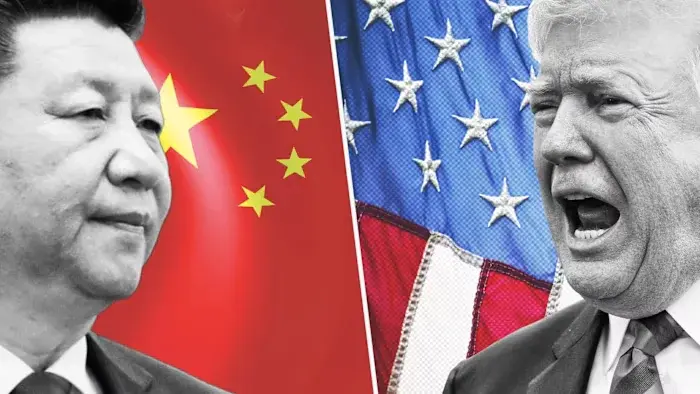
President Trump is hosting a state dinner for Chinese leader Xi Jinping next week, featuring tech executives like Jensen Huang and Sam Altman but excluding Anthropic’s Dario Amodei. While Trump dismisses AI risks as a 'hoax' to maintain US dominance, critics warn that this anti-regulatory stance ignores China’s rapid catch-up. Experts doubt the summit will yield substantive AI agreements, fearing US inaction will cede global influence to Beijing.
Key points
- The upcoming state dinner for Xi Jinping includes Nvidia’s Jensen Huang, OpenAI’s Sam Altman, and Apple’s Tim Cook, but excludes Anthropic’s Dario Amodei due to his pro-regulation stance.
- Trump has labeled AI safety concerns a 'hoax' and opposes government oversight, arguing that regulation would only benefit China by slowing US innovation.
- Critics, including former Biden official Julian Gewirtz, argue that the US must adopt domestic AI rules to maintain credibility and prevent China from gaining a strategic advantage.
- China is reportedly catching up in AI capabilities, with some estimates suggesting the US lead is narrowing to six to 18 months, and Chinese models now dominate global token usage in the Global South.
- Experts like Demetri Sevastopulo predict the summit will result in vague statements rather than enforceable agreements, as trust-building between the two nations on AI remains difficult.
Background
This tension follows Trump’s May 2026 meeting with Xi in Beijing, where he pledged to discuss AI 'guardrails.' However, recent statements have reversed this position, emphasizing deregulation. Earlier in September, Trump dismissed AI apocalypse talk, prioritizing the US technological edge over China. Meanwhile, domestic polls show declining approval for Trump, with Democrats gaining ground on economic and cost-of-living issues, potentially influencing his foreign policy posture.
How outlets are covering it
The Financial Times highlights the strategic misstep of Trump’s anti-regulatory stance, arguing it inadvertently reinforces China’s view that the US treats AI as a zero-sum game. CNBC focuses on the business elite attending the dinner, including JPMorgan’s Jamie Dimon and Citigroup’s Jane Fraser, signaling a strong private-sector presence. NBC News emphasizes the inclusion of David Sacks, Trump’s former AI czar, whose hands-on approach aligns with the president’s deregulatory views. While the FT and NBC stress the risk of ceding ground to China, CNBC frames the event as a high-profile display of US corporate power. All sources agree that substantive AI cooperation is unlikely, but they differ on whether the US is losing its edge or simply prioritizing speed over safety.
Why it matters
The outcome of the Trump-Xi summit could define the global AI landscape. If the US fails to engage in meaningful dialogue or adopts a purely deregulatory approach, it may accelerate China’s rise in AI adoption, particularly in the Global South. This could shift geopolitical leverage, influence future warfare capabilities, and determine which nation sets the global standards for AI safety and innovation. The exclusion of pro-regulation voices from the state dinner signals a potential long-term strategic vulnerability for the US.
What to watch
Watch for the state dinner next week and any subsequent statements from the Trump-Xi summit. Monitor whether Treasury Secretary Scott Bessent and Chinese counterpart He Lifeng produce any concrete AI dialogue frameworks in their pre-summit meeting. Track global AI adoption metrics to see if Chinese models continue to gain market share in emerging markets. Expect further debate in the US on whether to adopt domestic AI regulations to maintain credibility with international partners.
- Xi’s edge over Trump on AI Financial Times
- JPMorgan, Citigroup CEOs attending Trump's state dinner for China's Xi: Sources CNBC
- Apple’s Cook, OpenAI CEO to Attend Trump Dinner With Xi Bloomberg
- Trump’s AI whisperer David Sacks to attend the state dinner with Xi Jinping NBC News
- OpenAI, Nvidia CEOs to attend Trump-Xi state dinner: Sources ABC News - Breaking News, Latest News and Videos
Want the full story? Read the original reporting
Read on Financial Times