
Musk Blames Ambani for Starlink Delay in India
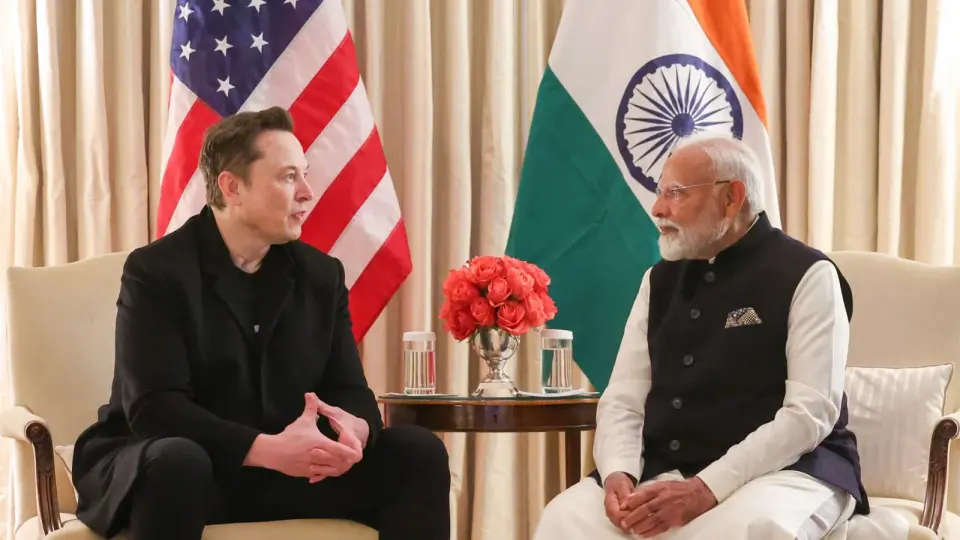
Elon Musk accused Indian billionaire Mukesh Ambani of blocking Starlink's launch in India, claiming the delay protects a monopoly. India's government rejected the claim, stating all satellite operators are at the same regulatory stage. Ambani's Jio is developing its own satellite network, while Starlink remains stalled despite years of compliance.
Key points
- Musk questioned if Ambani is the 'real boss of India' after Starlink failed to launch despite five years of regulatory compliance.
- India's Ministry of Communications stated that Starlink, Jio, and Eutelsat OneWeb are all awaiting security clearances and spectrum allocation.
- Jio is planning a network of 1,600 low Earth orbit satellites and 23 ground stations to expand connectivity.
- Rahul Gandhi criticized the government for favoring businessmen, prompting Musk to call the situation 'troubling'.
- Starlink has 11,000 satellites globally but faces security concerns in India regarding unlicensed terminal usage.
Background
This dispute follows earlier tensions where Musk accused Indian oligarchs of blocking Starlink to protect market dominance. The conflict highlights broader issues with foreign tech giants navigating Indian security protocols and regulatory frameworks. Recent developments include SpaceX's orbital launch tests and Musk's fluctuating net worth, but the core issue remains the stalled commercial launch in India despite prior partnership agreements with local telecom giants.
How outlets are covering it
CNBC emphasizes the direct confrontation between Musk and Ambani, noting that Jio and Airtel control 80% of the Indian telecom market. It highlights that Starlink signed distribution deals with these companies in March 2025, creating a complex rivalry. BBC focuses on the regulatory fairness, citing the Indian government's assertion that the approval process is non-discriminatory. BBC also notes security concerns, mentioning recovered Starlink equipment in drug smuggling and military operations, which Musk denied were active services. Both sources agree that Jio is developing indigenous satellite technology, but CNBC frames it as a competitive threat, while BBC presents it as part of a broader market expansion.
Why it matters
The outcome determines whether Starlink can enter one of the world's largest internet markets, potentially disrupting the dominance of Jio and Airtel. It also tests India's regulatory consistency for foreign satellite operators and raises questions about security protocols for low Earth orbit communications in a strategic region.
What to watch
Regulators must decide on security clearances and spectrum allocation for Starlink, Jio, and Eutelsat OneWeb. Jio is expected to proceed with its indigenous satellite network rollout. Musk may continue public pressure on Indian authorities, while the government maintains its stance on fair regulatory processes.
- 'Real boss of India?': Elon Musk takes aim at Indian billionaire Ambani as Starlink launch stalls CNBC
- Starlink: Why Elon Musk is taking on Mukesh Ambani and Jio over satellite internet BBC
- Musk’s India Romance Ends in Acrimony as Starlink, Tesla Stall Bloomberg.com
- India denies bias in satellite internet approvals after Musk's 'oligarchs' jab Reuters
- "India Doesn't Allow Monopoly In Any Sector": Minister On Musk's Claims NDTV
Want the full story? Read the original reporting
Read on CNBC