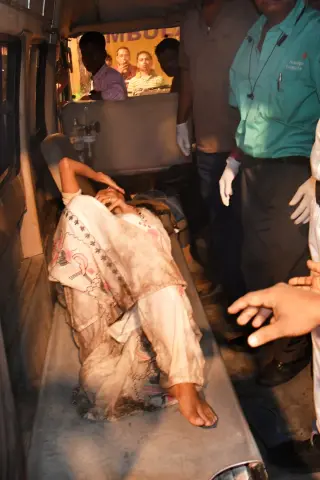
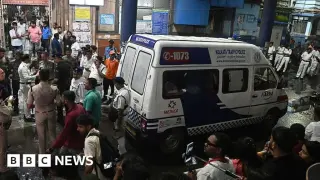
A stampede at a Hindu festival in Kolkata, India, killed 19 people and injured 25 after rain caused a crowd surge near a temporary pavilion. Authorities detained organizers and launched a high-court-led investigation into safety lapses.
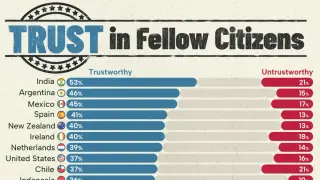
India leads a 31-country survey on interpersonal trust, with 53% of respondents viewing fellow citizens as trustworthy. Latin American nations rank high, while Japan places last, though most Japanese respondents remain neutral rather than distrustful.
At least 17 people have died in a crowd crush at a Hindu festival event in India, according to BBC reporting. The incident has raised urgent concerns about crowd management and public safety at large religious gatherings. No further details on the specific location, date, or cause of the crush were provided in the available source.
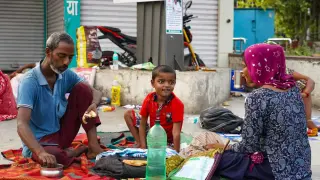
In New Delhi, thousands of low-income families sleep on sidewalks, in subways, and other public spaces near major public hospitals like AIIMS and Safdarjung Hospital. These patients and their caregivers travel from hundreds of miles away for specialized treatment but cannot afford lodging, forcing them to camp outside for weeks or months. While the hospitals provide subsidized medical care, they do not cover accommodation costs, leaving families to navigate a precarious existence on the pavement. A small ecosystem of volunteers, tea stalls, and charities provides basic support, but many still face hunger, exposure to the elements, and safety concerns. The situation highlights a critical gap in India’s public healthcare system, where access to treatment does not guarantee the ability to stay near the hospital during care.
India’s Special Intensive Revision (SIR) has removed 130 million names from voter rolls, triggering nationwide protests. Critics allege the purge disproportionately targets Muslims and benefits the ruling BJP, while the government defends it as a necessary cleanup of duplicates and deceased voters.
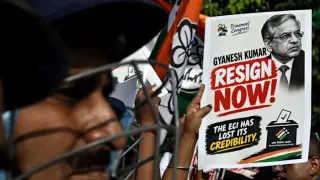
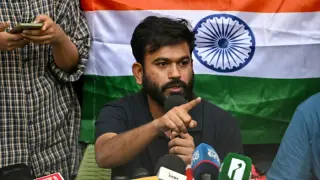
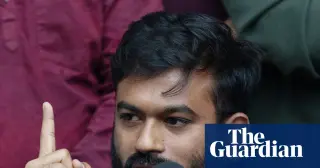
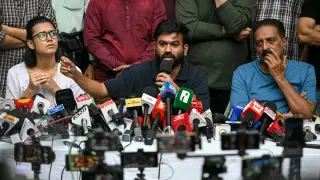
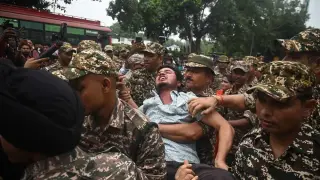
Indian police detained Abhijeet Dipke, founder of the youth-led Cockroach Janta Party (CJP), for the second time in a week as he attempted to reach a protest site in New Delhi. The demonstration, held despite heavy security, demanded the resignation of Chief Election Commissioner Gyanesh Kumar over a controversial voter roll revision. While authorities claim the revision removes duplicates and ineligible voters, critics argue it disenfranchises over 130 million people to favor the ruling Bharatiya Janata Party (BJP).
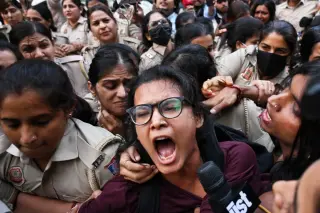
Indian police detained Abhijeet Dipke, the leader of the youth-led Cockroach Janta Party (CJP), on Friday in New Delhi. The arrest occurred before a planned demonstration at Connaught Place, where supporters intended to wave national flags. Authorities had previously issued Dipke a notice to cancel the event and closed the designated park. Despite the detention, approximately 2,000 protesters gathered, though police deployed heavy security forces to manage the area. The CJP continues to demand the resignation of Chief Election Commissioner Gyanesh Kumar over voter roll revisions.
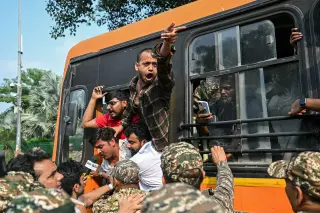
Indian police detained Abhijeet Dipke, founder of the youth-led Cockroach Janta Party (CJP), on October 16, 2026, as he attempted to reach a planned protest in New Delhi. The detention occurred despite police warnings and the closure of the intended venue, Central Park. The CJP and opposition groups have held near-daily protests this month demanding the resignation of Chief Election Commissioner Gyanesh Kumar over a voter list revision that critics claim favors Prime Minister Narendra Modi’s ruling party. While the government denies bias, the crackdown has intensified, with thousands of police deployed and other leaders detained.
On October 16, 2026, large crowds gathered in New Delhi for a flag-waving protest organized by the youth-led 'Cockroach' movement. Demonstrators demanded the resignation of Chief Election Commissioner Gyanesh Kumar, citing concerns over voter list revisions. Police detained prominent student leader Neha Bora during the event, continuing a pattern of crackdowns on protests that have intensified since early October.
Indian police detained Abhijeet Dipke, founder of the youth-led 'Cockroach Janta Party,' on Friday as he attempted to leave his residence for a planned protest in New Delhi. The detention occurred ahead of a demonstration in Connaught Place demanding the resignation of Chief Election Commissioner Gyanesh Kumar. Critics allege the ongoing voter list revision, which removed over 130 million names, favors Prime Minister Narendra Modi’s Bharatiya Janata Party, while the government denies these claims, stating the process aims to remove duplicate or ineligible entries. This is the latest escalation in a month of near-daily protests and police crackdowns.
Nike is establishing a new global campus in Bengaluru, India, as part of a long-term growth strategy to counter a 26% revenue drop in China. CEO Elliott Hill framed the move as a necessary investment in a market projected to become the world's third-largest retail hub by 2030. While the company continues its 'Pace' restructuring to save $2.5 billion by 2031, analysts debate whether this long-term bet addresses immediate operational failures or merely delays necessary short-term fixes.
Indian Prime Minister Narendra Modi faces his most significant domestic challenge in 12 years as a youth-led movement, the 'Cockroach Janta Party,' protests the removal of 130 million names from voter rolls. The unrest, sparked by a leaked medical exam and a Supreme Court justice’s derogatory remark, has forced the resignation of the education minister and exposed deep economic and democratic anxieties among young Indians.
Nepal's Prime Minister Balendra Shah has proposed a 'Himalayan Climate Resilience Mechanism' to unite India and China against shared climate risks, following devastating August floods that left over 1,455 dead and 5,285 missing. While the idea aims to share data and monitor glaciers, it faces significant hurdles due to unresolved territorial disputes and a history of broken hydrological data-sharing agreements between New Delhi and Beijing.
Massive youth-led protests in India are challenging Prime Minister Narendra Modi’s rule, triggered by a voter roll revision that removed 130 million names. The movement, led by the Cockroach Janta Party, has forced the resignation of the education minister and now demands the ouster of Election Commission chief Gyanesh Kumar. Authorities have responded with a heavy security crackdown in New Delhi, marking the most significant domestic challenge to Modi’s government since 2014.
Thousands of demonstrators marched in New Delhi on October 12, defying a government-imposed lockdown to demand the resignation of Chief Election Commissioner Gyanesh Kumar. The protests, led by opposition figures and the youth-focused Cockroach Janta Party, are driven by allegations that the Special Intensive Revision (SIR) of voter rolls removed 130 million names, potentially disenfranchising voters. While authorities have detained protest leaders and restricted assembly sites, the large turnout signals growing defiance against the ruling Bharatiya Janata Party.