
Dyson Launches $499 CameraJet: AI-Powered Toothbrush Merges Brushing and Flossing
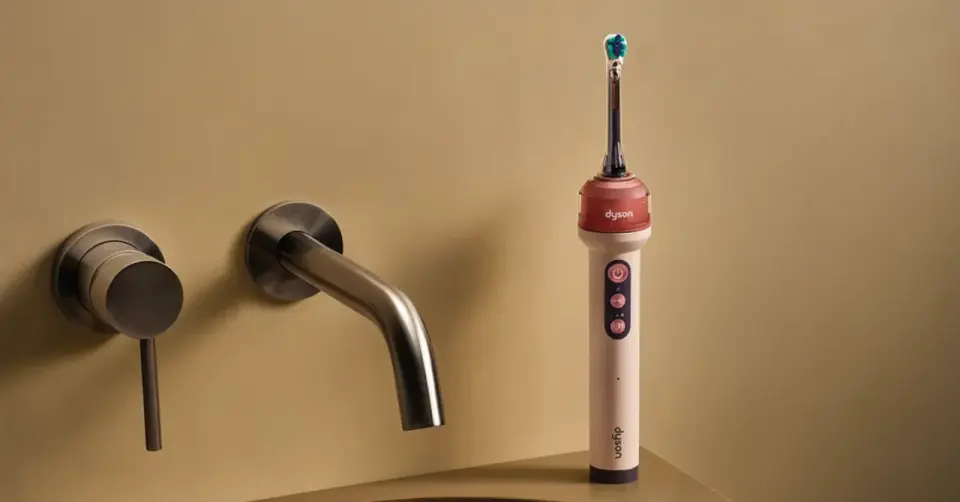
Dyson has entered the oral care market with the CameraJet, a $499 electric toothbrush that integrates a water flosser. The device uses an embedded endoscopic camera and AI to identify gaps between teeth, delivering targeted mouthwash jets while brushing. It connects to a smartphone app for live viewing and cleaning feedback, though it requires proprietary non-foaming toothpaste to function correctly.
Key points
- The CameraJet costs $499 and includes a refill dock, two brush heads, and a charging cable.
- It features a 'Gap Optical Targeting' system using a macro-lens camera that analyzes 28 images per second to detect gaps.
- An AI algorithm trained on 470,000 dental images triggers conical fluid jets within 100 milliseconds of detecting a gap.
- The device holds 12.5 milliliters of alcohol-free rinse in a tank that maintains pressure regardless of angle.
- Users must use non-foaming toothpaste and rinse to prevent foam from blocking the camera lens.
- The MyDyson app allows live viewing of the camera feed and provides coverage mapping, but images are not stored locally or in the cloud.
Background
Dyson is known for disrupting categories like vacuuming and hair care with high-tech, premium-priced appliances. Previous attempts to expand into other areas, such as electric vehicles and air-purifying headphones, resulted in significant financial losses or market failures. The CameraJet represents a new entry into the personal care sector, following the success of the Supersonic hair dryer, which accounts for a substantial portion of the company's US revenue. This launch follows Dyson's history of combining multiple technologies into single devices, such as the failed Zone headphones.
How outlets are covering it
Wired highlights the technical innovation, specifically the conical jet design and the six-year development period involving 470,000 training images, while noting the high price point. Morning Brew frames the product as a potential 'jewel' in Dyson's crown but questions its commercial viability, citing James Dyson's admission that the company may discontinue it if it fails like the EV project. Business Insider provides a broader historical context, contrasting the CameraJet with past flops like the washing machine and EV, while retail analyst Neil Saunders calls the product innovative but questions whether consumers will pay such a premium for a simple hygiene tool. All sources agree on the $499 price tag and the requirement for non-foaming consumables.
Why it matters
The CameraJet signals Dyson's intent to dominate the premium oral care market by leveraging its engineering expertise in fluid dynamics and AI. If successful, it could redefine consumer expectations for daily hygiene tools, moving them from basic mechanical devices to smart, data-driven appliances. However, the high cost and proprietary consumables may limit adoption, testing whether consumers are willing to pay a luxury premium for routine dental care.
What to watch
Dyson is set to launch its proprietary non-foaming toothpaste and low-foaming rinse soon, with a subscription service for consumables and replacement brush heads. The company will monitor market response closely, as James Dyson has indicated a willingness to discontinue the product if it does not achieve commercial success, similar to its previous failed ventures.
- Dyson’s Next Act Is an Electric Toothbrush With a Camera WIRED
- So there’s this $499 AI Dyson camera toothbrush Morning Brew
- Dyson makes everyday products into status symbols — or spectacular flops Business Insider
- What Dyson’s First Toothbrush Says About Oral Care’s Beauty Era vogue.com
- Dyson's $499 squirting AI camera toothbrush proves smart tech has officially gone too far Mashable
Want the full story? Read the original reporting
Read on WIRED