
Dyson Launches $499 CameraJet Toothbrush to Automate Flossing
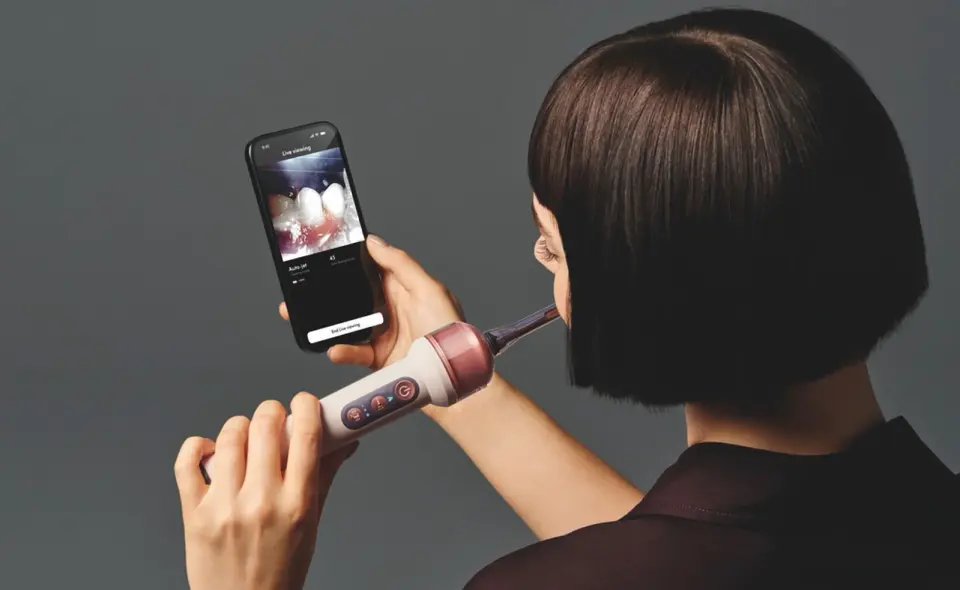
Dyson has launched the CameraJet, a $499 smart toothbrush that combines brushing, flossing, and rinsing into one device. It uses an AI-powered camera to detect gaps between teeth and triggers a precision jet of mouthrinse to clean them. The device was developed over six years by 661 engineers and 30 dental professionals, featuring a 100,000-pixel macro lens and a proprietary conical jet system designed to remove plaque more effectively than traditional water flossers. It connects via Wi-Fi and Bluetooth to an app for live viewing and cleaning insights, with no images stored in the cloud. The launch includes a docking station that refills the 12.5ml tank in three seconds, and Dyson is developing a proprietary non-foaming toothpaste to optimize camera visibility.
Key points
- The CameraJet costs $499 and is available in ceramic ultra blue and pink, including two brush heads, a charging dock, and a travel case.
- It features a 100,000-pixel macro lens and AI algorithm called Gap Optical Targeting, trained on 470,000 dental images, to detect interdental gaps within 100 milliseconds.
- The device uses a conical jet of mouthrinse to floss, which Dyson claims removes plaque more effectively than needle-like jets used by competitors like Waterpik.
- An anti-gravity tank holds 12.5ml of mouthrinse, allowing the jet to function in any orientation, including horizontal positions for cleaning back teeth.
- Brush heads contain RFID tags to track usage and signal when replacement is needed, while variable sonic oscillation prevents bristles from stalling.
- Dyson is developing a proprietary non-foaming toothpaste and low-foaming mouthrinse to prevent foam from obstructing the camera lens.
Background
Dyson previously entered the personal care market with the Supersonic hairdryer in 2016, which established the brand's premium pricing strategy in beauty and wellness. The CameraJet represents the company's first major entry into dental care, following years of research into oral hygiene habits. The device addresses the common issue that most people do not floss regularly, with Dyson citing that 9 in 10 people do not floss as often as recommended. The development process involved a five-year collaboration with the National University of Singapore to create a proxy plaque for testing, allowing engineers to iterate designs without clinical trials.
How outlets are covering it
CNET emphasizes the technical specifications, highlighting the 661 engineers involved and the 69% improvement in plaque removal in hard-to-reach areas compared to premium competitors. CNET notes the high price point, suggesting the $100 Oral-B iO Series 5 as a more affordable alternative for those seeking smart features. PR Newswire focuses on the engineering challenges, detailing the conical jet design and the anti-gravity tank that prevents air pockets, while stressing the privacy assurance that no images are stored. Allure provides a hands-on perspective, describing the device as a 'joy to use' and noting its quiet operation compared to traditional water flossers. Allure also highlights the secrecy surrounding the product, mentioning that Dyson employees are restricted from discussing new innovations with family members. Allure editors noted that the device is lighter than expected and that the jet sensation is pleasant, though one editor experienced a temporary jet failure in dark areas of the mouth, which was resolved by opening the mouth wider.
Why it matters
The CameraJet represents a significant shift in oral care technology by automating flossing, a task that most people neglect. By combining brushing, flossing, and rinsing into a single device, Dyson aims to improve compliance with dental hygiene recommendations. The device's AI-driven precision and privacy-focused design address concerns about data security in smart health devices. The high price point may limit widespread adoption, but it signals Dyson's intent to dominate the premium personal care market. The development of a proprietary non-foaming toothpaste indicates a move toward a closed ecosystem, similar to Dyson's approach with hair care products. This launch also highlights the growing trend of integrating AI and computer vision into everyday health devices, potentially setting a new standard for smart oral care.
What to watch
Dyson is expected to release a proprietary non-foaming toothpaste and low-foaming mouthrinse specifically designed for the CameraJet, though no specific release date has been announced. CNET is currently testing the device and plans to publish a review to assess its value relative to the $499 price tag. The company may expand the CameraJet's availability to more markets, with app functionality potentially varying by region. Dyson could also introduce additional brush head variants or accessories to complement the device. The success of the CameraJet may influence competitors to develop similar AI-driven oral care devices, potentially leading to a new category of smart dental products. Dyson may also leverage the CameraJet's technology in other personal care products, further expanding its presence in the health and wellness sector.
- Dyson Blasts Into Dental Care With a $499 Camera-Equipped Toothbrush CNET
- Dyson Debuts $499 AI-Powered Toothbrush With a Built-In Camera Yahoo Finance
- Dyson CameraJet: The first toothbrush with a camera and a jet, to target the gaps and remove plaque between your teeth PR Newswire
- We Were the First Editors to Try the New $499 Dyson Toothbrush Allure
- Dyson's first toothbrush "uses a camera to floss while you brush" Dezeen
Want the full story? Read the original reporting
Read on CNET