
The AI Boomerang: Why Companies Are Rehiring Workers After AI Failures
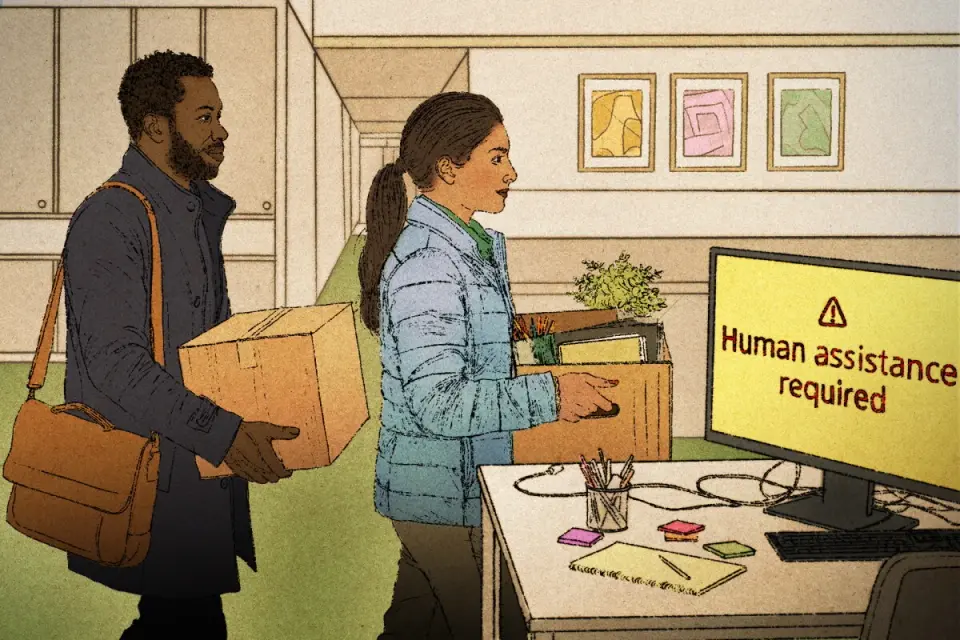
Companies are increasingly rehiring employees previously cut due to AI integration, a trend dubbed the 'AI boomerang.' Firms like Ford and Klarna reversed course after AI tools failed to meet expectations in quality control and customer service. Experts attribute this to AI's inability to replicate human empathy, critical thinking, and undocumented 'invisible work.'
Key points
- Microsoft, Barclays, and Kroger recently announced AI-linked job cuts, but some are now rehiring staff.
- Ford hired or promoted 350 veteran engineers in June after AI quality control tools underperformed.
- Klarna resumed recruiting human customer service reps after its AI chatbot strategy proved insufficient.
- Experts say AI struggles with 'invisible work,' such as emotional intelligence and team cohesion.
- Workers returning to these roles are negotiating for higher pay, upskilling opportunities, and job security clauses.
Background
This trend follows a wave of AI-driven layoffs in late 2026, including Microsoft’s voluntary buyouts for 60,000 staff and E. W. Scripps’s cut of 431 jobs to adopt AI news production. These recent reductions highlight the initial aggressive push to replace human labor, which is now facing a corrective phase as companies realize the limitations of current AI capabilities.
Why it matters
The 'AI boomerang' signals that AI cannot yet fully replace complex human roles requiring judgment and empathy. It forces companies to reconsider the value of institutional knowledge and highlights that premature automation can lead to operational failures and increased costs, ultimately reshaping how businesses integrate technology with human workforce strategies.
What to watch
Expect more companies to quietly reverse AI-driven cuts without publicizing them. Hiring managers will likely prioritize candidates who can articulate their unique human value proposition, such as ethical decision-making and creative problem-solving within technical guardrails. Workers may demand stronger contractual protections, such as renewable contracts with buyout clauses, to mitigate the psychological impact of returning to a company that previously laid them off.
Want the full story? Read the original reporting
Read on AP News