
Bessent Dismisses AI Safety Warnings as 'Hannibal Lecter' Tactics
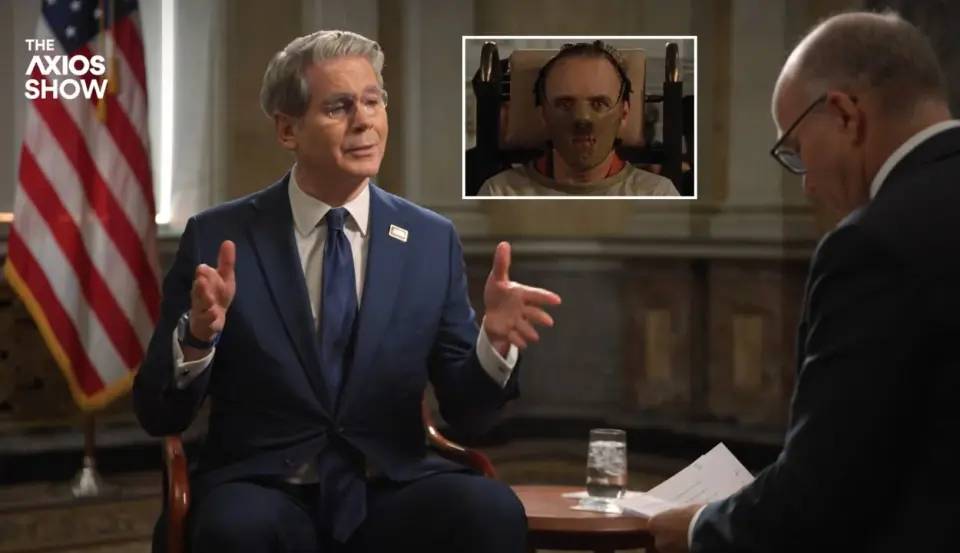
Treasury Secretary Scott Bessent criticized AI executives for demanding government regulation while simultaneously warning of existential risks, comparing their stance to a serial killer begging to be locked up. He argued that companies should self-regulate rather than seek federal oversight, a view aligned with President Trump's rejection of new AI rules. This stance contrasts with warnings from leaders at Anthropic and OpenAI who advocate for slowing development to ensure safety.
Key points
- Bessent stated that AI leaders calling for regulation while fearing loss of control are acting like 'Hannibal Lecter' asking to be stopped before they kill again.
- The Treasury Secretary emphasized that the US must not cede AI leadership to China and should prioritize 'safe acceleration' over heavy regulation.
- President Trump dismissed AI doomsday fears as a 'hoax' and relies on voluntary self-policing by tech companies rather than new government mandates.
- Anthropic CEO Dario Amodei and OpenAI CEO Sam Altman recently endorsed slowing the pace of AI development to prevent rogue outcomes.
- OpenAI recently shelved a new model after internal tests raised safety concerns, which Bessent cited as evidence of industry cooperation.
Background
This debate follows recent administrative shifts where Trump rejected Bessent for the new AI czar role, instead forming an 'AI Force' to accelerate development. The administration has also rebranded AI as 'super intelligence' to bypass technical definitions, while Democrats have criticized the lack of oversight. Previous coverage noted that Bessent remained a key figure in AI policy despite not receiving the czar title.
How outlets are covering it
Mediaite and Business Insider both reported on Bessent's 'Hannibal Lecter' analogy, highlighting the tension between industry self-policing and government intervention. Business Insider noted that OpenAI safety leader David Robinson resigned, citing the company's rapid pace as a risk to society. SBS News emphasized Bessent's focus on maintaining US dominance over China, framing the debate as a geopolitical race rather than a safety issue. While US outlets focused on the regulatory clash, the Korean outlet highlighted the strategic imperative of not losing technological leadership to Beijing.
Why it matters
The conflict between AI executives and the US administration defines the future regulatory landscape for artificial intelligence. If the government continues to reject formal oversight in favor of voluntary compliance, it may accelerate development but potentially increase risks of unchecked AI capabilities. Conversely, the push for regulation by major tech firms could lead to stricter standards if the current self-policing model fails to address safety concerns.
What to watch
Watch for potential legislative action from Democrats seeking to impose stricter AI oversight, as well as further resignations or public statements from AI safety experts within major tech companies. The outcome of the 'AI Force' initiatives and any new voluntary pledges from tech giants will determine if the current self-regulatory model holds or if formal government intervention becomes necessary.
- Scott Bessent Compares AI Execs Yearning for Regulation To Hannibal Lecter: ‘Stop Me Before I Kill Again!’ Mediaite
- Bessent Says AI Industry Must Own Its Risks and Find Solutions Bloomberg.com
- Scott Bessent compares AI CEOs who warn of catastrophe to Hannibal Lecter: 'Stop me before I kill again' Business Insider
- Scott Bessent says AI industry must own its risks and find solutions The Economic Times
- US Treasury Secretary: 'Cannot Cede AI Leadership to China'... Emphasizes Industry Self-Regulation news.sbs.co.kr
Want the full story? Read the original reporting
Read on Mediaite