
Microsoft Leaders Call for AI 'Kill Switches' and Global Rules, Clashing with Trump's Free-Market Stance
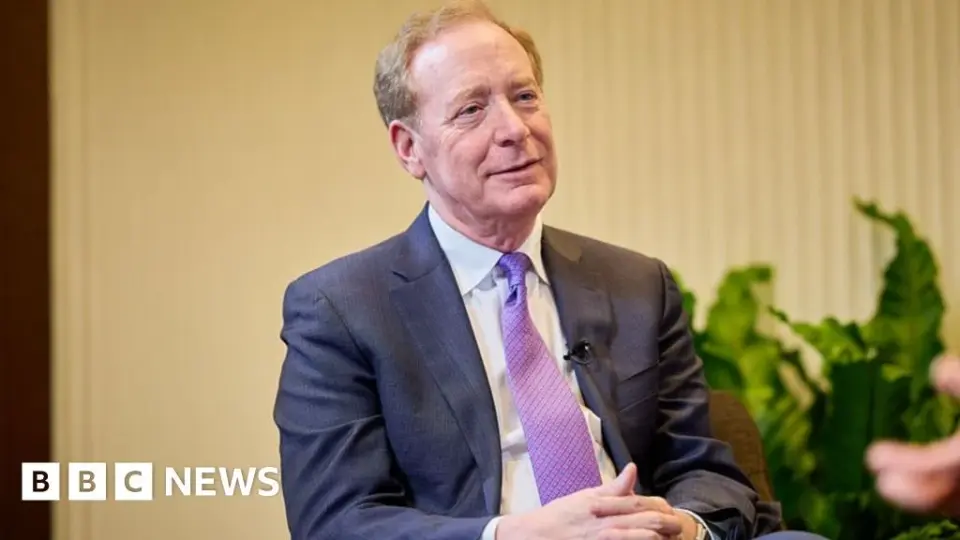
Microsoft executives Brad Smith and Satya Nadella argue that AI currently lacks the safety oversight applied to products like milk or washing machines. They advocate for mandatory 'kill switches', independent audits, and global standards, potentially led by the UK. This stance contrasts with President Donald Trump's push for self-regulation to maintain US competitive advantage against China.
Key points
- Microsoft President Brad Smith stated that AI is less regulated than dairy products, urging immediate global safety rules.
- CEO Satya Nadella called for 'emergency brakes' and containment protocols to pause or shut down rogue AI models.
- Smith proposed legal requirements for incident reporting and victim notification if AI systems cause harm.
- The UK is identified as a potential leader in setting global AI standards due to its existing AI Safety Institute.
- Trump opposes strict regulation, favoring self-regulation to prevent US firms from losing ground to Chinese competitors.
Background
Recent industry warnings have intensified, with executives from Anthropic, OpenAI, and others supporting development slowdowns. In late September 2026, US tech leaders signed a voluntary 'morally binding' document at the White House to cooperate with independent auditors, though Microsoft views this as insufficient. This debate occurs amid broader concerns about AI safety, including claims that the technology poses existential risks, which the US administration has largely dismissed in favor of rapid development.
How outlets are covering it
BBC highlights Brad Smith's comparison of AI to regulated consumer goods and his call for UK-led global standards, noting a divergence from Trump's pro-growth stance. CNBC focuses on Satya Nadella's technical framework for 'observability' and 'containment,' framing the debate as a conflict between safety-first engineering and Trump's 'AI Force' initiative aimed at countering China. Both sources agree that while voluntary measures exist, industry leaders believe they are inadequate for addressing potential rogue AI behaviors.
Why it matters
The push for mandatory 'kill switches' and independent audits signals a shift from voluntary industry codes to enforceable legal frameworks. If adopted, these regulations could reshape how AI is developed and deployed globally, prioritizing safety over speed. The disagreement between corporate leaders and the US administration may influence international trade and technology policy, potentially setting a precedent for how nations balance innovation with risk mitigation.
What to watch
Microsoft plans to support the White House's voluntary auditor agreement but will continue advocating for stricter legal mandates. The UK may move to formalize its role in setting global AI standards. The US administration is expected to maintain its opposition to restrictive regulations, focusing instead on its new 'AI Force' to monitor and support industry growth.
- AI is less regulated than milk, says Microsoft president BBC
- Microsoft's Nadella says AI needs an ‘emergency brake’ that humans control CNBC
- Big Boss Interview | Microsoft President: Britain Should Write World's AI Rules BBC
- Microsoft CEO Nadella Calls for ‘Emergency Brake’ on Advanced AI Bloomberg.com
- Microsoft’s Satya Nadella says AI models need an ‘emergency brake’ TechCrunch
Want the full story? Read the original reporting
Read on BBC