
China’s COMAC CE-25A completes first crewed electric flight, entering type certification review
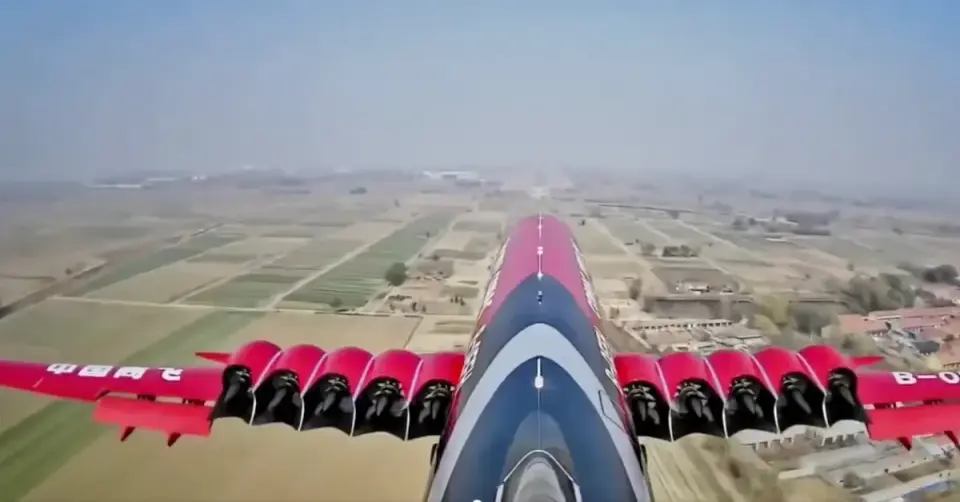
China’s state-backed Commercial Aircraft Corporation of China (COMAC) successfully completed the first crewed flight of its 19-seat battery-electric commuter plane, the CE-25A, on November 14, 2026, in Binzhou, Shandong Province. The aircraft, which weighs 10 tonnes and features a T-tail design with 10 electric ducted fans, carried two pilots and one flight test engineer. According to COMAC, all systems operated normally, and performance indicators met expectations. This milestone follows 19 prior unmanned autonomous test flights, the first of which occurred on February 2, 2026. The CE-25A has a specified range of 400 km and a cruise speed of 300 km/h. China’s Civil Aviation Administration of China (CAAC) has accepted COMAC’s application for a type certificate, initiating the airworthiness review process. However, no date has been set for commercial service. The aircraft was developed jointly by COMAC, battery giant CATL, and Shanghai Jiao Tong University. While Western competitors like Heart Aerospace have delayed targets and added fuel-burning backups, China’s progress in electric aviation is seen as part of a broader shift away from fossil fuels, mirroring its rapid adoption of electric trucks.
Key points
- The CE-25A completed its first crewed flight on November 14, 2026, in Binzhou, Shandong, with two pilots and one engineer aboard.
- The aircraft is a 10-tonne, 19-seat commuter plane with a 400 km range, 300 km/h cruise speed, and 2,400 m cruising altitude.
- It uses 10 electric ducted fans (five per wing) instead of propellers, and its name signifies compliance with China’s Part 25 airworthiness standards.
- The plane had already completed 19 unmanned autonomous test flights since its first flight on February 2, 2026.
- CAAC has accepted COMAC’s type certificate application, but no timeline for commercial service has been announced.
- The CE-25A was developed jointly by COMAC, CATL, and Shanghai Jiao Tong University, with CATL’s 'condensed' battery technology potentially used, though unconfirmed.
Background
China has been accelerating the electrification of its transport sector, with electric trucks already capturing over half of heavy truck sales in 2026, compared to just 0.3% in the US. This shift is driven by both environmental goals and the desire to reduce dependence on fossil fuels, particularly jet fuel, which saw a 63% price increase in early 2026. The CE-25A program, first revealed as a model at the 2023 China International Import Expo, has been in quiet development, with the full-size aircraft becoming public only after photos leaked in October 2026. The joint venture between COMAC, CATL, and Shanghai Jiao Tong University, established in July 2023 with CNY 600 million in registered capital, aims to develop electric aircraft using advanced battery technology, including CATL’s 'condensed' battery, which claims up to 500 Wh/kg energy density.
How outlets are covering it
Chinese state media, including Xinhua and CGTN, emphasized the CE-25A as a historic first for China’s aviation industry and a significant leap in the country’s push for electric aviation, highlighting the collaborative effort between COMAC, CATL, and Shanghai Jiao Tong University. They noted the successful completion of 19 unmanned test flights and the acceptance of the type certificate application by CAAC as major milestones. In contrast, Electrek framed the flight as part of a broader trend of China pulling ahead in electrification, comparing it to the rapid adoption of electric trucks and contrasting it with Western competitors like Heart Aerospace, which has delayed its service target to 2031 and added fuel-burning backups. Electrek also highlighted the potential for China’s battery technology, particularly CATL’s 'condensed' battery, to enable commercial-scale electric flight, while noting that the CE-25A’s 400 km range is limited compared to turboprops. Euronews reported the flight as a historic first for COMAC, noting the 16-minute, 60-km flight and the ongoing type certification process, but did not delve into the broader implications for the global aviation industry. All sources agreed on the basic facts of the flight, but differed in their emphasis on the strategic and competitive implications of China’s progress in electric aviation.
Why it matters
The successful crewed flight of the CE-25A marks a significant milestone in China’s push to electrify its aviation sector, potentially reducing its dependence on fossil fuels and addressing rising jet fuel costs. The acceptance of the type certificate application by CAAC is a critical step toward commercial service, although no timeline has been set. The aircraft’s development, involving key partners like CATL and Shanghai Jiao Tong University, highlights China’s integrated approach to advancing electric aviation technology. While the CE-25A’s 400 km range is limited compared to turboprops, it represents a starting point for short-haul electric flights, similar to the early stages of electric truck adoption. This progress could have global implications, as China’s leadership in electrification may influence international standards and competition in the aviation industry. Additionally, the success of the CE-25A could encourage further investment in electric aviation technology, potentially leading to more advanced and longer-range electric aircraft in the future.
What to watch
The next steps for the CE-25A involve the ongoing airworthiness review by CAAC following the acceptance of the type certificate application. COMAC has not provided a timeline for commercial service, but the successful completion of 19 unmanned test flights and the first crewed flight suggests continued progress in the certification process. The company may also need to address any issues identified during the review and potentially conduct additional tests to meet regulatory requirements. In the broader context, China may continue to invest in electric aviation technology, potentially leading to the development of more advanced and longer-range electric aircraft. The success of the CE-25A could also influence international competition, as Western competitors like Heart Aerospace and Eviation face delays and challenges. Additionally, the integration of CATL’s 'condensed' battery technology, if confirmed, could set new benchmarks for battery energy density in aviation, potentially enabling more commercial-scale electric flights in the future.
- China’s electric airliner era starts with a 19-seat plane and 400 km of range Electrek
- China's independently developed 10-tonne electric aircraft completes first piloted flight Xinhua
- Chinese electric passenger plane completes first crewed flight Euronews.com
- China's electric passenger plane aces first manned flight CGTN
- China’s COMAC completes first piloted flight of CE-25A electric aircraft AeroTime
Want the full story? Read the original reporting
Read on Electrek