
AI Delivery Robots Face Widespread Physical Abuse in U.S. Cities
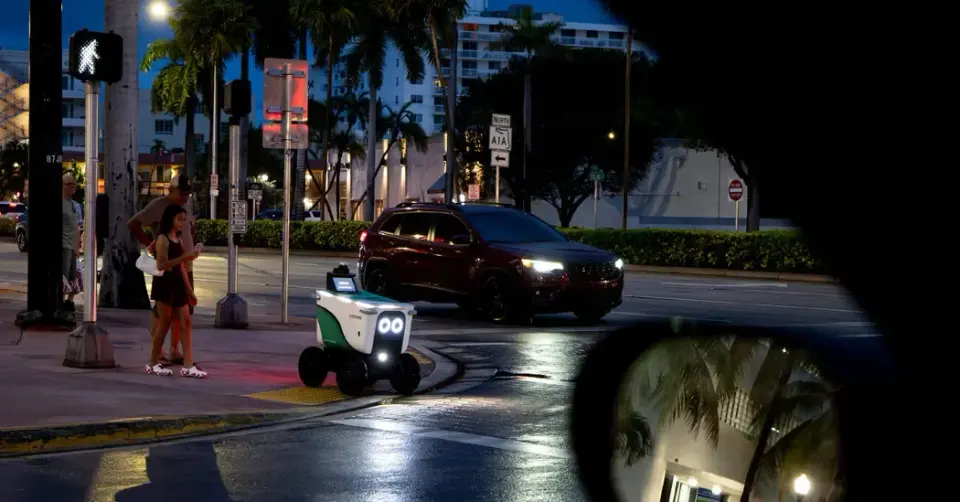
Autonomous food delivery robots operating in American cities are increasingly targeted by physical attacks, including kicking, beating, and deliberate toppling. While these AI-controlled machines handle most delivery tasks independently, they lack the ability to self-right after being flipped. The violence reflects broader public anxiety regarding artificial intelligence and its integration into daily urban life.
Key points
- Delivery robots are frequently subjected to physical abuse, including being kicked, beaten, and defaced, as they navigate sidewalks in various U.S. cities.
- The machines are small, squat, and AI-controlled, capable of performing most delivery tasks autonomously but unable to stand up if knocked over.
- The widespread destruction of these devices has sparked significant public debate and concern regarding the societal acceptance of AI technology.
- The issue is not isolated to a single incident; reports indicate a pattern of 'mayhem' following the deployment of these robots in urban environments.
Background
This incident occurs amidst a broader expansion of autonomous technology in consumer services, including the recent launch of new robot gadgets at IFA 2026 and the integration of AI in everyday devices like smartphones. While previous concerns focused on data privacy and technical reliability, the current crisis highlights a shift toward physical resistance and public hostility toward visible AI infrastructure.
Why it matters
The physical destruction of delivery robots signals a critical friction point between technological advancement and public sentiment. If AI-driven infrastructure is met with consistent violence, it may hinder the adoption of autonomous services in urban areas, forcing companies to reconsider deployment strategies or invest in more robust, tamper-proof designs. This also raises questions about how society will regulate and protect emerging AI technologies from public backlash.
What to watch
Companies like DoorDash and Uber Eats may need to reassess their deployment strategies, potentially introducing more durable hardware or limiting operations to less hostile areas. Regulatory bodies might also need to address the legal status of these machines and the consequences of damaging them. Public education campaigns could be launched to mitigate fear and hostility toward AI technology.
Want the full story? Read the original reporting
Read on The New York Times