
Amazon Prime Air Targets 500 U.S. Cities Amid Safety Scrutiny and Noise Complaints
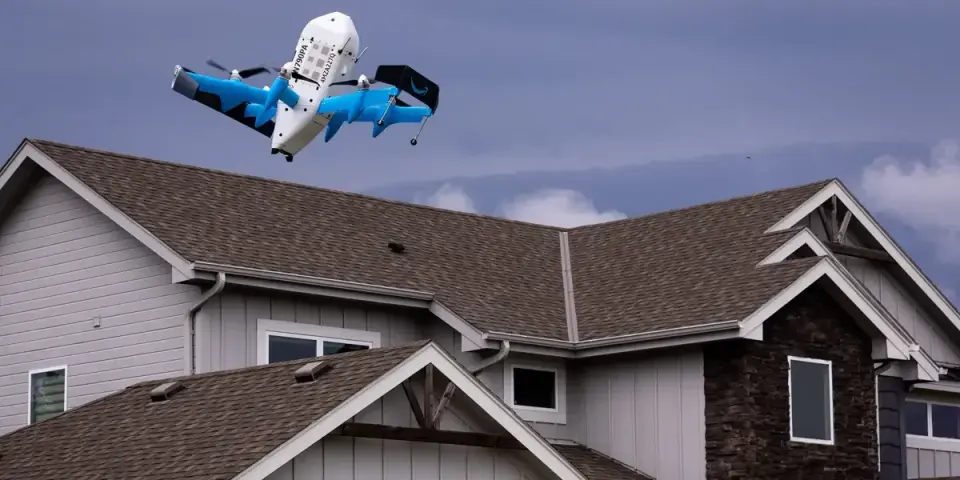
Amazon is expanding its Prime Air drone delivery service to nearly 500 U.S. cities by the end of 2026, a sixfold increase from its current footprint. The expansion includes new markets in Illinois, Georgia, Ohio, Idaho, and New York, with delivery times averaging 60 minutes for packages weighing 5 pounds or less. While the company aims for one million deliveries this year, it faces ongoing safety investigations and significant community backlash regarding noise pollution.
Key points
- Amazon plans to expand Prime Air to nearly 500 U.S. cities and towns by year-end, a sixfold increase from its current 11 metro areas.
- The service covers approximately 175 square miles per site, delivering items weighing 5 pounds or less within a 7.5-mile radius.
- Most orders arrive within 60 minutes, though some are delivered in as little as 30 minutes or even a few minutes.
- Amazon is testing a 'gentle delivery' mechanism using a retractable tether to handle fragile items, replacing the current 13-foot drop method.
- The expansion follows a 2024 regulatory greenlight for long-range drone deliveries, enabling operations beyond initial hubs in Dallas and Phoenix.
Background
Amazon first proposed drone delivery in 2013, but the program faced years of regulatory delays and technical challenges. The service launched in 2022, initially limited to suburban areas near Dallas and Phoenix. Recent expansions have been driven by new FAA approvals for longer-range flights and the integration of drone operations into larger robotic sort centers, allowing for a wider variety of products to be delivered.
How outlets are covering it
Business Insider emphasizes the ease of checking eligibility via the Amazon website and highlights the speed of delivery, noting that most orders arrive within an hour. CNBC focuses on the ambitious growth targets, citing an internal meeting where Prime Air VP David Carbon projected one million deliveries this year, while also detailing safety incidents in Arizona and Texas that triggered FAA and NTSB investigations. Ars Technica provides a broader competitive landscape, noting that rivals like Wing and Zipline have already surpassed one million deliveries, and highlights the growing noise complaints from residents in Michigan and Texas who describe the sound as comparable to a 'flying leaf blower.'
Why it matters
The rapid expansion of drone delivery signals a shift in last-mile logistics, potentially reducing reliance on traditional ground vehicles and lowering emissions. However, the success of this model depends on resolving community concerns regarding noise and privacy, as well as maintaining a strong safety record amidst increasing operational density. The competition from established players like Wing and Zipline suggests that drone delivery is becoming a standard expectation for fast e-commerce fulfillment.
What to watch
Amazon expects to add more locations in the coming months as it works toward its 500-city goal. The company will continue to refine its 'Detect-and-Avoid' safety systems and test new delivery mechanisms, such as the tethered drop, to expand the types of items that can be delivered. Regulators will likely monitor the ongoing safety investigations, while local communities may continue to raise concerns about noise and privacy, potentially influencing future regulatory frameworks for urban drone operations.
- Amazon is rolling out drone delivery to 500 cities. Here’s how to see if they'll deliver to your house. Business Insider
- Amazon to expand drone service to nearly 500 cities after targeting 1 million deliveries this year CNBC
- Amazon aims for delivery drones to reach 500 US neighborhoods by end of 2026 Ars Technica
- Amazon to Expand Drone Deliveries to Suburban Chicago, Atlanta Bloomberg.com
- STORY REMOVED: US--Amazon Drone Delivery Expansion finance.yahoo.com
Want the full story? Read the original reporting
Read on Business Insider