
Amazon Prime Air drone crashes on Michigan garage after hitting fiber-optic cable, triggering FAA probe
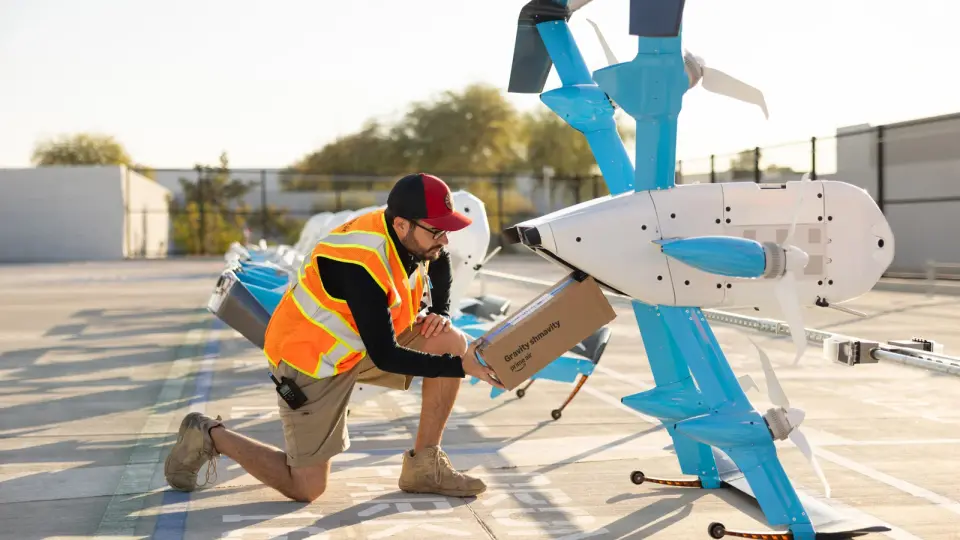
An Amazon Prime Air delivery drone crashed onto a neighbor's garage roof in Huntington Woods, Michigan, on November 20 after striking a fiber-optic cable during takeoff. The incident, which occurred shortly after the drone delivered a shampoo order, has prompted an investigation by the Federal Aviation Administration. While no injuries were reported, the crash highlights concerns about the reliability of Amazon's obstacle-avoidance technology as the company expands its drone network across the United States.
Key points
- The incident occurred on November 20 in Huntington Woods, Michigan, when an Amazon MK30 drone struck a fiber-optic cable and power lines during takeoff, causing it to land on a neighbor's garage roof.
- The FAA opened an investigation after posting a preliminary accident notification on November 23, while the National Transportation Safety Board is gathering information but has not yet decided whether to launch its own probe.
- Amazon stated that the drone successfully delivered a shampoo order to Jim Brennan's backyard before losing a propeller and crashing; the company claims this was the first such crash in the Detroit area, though sources familiar with the program suggest otherwise.
- Amazon Prime Air operates nearly 6,000 flights daily and has delivered hundreds of thousands of packages in 2026, with plans to expand to nearly 500 cities by the end of the year.
- Amazon provided a $100 gift card to the affected homeowner and offered to help with repairs, while the customer has since been placed on a 'no-drones' list as a precaution.
Background
This incident follows a series of Amazon drone mishaps, including two crashes into a construction crane in Tolleson, Arizona, in October 2025, and incidents in Waco, Texas, and Richardson, Texas, in late 2025 and early 2026. Amazon has been expanding its Prime Air service, which currently operates from 11 U.S. sites, with a goal to reach nearly 500 cities by the end of 2026. The FAA's proposed Part 108 rule, which would standardize beyond-visual-line-of-sight drone operations, remains in the proposal stage as of August 2026.
How outlets are covering it
While Amazon emphasized that incidents are 'extremely rare' and that safety is its top priority, critics and local sources question the effectiveness of the MK30's sense-and-avoid technology, which failed to detect the thin fiber-optic cable. WXYZ 7 News reported that sources familiar with Amazon's program indicated this was not the first crash in Michigan, a claim Amazon denied. NBC News highlighted the temporary loss of internet access for neighbors, while CNN focused on the rapid response from Amazon teams and the minor nature of the damage.
Why it matters
The crash underscores safety concerns as Amazon rapidly scales its drone delivery network to nearly 500 cities by the end of 2026. The incident may influence the FAA's regulatory framework for beyond-visual-line-of-sight operations and could lead to stricter oversight of autonomous delivery systems in residential areas.
What to watch
The FAA is expected to continue its investigation into the November 20 crash, while the NTSB will determine whether to open its own probe. Amazon is expected to review its obstacle-avoidance technology and delivery procedures in response to the incident. The company's expansion to nearly 500 cities by the end of 2026 remains on track, though the incident may prompt further scrutiny of its safety protocols.
- Amazon drone crashes on garage after delivering shampoo, draws FAA probe Ars Technica
- Amazon drone crashes into garage after delivering shampoo CNN
- Amazon drone delivering shampoo snags on wire and tumbles onto Michigan man’s garage roof NBC News
- Amazon delivery drone crashes into Huntington Woods garage after completing a shampoo delivery WXYZ Channel 7
- Amazon delivery drone crashes onto Huntington Woods garage after hitting fiber-optic line, neighbor says ClickOnDetroit | WDIV Local 4
Want the full story? Read the original reporting
Read on Ars Technica