
Amazon targets 500 US drone delivery zones by year-end amid safety and noise disputes
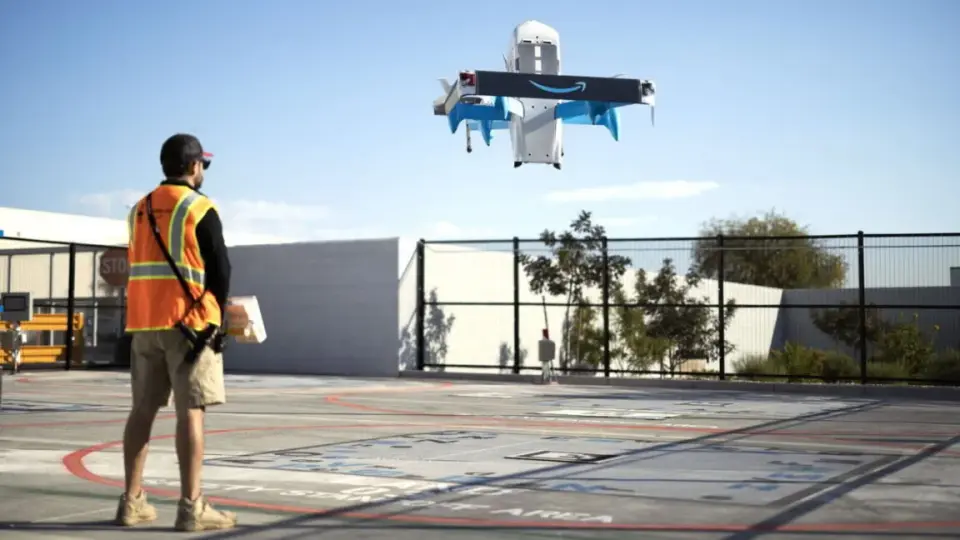
Amazon announced on August 19 that it plans to expand its Prime Air drone delivery service to nearly 500 US cities and towns by the end of 2026, representing a sixfold increase from its current footprint. The expansion includes new coverage in Chicago, Cleveland, Atlanta, Syracuse, and Boise, with each site covering approximately 175 square miles. While the company aims for 1 million deliveries this year, the rollout faces ongoing challenges regarding safety incidents, regulatory investigations, and community complaints about noise pollution.
Key points
- Amazon’s Prime Air service currently operates in 10 cities across seven states, with plans to add six new metropolitan areas by year-end.
- The company projects 1 million drone deliveries in 2026, though it has completed hundreds of thousands so far, with most orders arriving within 30 to 60 minutes.
- Prime Air drones can carry items weighing up to 5 pounds that fit within a large shoebox, with a delivery radius of about 7.5 miles from facilities.
- The expansion follows a 2024 regulatory approval from the FAA for long-range drone deliveries, which enabled Amazon to move beyond initial markets in Texas and Arizona.
- Amazon is testing a 'gentle delivery' mechanism using a retractable tether to handle fragile or perishable items, replacing the previous 13-foot drop method.
Background
Amazon founder Jeff Bezos first proposed drone delivery in 2013, but the service faced years of regulatory delays and technical hurdles. The company received critical FAA approval for long-range flights in 2024, allowing it to expand from initial pilots in Dallas and Phoenix to 11 metro areas. This latest expansion is part of a broader push to integrate drone delivery into Amazon’s same-day and ultra-fast delivery strategies, following earlier coverage of the company’s Q2 2026 earnings performance.
How outlets are covering it
Ars Technica and CNBC both highlight the aggressive expansion timeline and the 1 million delivery target, but they differ in emphasis regarding operational challenges. Ars Technica focuses heavily on community backlash, citing specific noise complaints from residents in Michigan and Texas, as well as privacy concerns. It notes that Amazon’s drones have caused multiple safety incidents, including crashes into a crane in Arizona and an internet cable in Texas, which are under investigation by the FAA and NTSB. CNBC, however, frames the expansion as a sign of momentum and commercial success, quoting Prime Air VP David Carbon’s confidence in the service’s demand. CNBC also notes that Amazon is behind competitors like Alphabet’s Wing and Zipline in total delivery volume, with Wing having already surpassed 1 million commercial deliveries. Yahoo Finance provided no substantive content, only stock market data, so it offers no perspective on the story.
Why it matters
The expansion of drone delivery to 500 US neighborhoods will significantly impact urban and suburban communities, potentially increasing convenience but also raising issues of noise pollution, privacy, and safety. As Amazon scales up, it faces regulatory scrutiny and competition from rivals like Walmart, Wing, and Zipline, which are also expanding their drone networks. The success of this rollout will determine whether drone delivery becomes a standard part of last-mile logistics or remains a niche service limited by public acceptance and technical reliability.
What to watch
Amazon expects to launch Prime Air in Chicago, Cleveland, Atlanta, Syracuse, and Boise in the coming months, with additional locations to follow later in 2026. The company will continue to test its 'gentle delivery' tether system and expand product eligibility. Meanwhile, the FAA and NTSB will likely conclude their investigations into recent drone crashes. Competitors like Walmart and Zipline are also scaling up, with Walmart aiming to expand to 270 stores by 2027 and Zipline targeting 1 million daily deliveries by 2029. Community reactions and potential local council interventions will be key indicators of the service’s long-term viability.
- Amazon aims for delivery drones to reach 500 US neighborhoods by end of 2026 Ars Technica
- Amazon to expand drone service to nearly 500 cities after targeting 1 million deliveries this year CNBC
- Amazon Prime Air delivery drones coming to NE Ohio: Residents have mixed reactions FOX 8 News
- Amazon to Expand Drone Deliveries to Suburban Chicago, Atlanta Bloomberg.com
- STORY REMOVED: US--Amazon Drone Delivery Expansion Yahoo Finance
Want the full story? Read the original reporting
Read on Ars Technica