
Amazon’s 1 Million Robots: How AI Arms Are Reshaping Warehouse Work and Safety
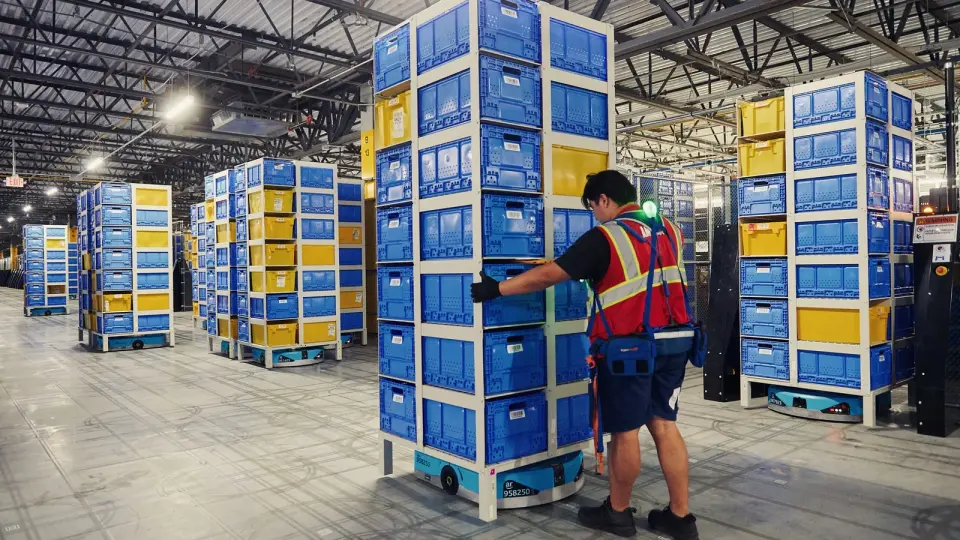
Amazon operates over 1 million robots in its warehouses, a fleet it plans to expand significantly through new manufacturing facilities in Texas and Indiana. While the company argues that robotic arms like Vulcan and Cardinal reduce physical strain by handling heavy or high-reach tasks, critics and researchers highlight that automation often increases the pace of work, leading to higher rates of repetitive motion injuries. The integration of AI foundation models allows robots to handle millions of product variations, but the tension between efficiency and human safety remains a central debate in the logistics sector.
Key points
- Amazon has deployed over 1 million robots, primarily wheeled mobile units, to support its 200 million Prime subscribers and 1.5 million human employees.
- The company is expanding robot production with new factories in Austin, Texas, and Greenwood, Indiana, aiming to more than double its robotic arm fleet this year.
- Advanced robotic arms like Cardinal and Sparrow use AI to sort and pack packages, while the newer Vulcan arm incorporates force-feedback sensors for precise handling in inventory pods.
- Amazon claims its Global Recordable Incident Rate has improved by 43 percent since 2019, attributing this to robots taking on dangerous tasks, though critics dispute this narrative.
- Internal documents reported by The New York Times suggest Amazon may reduce US hiring by 160,000 by 2027 due to automation, a claim the company attributes to a single internal group.
Background
This development follows Amazon’s 2012 acquisition of Kiva Systems, which marked the beginning of its large-scale robotics integration. The current expansion builds on previous deployments of mobile robots like Sequoia and Hercules, which have been central to Amazon’s fulfillment strategy for over a decade. The recent introduction of AI-driven arms represents a shift from simple mobile logistics to complex, AI-guided manipulation of diverse products.
Why it matters
The balance between automation and human labor in warehouses sets a precedent for the future of work in logistics and manufacturing. As AI enables robots to handle more complex tasks, the potential for reduced hiring and increased productivity is significant, but the long-term impact on worker safety and job security remains a critical issue for policymakers and labor advocates.
What to watch
Amazon plans to scale up the use of Vulcan robotic arms in 2027 and continue expanding its robot manufacturing capacity. The company will likely face ongoing scrutiny from labor groups and researchers regarding injury rates and the pace of work in automated facilities, while internal debates about hiring reductions may influence future workforce planning.
Want the full story? Read the original reporting
Read on Ars Technica