
Anthropic Mathematician Claims AI-Assisted Proof of Riemann Hypothesis Amid Verification Delays
Levent Alpöge, a mathematician at Anthropic, claims to have solved the 170-year-old Riemann hypothesis using the company's Claude AI model. The proof, submitted in Lean code, is over 250,000 lines long and awaits independent verification. This claim follows a wave of AI-driven mathematical breakthroughs, including OpenAI's recent solutions to fluid dynamics problems, sparking debate over the reliability of AI-generated proofs.
Key points
- Levent Alpöge announced on Friday that he used Anthropic's Claude chatbot to create a proof for the Riemann hypothesis over six weeks.
- The proof is written in Lean, a formal verification language, and exceeds 250,000 lines of code.
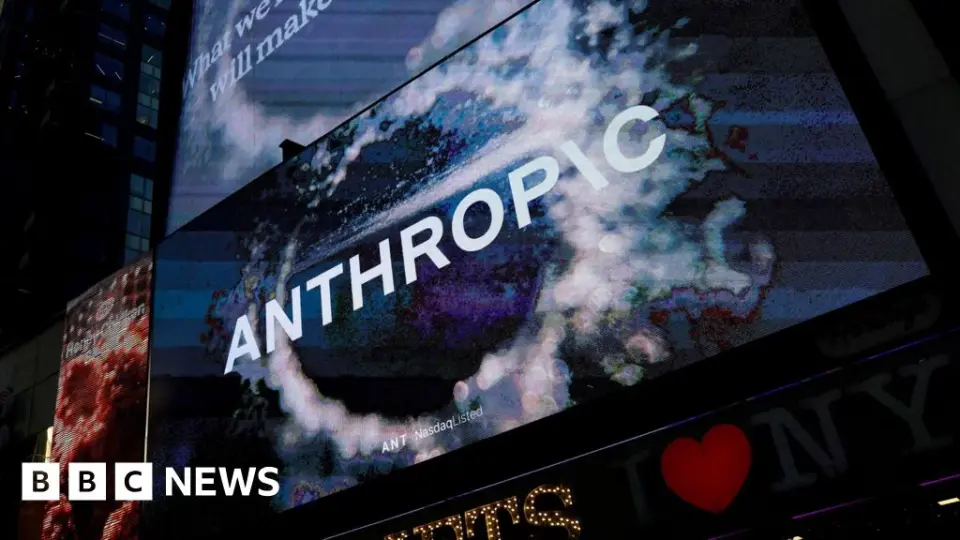
- Anthropic recently went public with a US stock market debut, which Alpöge noted as an awkward timing for the announcement.
- Prominent mathematician Terence Tao stated that verifying the proof will take time, though Alpöge is available to assist with the process.
- OpenAI previously claimed to solve parts of the Navier-Stokes equations in 88 hours using AI agents, a claim that remains unverified and controversial.
Background
In October 2026, OpenAI released over 700 AI-generated mathematical papers, claiming solutions to 372 open problems, including variations of the Riemann hypothesis. This release caused a verification crisis, with some papers retracted for errors and early-career researchers facing career disruptions. The current claim by Alpöge follows this period of intense scrutiny regarding AI's role in high-level mathematics.
How outlets are covering it
BBC emphasizes the timing of the announcement relative to Anthropic's IPO and the scale of the Lean code proof. The New York Times highlights the skepticism from mathematicians like Brian Conrad, who criticized Alpöge for releasing a proof he did not fully understand, and notes a concurrent, independent proof attempt by Alessandro Masullo. Both sources agree that verification is pending, but NYT provides more detail on the academic community's mixed reactions, including praise from James Maynard and shock from Alex Kontorovich.
Why it matters
The Riemann hypothesis is considered the most famous unsolved problem in mathematics, with broad implications for number theory and cryptography. If verified, this proof would mark a historic shift in how mathematical breakthroughs are achieved, potentially accelerating AI's integration into fundamental scientific research. However, the lack of immediate verification raises concerns about the reliability of AI-generated proofs and the integrity of academic standards.
What to watch
Independent mathematicians will review the Lean code to verify the proof's validity. This process may take months. The academic community will continue to debate the ethical and methodological implications of using AI for high-level mathematical research, particularly regarding transparency and credit attribution.
- Anthropic may have solved major maths problem Reimann hypothesis BBC
- Anthropic Mathematician Claims to Solve Riemann Hypothesis With Help From Claude The New York Times
- Anthropic Mathematician Says AI Has Solved the Most Famous Problem in Math WSJ
- World in Brief: Tech sell-off intensifies; Anthropic claims a mathematical breakthrough The Economist
- Using AI, mathematician claims to have solved one of math’s great mysteries The Washington Post
Want the full story? Read the original reporting
Read on BBC