
Anthropic mathematician claims AI-assisted proof of Riemann hypothesis
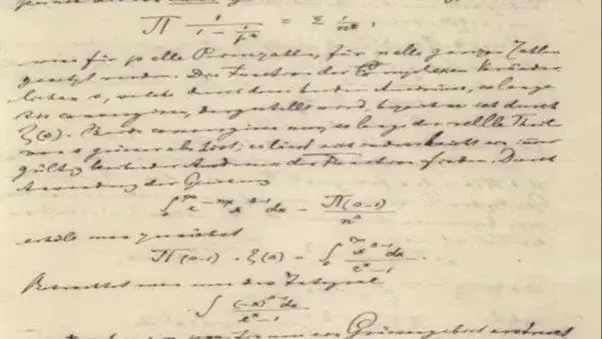
Levent Alpöge, a mathematician at Anthropic, claims to have solved the Riemann hypothesis using the Claude AI model. The proof, published in Lean code but not yet independently verified, would be a historic breakthrough in number theory. Experts warn that rigorous scrutiny is required to confirm the validity of the claim.
Key points
- Levent Alpöge, an Anthropic employee and mathematician, announced on Friday that he used the Claude model to develop a proof for the Riemann hypothesis.
- The Riemann hypothesis, formulated in 1859, is a central unsolved problem in number theory regarding prime numbers.
- Alpöge published the findings in Lean, a programming language for mathematical proofs, rather than a traditional prose explanation.
- He stated the AI-assisted work involved 250,000 pages of calculations and that Claude significantly outpaced him in the final stages.
- The proof has not yet been independently verified by the broader mathematical community.
- Mark Chaplain, president of the London Mathematical Society, called the announcement a historic development.
Background
This claim follows a series of high-profile AI-assisted mathematical announcements. In October 2026, OpenAI released hundreds of AI-generated mathematical papers, some of which were retracted due to errors, sparking debate about the quality and integrity of AI-generated proofs. Additionally, OpenAI and Anthropic recently claimed to disprove the Exponential Time Hypothesis, a foundational assumption in computer science. These events have raised concerns among mathematicians about the reliability of AI outputs and the future of human-led research in the field.
Why it matters
If verified, this would be the first AI-assisted solution to one of the Millennium Prize problems, potentially revolutionizing both mathematics and the understanding of AI capabilities. It also highlights the growing tension between AI labs and the mathematical community over the transparency and reliability of AI-generated proofs.
What to watch
The mathematical community will begin the process of independently verifying the proof published in Lean. Experts expect this to take time and involve rigorous scrutiny. If confirmed, it could lead to significant advances in number theory and other areas of mathematics. If not, it may further fuel debates about the limitations and risks of AI in scientific research.
- Anthropic staffer claims solution to mathematics’ Riemann hypothesis Financial Times
- Anthropic mathematician claims to prove Riemann hypothesis, most famous problem in all of math Scientific American
- Using AI, mathematician claims to have solved one of math’s great mysteries The Washington Post
- Anthropic Mathematician Says AI Has Solved the Most Famous Problem in Math WSJ
- World in Brief: Anthropic mathematician claims Riemann hypothesis proof; the firm’s shares slide The Economist
Want the full story? Read the original reporting
Read on Financial Times