
Anthropic researcher claims AI-assisted proof of Riemann hypothesis, sparking verification race
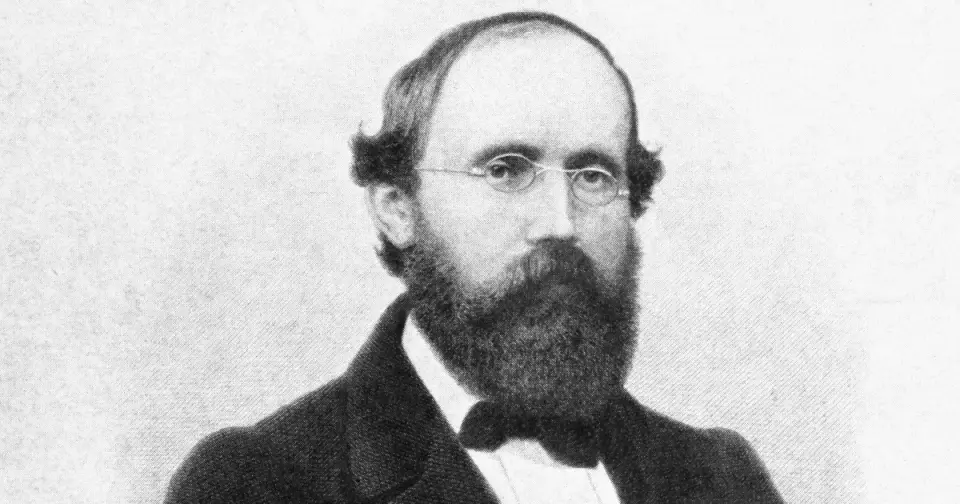
Levent Alpöge, a mathematician at Anthropic, claims he used the company’s Claude AI model to prove the Riemann hypothesis, a 167-year-old unsolved problem in pure mathematics. He posted a four-page explanation and 17 million lines of Lean code on his website, stating that Claude 'far outpaced' him near the finish line. Independent experts are currently verifying the claim, but no human has yet fully reviewed the argument. If confirmed, this would resolve a key question regarding prime number distribution and impact internet security algorithms. The announcement follows Anthropic’s recent IPO and raises questions about AI’s role in mathematical research.
Key points
- Levent Alpöge claims Claude helped him prove the generalised Riemann hypothesis in approximately six weeks.
- The proof was submitted as 17 million lines of Lean code, a programming language that verifies mathematical reasoning step-by-step.
- Independent mathematicians are translating the code into English to verify the logic, a process expected to take one to two weeks.
- The Riemann hypothesis, proposed in 1859, is one of seven Millennium Prize problems, each carrying a $1 million award.
- The claim impacts cryptography and internet security, as many algorithms assume the hypothesis is true.
- The announcement coincided with Anthropic’s debut on the Nasdaq stock market, which Alpöge acknowledged as 'horrible' timing.
Background
This development follows a wave of AI-driven mathematical breakthroughs in 2026. In October, OpenAI released over 700 AI-generated manuscripts, claiming to solve 372 open problems, though some were later retracted due to errors. This sparked debate about the reliability of AI proofs and the impact on early-career researchers. Earlier in September, OpenAI also claimed its AI solved part of the Navier-Stokes problem, another Millennium Prize issue. The current claim by Alpöge represents a significant escalation in AI-assisted mathematical discovery, moving from partial progress to a potential full proof of a foundational conjecture.
How outlets are covering it
Al Jazeera emphasizes the potential impact on internet security and the collaborative nature of the proof, noting that Alpöge credited Claude heavily. The Guardian highlights the controversy surrounding private tech companies using massive resources to solve problems, citing concerns about environmental damage and the 'boasting' nature of such breakthroughs. Both sources agree that the proof is unverified and that human mathematicians are currently struggling to interpret the Lean code. The Guardian also notes that an independent mathematician in Italy, Alessandro Masullo, released an incomplete proof of the same problem on the same day, stating he did not use AI due to trust issues. This contrast highlights the divide between AI-assisted and traditional mathematical approaches.
Why it matters
The Riemann hypothesis is considered the most important unsolved problem in pure mathematics. A verified proof would settle a question that has occupied mathematicians for 167 years and has implications for hundreds of other mathematical results. Beyond pure math, the hypothesis underpins certain algorithms used in internet security; proving it would provide certainty that these algorithms work as intended. Furthermore, this event marks a potential shift in how mathematical research is conducted, with AI playing a central role in generating proofs that humans must then verify and interpret.
What to watch
Independent mathematicians are currently translating the 17 million lines of Lean code into English to verify the proof. Experts expect a clearer understanding of the argument within one to two weeks. If the proof holds up, it could lead to a Fields Medal for Alpöge and a $1 million award from the Clay Mathematics Institute. The broader mathematical community will continue to debate the role of AI in research, with some expressing concern about the dominance of private tech companies in solving complex problems.
- Riemann hypothesis: Has the world’s most famous maths problem been cracked? Al Jazeera
- Anthropic Mathematician Claims to Solve Riemann Hypothesis With Help From Claude The New York Times
- AI may have solved the most important problem in mathematics The Economist
- Anthropic Mathematician Says AI Has Solved the Most Famous Problem in Math WSJ
- Anthropic mathematician claims he used Claude to prove 19th-century Riemann hypothesis The Guardian
Want the full story? Read the original reporting
Read on Al Jazeera