
Basecamp Research Raises $140M to Scale AI-Driven Biological Discovery
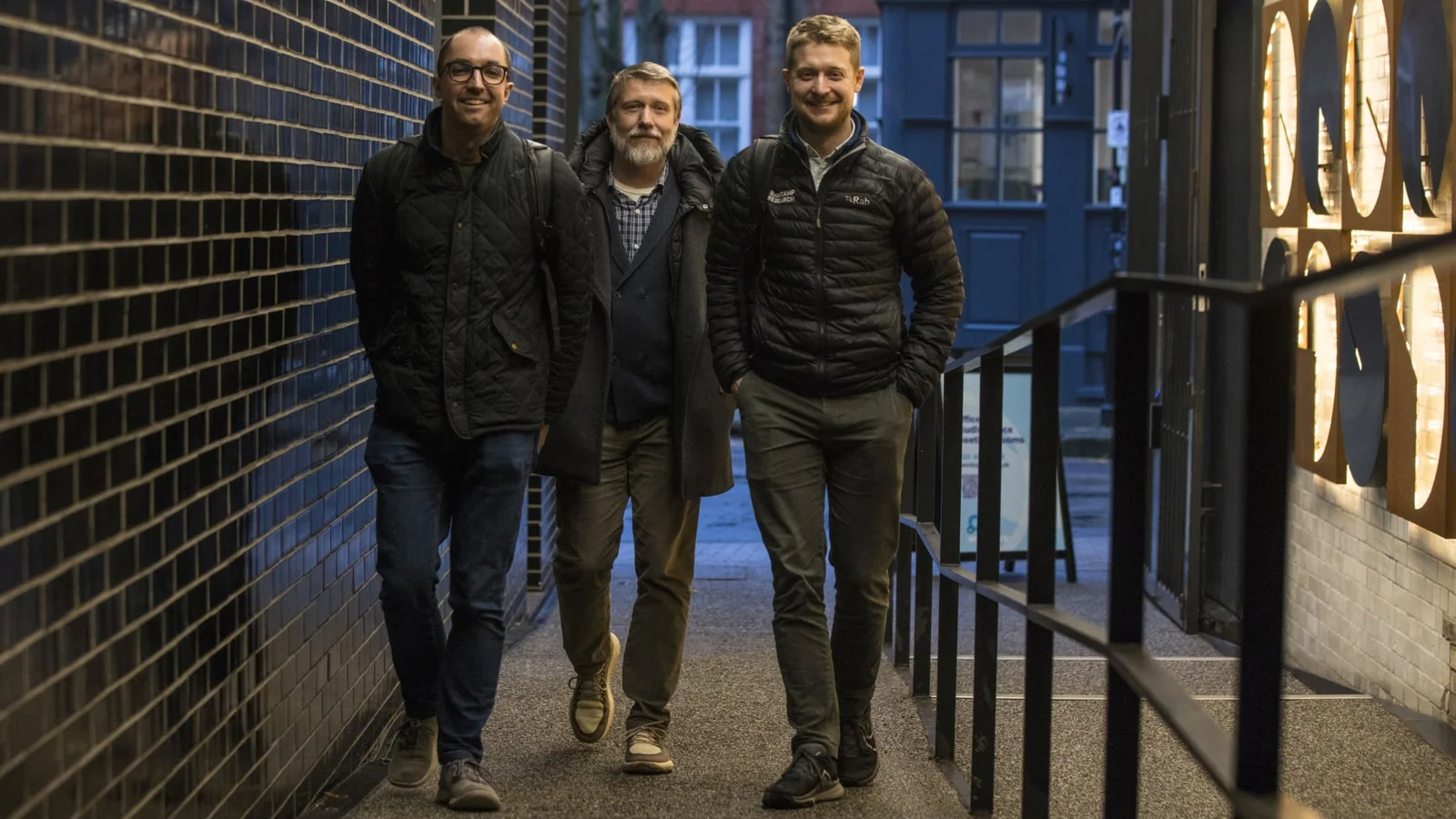
London-based AI startup Basecamp Research has secured a $140 million Series C funding round led by S32, with participation from Nvidia, Anthropic’s Anthology Fund, and the NATO Innovation Fund. The capital will support the expansion of its EDEN AI models, which analyze genetic data from diverse global ecosystems to design antibiotics and gene therapies. The company aims to move its six therapeutic candidates from lead optimization toward clinical trials, focusing on in vivo cell therapies and antimicrobial peptides.
Key points
- Basecamp Research raised $140 million in a Series C round led by S32, with investors including Nvidia, Anthropic’s Anthology Fund, the NATO Innovation Fund, and Redalpine.
- The company’s EDEN models are trained on a dataset of approximately 15 trillion DNA tokens, collected from over 30 countries and 208 partner organizations, aiming to surpass public genome databases in biodiversity coverage.
- Basecamp’s pipeline includes six programs, all currently in lead optimization, focusing on CAR-T cell therapies for blood cancer and autoimmune diseases, liver gene therapy for phenylketonuria, and antimicrobial peptides.
- Recent mouse trials showed that an AI-designed candidate, EDEN-7, performed comparably to last-resort antibiotics against multidrug-resistant bacteria, marking a key step from computational design to biological validation.
- The company allocates one-third of its GPU resources to reinforcement learning to refine model outputs, emphasizing that biological data requires different scaling laws than language models.
Background
Basecamp Research was founded in 2020 (though some sources cite 2019) to address the limitations of public genome databases, which are heavily skewed toward human and common species. The company’s approach contrasts with traditional pharma AI efforts, which often rely on siloed, small datasets. This funding round follows a broader trend of AI leaders from major tech firms pursuing science-focused startups, such as former OpenAI executive Kevin Weil’s recent venture. The company’s strategy aligns with the growing belief that biological AI requires massive, diverse data inputs to achieve meaningful medical breakthroughs, a view supported by its partnership with Microsoft and its participation in the Trillion Gene Atlas initiative.
How outlets are covering it
Endpoints News highlights the financial milestone and the strategic importance of the funding for advancing Basecamp’s pipeline, noting the company’s initial challenge in convincing investors of its genetic database potential. The Decoder provides a deeper technical perspective, featuring CTO Philip Lorenz’s argument that biology is a far more complex problem for AI than language, requiring orders of magnitude more data. Lorenz emphasizes that while public databases are limited, Basecamp’s diverse sampling from extreme environments offers a more comprehensive view of biological processes. The Decoder also notes the company’s cautious approach to clinical translation, acknowledging that while lab results are promising, significant hurdles remain in delivery and safety for human applications. Both sources agree on the potential of AI-designed molecules but differ in emphasis: Endpoints focuses on the business and funding aspect, while The Decoder delves into the technical challenges and data strategy.
Why it matters
Basecamp Research’s funding and progress underscore the growing intersection of AI and biotechnology, where large-scale data collection and advanced models are being used to accelerate drug discovery. The company’s success in generating active antimicrobial peptides and advancing gene therapy candidates could reshape how new treatments are developed, potentially reducing the time and cost associated with traditional clinical trials. This development also highlights the importance of diverse biological data in training AI models, challenging the dominance of human-centric datasets in the field.
What to watch
Basecamp Research plans to use the new funding to expand its EDEN models and push its therapy candidates toward preclinical and clinical stages. The company aims to grow its dataset to one quadrillion tokens within 18 months, leveraging the Trillion Gene Atlas initiative. Key milestones will include the transition of its lead optimization programs into preclinical studies, with a focus on in vivo cell therapies and antimicrobial peptides. The company will also continue to refine its models through reinforcement learning and targeted experiments, aiming to address challenges in delivery and safety for human applications.
- Basecamp raises $140M Series C, unveils six-program pipeline in test of its AI Endpoints News
- AI-based drug developer Basecamp valued at $800 million after $140 million funding round Reuters
- UK start-up raises $140m in quest for world’s rarest genetic code The Times
- Basecamp Research Raises $140 Mln In Oversubscribed Series C Funding TradingView
- Inside Basecamp Research, the AI startup turning evolution into training data The Decoder
Want the full story? Read the original reporting
Read on Endpoints News