
Delta’s weight-check glitch delays 1,000 flights as US intelligence chief warns of more tech disruptions
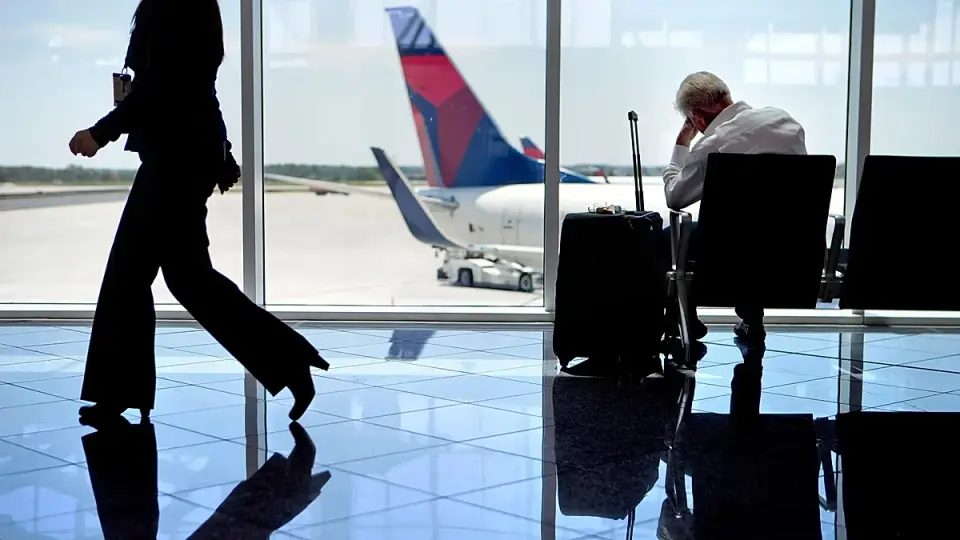
A software failure in Delta Air Lines’ weight-and-balance system caused over 1,000 flight delays at Atlanta’s Hartsfield-Jackson airport on Sunday, just days before the Thanksgiving travel rush. Director of National Intelligence Jay Clayton warned that Americans should expect more such disruptions as the country undergoes a major cycle of cybersecurity upgrades and AI integration. While officials attribute recent outages to maintenance and patching rather than coordinated cyberattacks, the incidents have affected air travel, banking, and government networks, prompting concerns about infrastructure resilience.
Key points
- Delta Air Lines experienced a software fault in its weight-check system on Sunday, causing over 1,000 flights to run late and 3% to be cancelled, with 58% of its schedule delayed.
- Director of National Intelligence Jay Clayton stated that the US is in a major upgrade cycle, leading to 'glitches, gaps, interruptions in service' as organizations roll out security patches and AI adaptations.
- The FAA briefly held flights to Atlanta for roughly an hour, though it confirmed its own air traffic control technology was not involved in the Delta issue.
- Recent outages have also affected Microsoft Outlook, JPMorgan Chase, and the National Security Agency’s NSANet, with officials attributing these to maintenance rather than coordinated attacks.
- Treasury Secretary Scott Bessent compared the disruptions to a 'vaccine,' suggesting that short-term glitches from cybersecurity investments will improve long-term resilience.
Background
This incident follows a series of US infrastructure failures in November 2026, including a nationwide FAA ground stop earlier in the month and the offline status of the NSA’s NSANet. The White House recently replaced its cyber chief amid internal disputes over the response to these disruptions. Critics, including former presidential candidate Andrew Yang, have argued that AI-driven cyberattacks may be exacerbating these failures, though official investigations have found no evidence of coordinated foreign or malicious activity.
How outlets are covering it
Euronews and CNBC emphasize that the outages are the result of necessary upgrades and cybersecurity investments, with Jay Clayton and Treasury Secretary Scott Bessent framing the disruptions as temporary 'bumps in the road' or 'vaccines' for long-term resilience. The New York Times, however, highlights the role of AI in uncovering dormant vulnerabilities, such as the 'Upload2Shell' bug in Ghostscript, suggesting that AI is exposing decades of fragile code. While Euronews notes that European outages involved deliberate hacker actions, US officials attribute domestic failures to maintenance, creating a contrast in the causes of global tech disruptions.
Why it matters
The recurring tech outages highlight the fragility of US critical infrastructure as it transitions to AI and enhanced cybersecurity. With major disruptions affecting air travel, banking, and national security systems, the incidents raise concerns about the reliability of essential services during peak periods like Thanksgiving. The debate over whether these failures are due to maintenance or emerging AI-driven vulnerabilities underscores the need for robust infrastructure resilience in the face of rapid technological change.
What to watch
Delta aims to clear its flight backlog before nightfall, while the FAA continues to monitor air traffic. As the US undergoes a major upgrade cycle, more disruptions may occur, prompting ongoing discussions about the balance between cybersecurity investments and service reliability. The White House and government agencies will likely continue to reassure the public that the outages are not the result of coordinated cyberattacks, while experts may push for further scrutiny of AI’s role in exposing vulnerabilities.
- US intelligence chief warns of more tech outages as Delta suffers fresh Atlanta failure Euronews
- Tech Outages Are Only the Beginning. A.I. Will Bring More Disruptions. The New York Times
- Director of National Intelligence Jay Clayton warns Americans of 'bumps in the road' after tech outages CNBC
- US intelligence chief predicts more tech outages as systems undergo upgrades Reuters
- Even FEMA officials are worried about the string of outages and withdrew extra cash. 'This is scary' Fortune
Want the full story? Read the original reporting
Read on Euronews