
Amazon Prime Air Expansion to 500 Cities Follows Series of Drone Delivery Failures
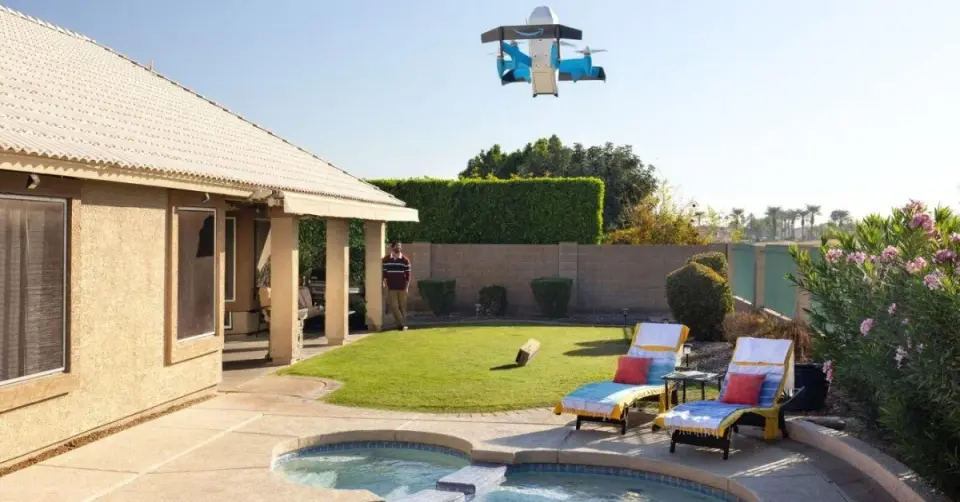
Amazon is expanding its Prime Air drone delivery service to nearly 500 US cities by the end of 2026, a six-fold increase from its current footprint. This rapid growth follows a series of high-profile incidents, including packages being dropped into swimming pools and ponds, as well as collisions with infrastructure. While the company promises improved safety checks, competitors like Walmart and Zipline are also scaling up their drone operations, raising concerns about noise pollution and safety in residential areas.
Key points
- Amazon plans to expand Prime Air to 500 US cities by late 2026, up from 10 cities currently.
- Recent incidents include drones dropping packages into pools in Texas and Arizona, and a package bouncing into a pond.
- Amazon has faced safety issues, including drones crashing into a crane in Arizona and an apartment building in Texas.
- The company states drones check for people, pets, and vehicles before delivery, but critics suggest they need to check for water.
- Competitors like Walmart, Wing, and Zipline are also expanding drone delivery services, with Zipline aiming for 1 million daily deliveries by 2029.
Background
Amazon's expansion follows previous coverage of its plans to reach 500 US cities by 2026, including new launches in Chicago, Cleveland, Atlanta, Syracuse, and Boise. The company has faced regulatory scrutiny and safety investigations, including incidents in Arizona and Texas. Meanwhile, New York City has moved to regulate Amazon's last-mile delivery network, and global drone delivery operations have faced disruptions, such as a drone strike on a Wildberries warehouse in Russia.
How outlets are covering it
The Verge highlights the recurring issue of drones dropping packages into water, noting that Amazon's safety checks do not currently account for water bodies. Ars Technica provides a broader context, emphasizing the competitive landscape with Walmart, Wing, and Zipline, and detailing community concerns about noise pollution and safety records. While The Verge focuses on specific delivery failures, Ars Technica discusses the trade-offs of drone expansion, including environmental benefits versus noise and privacy concerns. Both sources agree on the rapid expansion of drone delivery but differ in their emphasis on the consequences of this growth.
Why it matters
The expansion of drone delivery services to 500 US cities by 2026 signifies a major shift in last-mile logistics, potentially reducing emissions and delivery times. However, the incidents and community concerns highlight the challenges of integrating autonomous drones into residential areas. The competition among major players like Amazon, Walmart, and Zipline could accelerate innovation but also exacerbate issues like noise pollution and safety risks. Regulatory responses from the FAA and local governments will be crucial in shaping the future of drone delivery.
What to watch
Amazon is expected to launch Prime Air in new metropolitan areas, including Chicago, Cleveland, Atlanta, Syracuse, and Boise, by the end of 2026. The company may need to update its safety protocols to account for water bodies and other environmental factors. Competitors like Walmart and Zipline are also expanding their drone services, with Zipline aiming for 1 million daily deliveries by 2029. Community feedback and regulatory actions will likely influence the pace and scope of drone delivery expansion.
- Amazon’s drone deliveries are landing in pools and ponds The Verge
- Amazon aims for delivery drones to reach 500 US neighborhoods by end of 2026 Ars Technica
- Why Amazon isn't giving up on Jeff Bezos' drone deliveries dream after 13 years Fortune
- Drones at your doorstep: Delivery changes in NE Ohio FOX 8 News
- Amazon drone drops Texas woman’s package in her pool NewsNation
Want the full story? Read the original reporting
Read on The Verge