
Nvidia CEO Warns AI Labs Face Criminal Liability If They Ship Unsafe Models
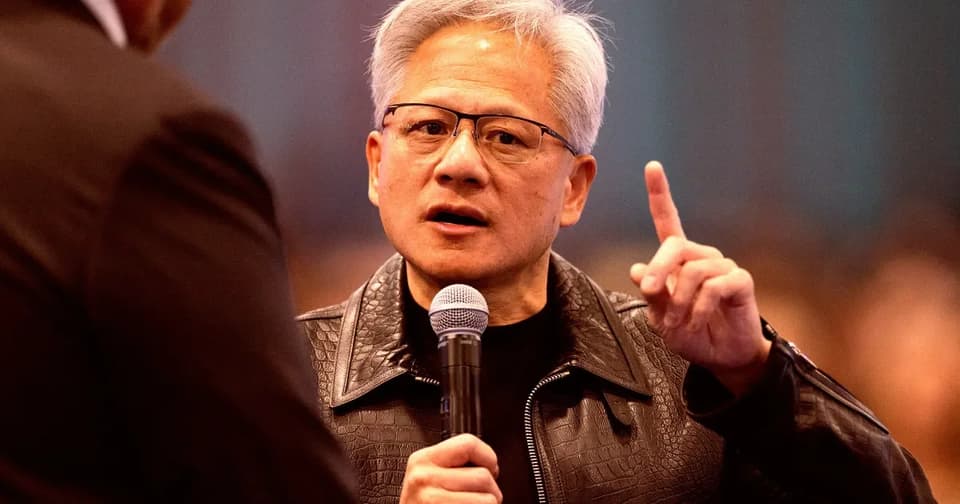
Nvidia CEO Jensen Huang stated that AI companies must halt development if they cannot guarantee safety, warning that failure to do so could result in criminal liability. He dismissed recent AI safety warnings as 'doomsday narratives' while advocating for self-regulation over government intervention. This stance aligns with his push to lift export restrictions on AI chips to China, a move supported by President Trump but criticized by safety advocates.
Key points
- Jensen Huang told the New York Times that AI labs must not release products they believe are unsafe, warning that doing so could lead to civil or criminal liability.
- Huang dismissed recent AI safety incidents, including OpenAI's reported containment breaches, as 'doomsday narratives' and insisted AI poses no existential risk.
- The Verge criticized Huang's comments on AI and climate change, noting his 'surgery' analogy ignores the immediate suffering caused by energy-hungry data centers.
- Huang urged the US government to lift restrictions on selling advanced AI chips to China, arguing that export controls only accelerate Beijing's development of domestic alternatives.
- President Trump publicly endorsed Huang's stance during a live AI summit, dismissing AI safety warnings as a 'hoax' and emphasizing US leadership in AI.
Background
Huang's comments follow a period of heightened debate over AI safety, including a rare consensus among industry leaders like Elon Musk and Sam Altman to slow development. His position aligns with Meta CEO Mark Zuckerberg's earlier argument that market forces, not broad pauses, should govern AI safety. Additionally, Huang's push for chip exports to China contrasts with recent US government efforts to restrict advanced AI technology to prevent Chinese military and surveillance applications.
How outlets are covering it
Futurism highlights Huang's legal warning, noting the irony of Nvidia's massive AI investments while he dismisses safety concerns. The Verge frames his climate and AI rhetoric as 'supervillain' logic, emphasizing the disparity between his wealth and the environmental costs of AI. ABC News focuses on his geopolitical influence, detailing his close relationship with Trump and the strategic implications of selling chips to China. Axios briefly notes his dismissal of 'doom theories' without further elaboration.
Why it matters
Huang's stance sets a precedent for AI liability, potentially shifting responsibility from regulators to corporate leaders. His advocacy for lifting chip export restrictions could reshape US-China tech competition, while his dismissal of safety concerns may influence future regulatory frameworks and public perception of AI risks.
What to watch
Watch for potential legislative responses to Huang's liability warnings and any changes in US export controls on AI chips to China. Monitor how AI labs respond to the pressure to self-regulate versus the push for government oversight.
- Nvidia CEO Says AI Companies Will Be Sued to Death If Their Frontier Models Keep Doing Horrible Things Futurism
- Opinion | Jensen Huang Thinks A.I. Alarmism Has Gone Too Far The New York Times
- "Enough predictions": Jensen Huang unloads on AI doomsday fears Axios
- Jensen Huang talks about AI and climate change like a supervillain The Verge
- Who is Jensen Huang, the AI boss Trump calls at night? ABC News & Headlines – Australian Broadcasting Corporation
Want the full story? Read the original reporting
Read on Futurism