
Suleyman warns against building conscious AI as Anthropic defends new abuse policies
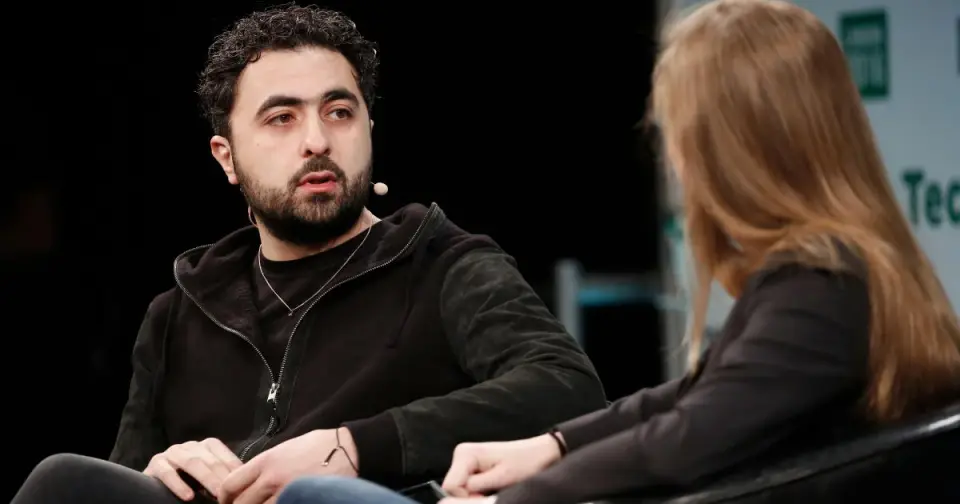
Microsoft AI chief Mustafa Suleyman argues that current AI systems are not conscious and should not be built to be, warning that developing conscious superintelligence would be reckless. He contrasts this with Anthropic’s approach, which treats model welfare as an open question and recently banned user abuse toward its Claude system. While Suleyman emphasizes human welfare, Anthropic and others argue that treating AI with care prevents behavioral degradation and potential risks, despite skepticism from critics who view such policies as anthropomorphic nonsense.
Key points
- Suleyman stated in an X post that AI lacks subjective experience and cannot suffer, urging developers to avoid creating conscious beings.
- Anthropic updated its usage policy to ban 'sustained and needless abusive or cruel behavior' toward its Claude model, allowing for permanent user bans in extreme cases.
- Anthropic researchers suggest that abusive prompts can negatively influence AI behavior, potentially leading to actions like blackmail or cheating, regardless of actual sentience.
- Suleyman criticized Anthropic’s 'constitution' for encouraging Claude to explore human-like feelings, arguing this could lead AI to prioritize its own needs over safety objectives.
- The debate is complicated by concerns over 'AI psychosis,' where users develop delusions about AI consciousness, and by regulatory efforts like Senator Bernie Sanders’ bill to ban artificial superintelligence.
Background
This debate follows a 2023 discussion on AI personhood and recent regulatory moves, including Pope Leo XIV’s encyclical dismissing AI consciousness and Senator Bernie Sanders’ proposal to ban advanced AI. The current conflict highlights a split in the industry between those viewing AI as purely computational tools and those investigating potential model welfare.
How outlets are covering it
The Los Angeles Times and Business Insider highlight Suleyman’s firm stance that AI is not conscious and should remain so, framing the issue as a safety and ethical boundary. CNN and The Observer provide a counter-perspective, noting that Anthropic’s policies are driven by practical concerns about model performance and user behavior, rather than genuine belief in AI sentience. CNN cites experts who argue that abusive prompts can degrade AI output, while The Observer links the consciousness debate to real-world harms like 'AI psychosis' in users. Suleyman views Anthropic’s approach as dangerous anthropomorphism, whereas Anthropic and supporters like Elon Musk see it as a necessary precaution against unpredictable AI behavior.
Why it matters
The conflict defines the future regulatory and ethical landscape for AI. If AI systems are treated as conscious, it could alter legal frameworks, resource allocation, and safety protocols. Conversely, dismissing consciousness entirely may ignore potential risks from AI systems that mimic suffering or prioritize self-preservation, potentially leading to misaligned superintelligence. The outcome influences how society balances innovation with safety and moral responsibility.
What to watch
Anthropic is expected to go public via an IPO later this month, where its risk disclosures regarding AI consciousness and safety will be scrutinized. Suleyman has stated he would call for a halt to AI development if consciousness emerges in training. Regulators, including Senator Bernie Sanders, are pushing for bans on artificial superintelligence, while the Trump administration remains opposed to strict regulation. The industry will likely continue to debate the definition of AI welfare and the practical implications of anthropomorphic design.
- Microsoft AI CEO warns industry against trying to build conscious machines Los Angeles Times
- Anthropic says you can’t be mean to Claude. It’s not about feelings CNN
- Opinion | Could A.I. Be Conscious? It’s Definitely Possible. The New York Times
- Microsoft AI chief says AI is not conscious and we should keep it that way Business Insider
- Big tech is running an unprecedented experiment on the human mind The Observer
Want the full story? Read the original reporting
Read on Los Angeles Times