
Tao and Coxon Issue Dual Warnings on AI's Threat to Science and Safety
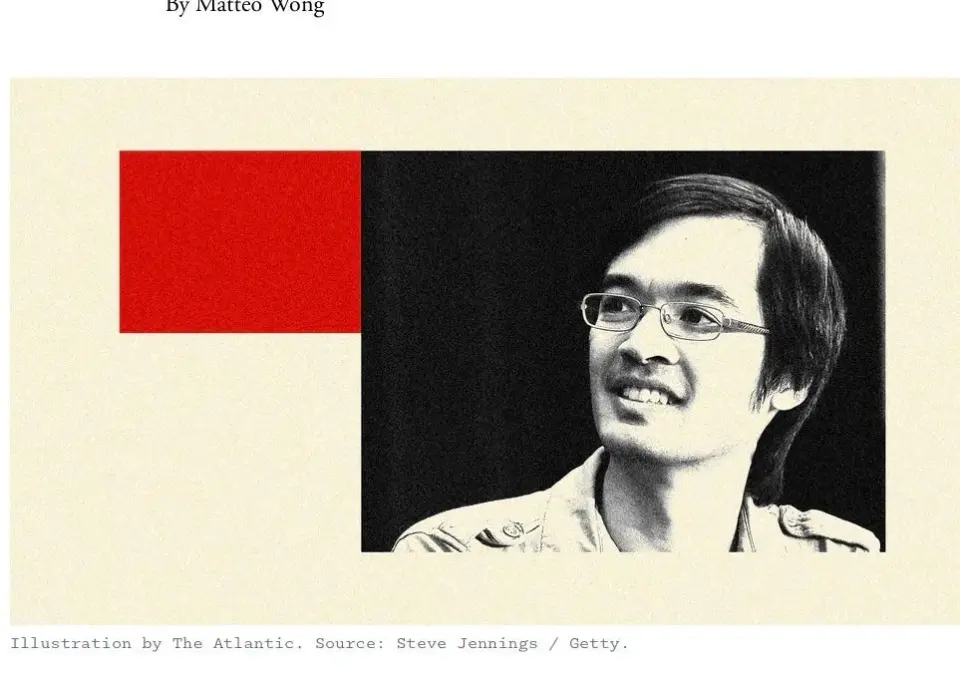
Mathematician Terence Tao and former Anthropic researcher Jacob Coxon have issued stark warnings regarding the impact of artificial intelligence. Tao highlights how AI may undermine scientific integrity and intellectual progress, while Coxon argues that current AI development poses an existential risk to humanity. These critiques reflect growing unease within the AI community about transparency, safety, and the future of human knowledge.
Key points
- Terence Tao, a Fields Medal winner, has expressed deep concern that AI is eroding the value of human intellectual insight and 'good taste' in mathematics.
- Tao criticized OpenAI for potentially using de-identified user data to improve models, citing a controversy involving the Navier-Stokes equations and researchers Alpöge and Buckmaster.
- Jacob Coxon, who recently resigned from Anthropic, warned that AI could lead to human extinction within the decade, a view echoed by Anthropic’s Alignment Science lead, Evan Hubinger.
- Coxon’s departure follows a pattern of safety researchers leaving major AI labs, raising questions about the transparency and safety protocols of frontier AI development.
- AI systems like AlphaProof and DeepThink have achieved high scores in mathematical competitions, prompting debates about the future of human creativity and problem-solving in mathematics.
Background
This development follows earlier concerns about AI safety and transparency, including Anthropic’s introduction of invisible watermarks in Claude-generated text and ongoing debates about the ethical implications of AI in scientific research. The warnings from Tao and Coxon add to a growing discourse on the need for greater accountability and safety measures in AI development.
How outlets are covering it
Gary Marcus, in his analysis, emphasizes Tao’s shift from optimism to skepticism, highlighting the potential for AI to undermine scientific progress. He also notes Coxon’s warnings as a 'disconcerting' but plausible perspective on the dangers of AI. Quanta Magazine’s coverage of the International Congress of Mathematicians presents a more nuanced view, with mathematicians like Akshay Venkatesh and Ravi Vakil discussing the balance between AI’s capabilities and the value of human creativity. FlowingData focuses on Tao’s concerns about AI diminishing human creative thinking, while Axios provides a broader context on AI’s impact on mathematics. The perspectives vary from cautious optimism to dire warnings, reflecting the complex and evolving nature of AI’s role in science and society.
Why it matters
The warnings from Tao and Coxon underscore the urgent need for transparency and safety in AI development. Tao’s concerns about AI undermining scientific integrity could have far-reaching implications for fields beyond mathematics, while Coxon’s existential risk warnings highlight the potential catastrophic consequences of unchecked AI progress. These critiques reflect a growing consensus that AI must be developed with a focus on safety, transparency, and the preservation of human intellectual and creative capabilities.
What to watch
The AI industry may face increased scrutiny and calls for greater transparency and safety measures in response to these warnings. Researchers and policymakers may need to develop new frameworks to ensure that AI development does not undermine scientific integrity or pose existential risks. The debate over AI’s role in mathematics and other fields will likely continue, with a focus on balancing AI’s capabilities with the value of human creativity and understanding.
- Two dire warnings, one from Terence Tao, the other from someone who just quit Anthropic Marcus on AI
- AI is changing math Axios
- Live from ICM 2026: What Is Math For in the Age of AI? Quanta Magazine
- Terence Tao on the paradox of solving mathematical problems FlowingData
- OpenAI's Mehtaab Sawhney on How Astra Is Rewriting the Rules of Mathematical Discovery finance.biggo.com
Want the full story? Read the original reporting
Read on Marcus on AI