
Pinehurst Station Opens Early Amid Cost Controversy and Community Celebration
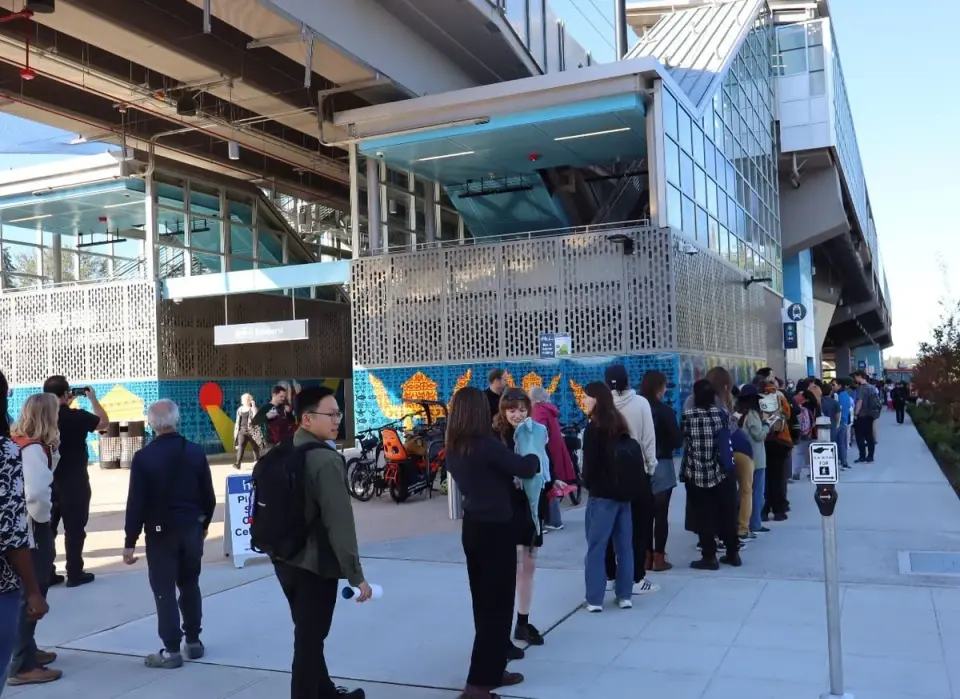
Sound Transit opened its first in-fill light rail station, Pinehurst, in North Seattle on September 30, 2026, five years ahead of schedule. The $240 million project drew hundreds of transit fans for a celebration, despite criticism over its cost and low projected ridership. The station connects to the 1 and 2 Lines and offers new bus transfers, though surrounding housing developments remain stalled due to legal appeals.
Key points
- Pinehurst Station opened on September 30, 2026, serving the 1 and 2 Lines with service every 4-5 minutes.
- The station cost $240 million, up from a 2020 estimate of $144 million, but is cheaper than other elevated infill projects like the Boeing Access Road Station.
- Hundreds of attendees celebrated the opening, participating in art activities with station artist Romson Bustillo and using the new King County Metro Route 77.
- Projected ridership ranges from 1,100 to 4,200 daily, with critics questioning the value given limited nearby housing and single-family zoning.
- The station opened five years early to coincide with the Lynnwood Link extension, saving costs and reducing construction headaches for riders.
Background
Pinehurst Station is the first in-fill station added to an existing Sound Transit line, a concept previously discussed in the context of the Graham Street Station in the Rainier Valley. The opening follows a period of transit infrastructure changes, including a fare-gate pilot program approved in August 2026 for 14 Link stations. The station's timeline was accelerated from a 2031 target to leverage concurrent construction with the broader Lynnwood Link extension, a strategy that saved resources despite the project's significant cost overruns.
How outlets are covering it
Supporters, including Sound Transit CEO Dow Constantine and local advocates, view the early opening as a major win for transit accessibility, particularly for seniors and residents in North Seattle who previously had to travel to Northgate or Shoreline. The Urbanist highlights the station's value as a bus transfer point and notes that $240 million is a bargain compared to other elevated stations. Conversely, KIRO Newsradio host John Curley called the project a 'total waste of money' and 'criminal,' arguing that the lack of nearby housing and development makes the investment unjustified. He questioned the long-term viability of rail against future technologies like driverless cars. KUOW reported on community enthusiasm, noting that while the station is loud due to its proximity to I-5, many residents see it as a vital connection that expands their mobility options. The Urbanist also noted that while the station is open, surrounding upzones are stalled in legal appeals, limiting immediate housing growth.
Why it matters
The opening of Pinehurst Station demonstrates Sound Transit's ability to accelerate infrastructure projects, but it also highlights the tension between building transit first and ensuring surrounding development follows. The controversy over the $240 million cost and low initial ridership underscores the challenges of funding transit in areas with limited housing density. As Sound Transit faces a $34.5 billion shortfall in its ST3 plan, the success or failure of such in-fill stations could influence future decisions on where to prioritize new infrastructure.
What to watch
Sound Transit expects ridership to grow as the light rail network expands, potentially reaching 4,200 daily riders. The next in-fill station, Graham Street in the Rainier Valley, is not set to open until 2031. Local advocates are pushing to accelerate the timeline for upzoning single-family areas near Pinehurst, despite current legal appeals. The City of Seattle is also working on improving NE 130th Street with protected bike lanes to better connect the station to the neighborhood.
- Scores Turn Out To Celebrate Sound Transit's First Infill Station The Urbanist
- New light rail station rolls into Seattle’s Pinehurst neighborhood KUOW
- ‘What a total waste of money!’ Curley blasts Sound Transit’s $240M Pinehurst Station mynorthwest.com
- Two major train upgrades arrive in the Puget Sound region this week king5.com
- Seattle’s newest light rail station opens. We talked to its first-ever commuter The Seattle Times
Want the full story? Read the original reporting
Read on The Urbanist