
Baltimore’s Vacant Homes Face a Dual Reality: Artistic Documentation and Market-Driven Revival
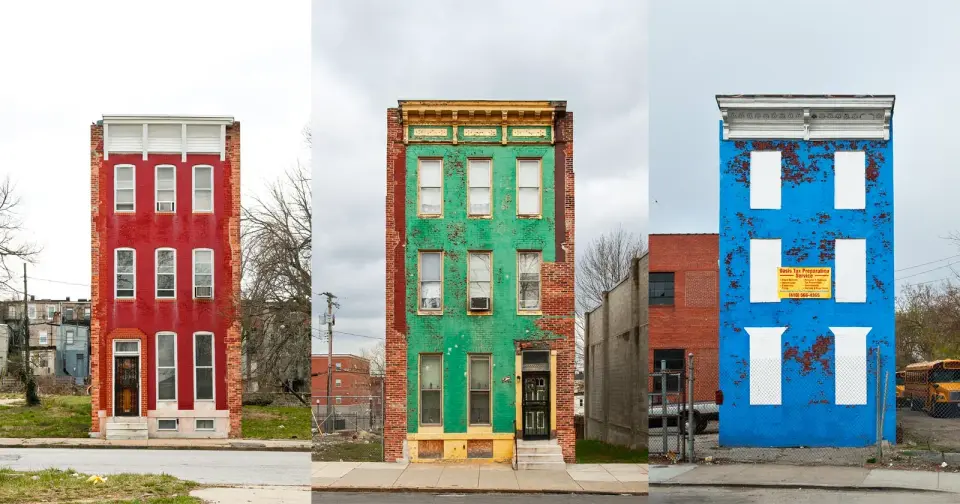
Baltimore’s long-standing vacancy crisis is undergoing a complex transformation. While photographer Ben Marcin has spent 16 years documenting the city’s abandoned structures for his new book 'The Holdouts,' market forces are simultaneously driving a surge in investment. Rising housing costs elsewhere have turned Baltimore’s cheaper inventory into a bidding war, with the city committing $3 billion to eliminate vacancy by 2038. However, progress is uneven; some neighborhoods see rapid rehabilitation through nonprofit developers, while others like Carrollton Ridge remain largely untouched due to high crime and speculative buying.
Key points
- Ben Marcin’s debut photobook, 'The Holdouts,' features 16 years of images documenting abandoned homes in Baltimore and the Eastern Shore, focusing on isolation and the passage of time.
- Baltimore’s median home price of $235,333 is significantly lower than the national median of $381,333, attracting investors from high-cost markets like Los Angeles and Washington, D.C.
- The city has reduced its vacant home count from 16,000 to below 12,000 over the past decade, aided by a $3 billion commitment to eliminate vacancy by 2038.
- Nonprofit developers such as ReBUILD Metro and Blank Slate Development are using 'whole-blocks' strategies and TIF bonds to rehabilitate properties, as seen in the recent Parkwood Village project.
- Carrollton Ridge remains a hotspot for vacancy with roughly 750 empty homes, hindered by crime and speculative investors who buy properties without rehabilitating them.
Background
Previous coverage of urban photography and housing trends has highlighted how artists and developers interact with changing landscapes. For instance, earlier reports noted how photographers document community shifts, while this story focuses on the specific economic and artistic responses to Baltimore’s unique vacancy crisis.
How outlets are covering it
PetaPixel emphasizes the artistic and human element, highlighting Marcin’s 16-year project and the dangers he faced, such as ticks and drug dealers, to capture the 'holdouts' of the city. In contrast, Propmodo focuses on the economic mechanics, noting how rising costs elsewhere have made Baltimore an investment magnet, with specific data on price gaps and bidding wars. WBAL-TV (via 98 Rock) provides a local, optimistic perspective, showcasing successful ribbon-cutting ceremonies and the use of innovative TIF funding to create mixed-income neighborhoods, contrasting with the broader challenges noted by Propmodo in areas like Carrollton Ridge.
Why it matters
This story illustrates the tension between the cultural memory of urban decay and the rapid, market-driven attempts to erase it. The success of the $3 billion initiative depends on whether community-focused development can outpace speculative buying, which has previously led to new waves of foreclosure. The outcome will determine if Baltimore’s recovery is inclusive or fragmented.
What to watch
The city will continue its push to eliminate vacancy by 2038, with more TIF bond projects expected. Investors from out-of-state markets will likely continue to compete for rehabbed properties, while nonprofits will focus on stabilizing high-crime areas like Carrollton Ridge to prevent further speculative exploitation.
- Photographer Spends 16 Years Documenting Baltimore’s Abandoned Homes PetaPixel
- Abandoned Homes in Baltimore Are Now Being Fought Over in Bidding Wars WSJ
- Rising Housing Costs Elsewhere Turn Baltimore's Vacant Stock Into Investment Magnet Propmodo
- Parkwood Village ribbon-cutting unveils 8 renovated homes 98 Rock Baltimore
Want the full story? Read the original reporting
Read on PetaPixel