
Taryn Simon’s Guggenheim Show Traces America’s Hidden Trauma Through a Single FBI Agent’s Career
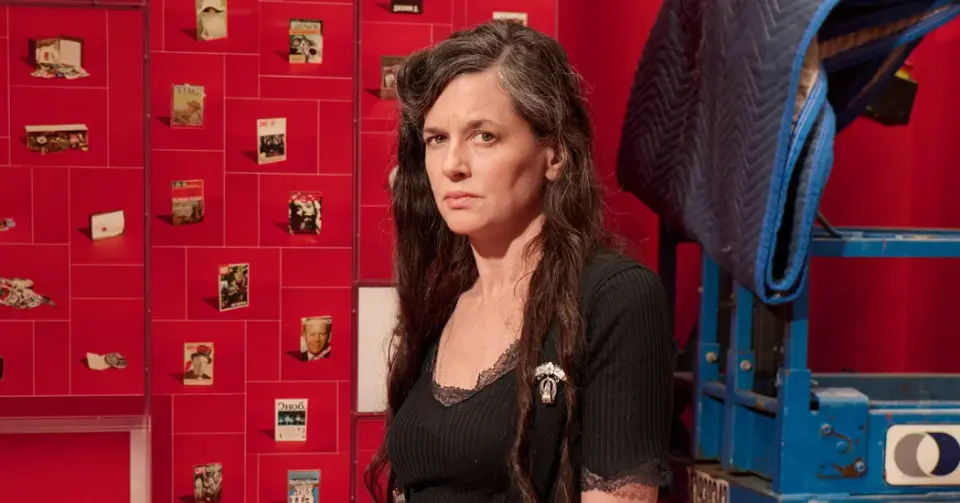
Photographer Taryn Simon has unveiled a major exhibition at the Guggenheim titled 'Father Country I Do Love You,' which uses the career of a retired FBI agent to map the long-term human consequences of American state power. The project, developed over nearly a decade, connects major national tragedies like the 9/11 attacks and the TWA Flight 800 crash to the personal lives of those affected by surveillance and government intervention. Simon’s work blends journalistic rigor with conceptual art, exploring how state actions reverberate through decades, affecting individuals far beyond the immediate events. The exhibition includes intimate portraits, such as a birth scene captured in a New Hampshire hospital, illustrating the artist’s method of embedding herself in private moments to reveal broader societal narratives.
Key points
- The exhibition 'Father Country I Do Love You' is currently on display at the Guggenheim Museum in New York.
- The project centers on the career of a single retired FBI agent, whose work touched events from the 1996 TWA Flight 800 crash to the 9/11 Pentagon attack.
- Simon began researching the agent in 2017, engaging in an ongoing conversation to understand the reverberations of his surveillance work.
- The work explores the fates of individuals affected by the agent’s actions, including a woman whose film was confiscated at the Pentagon and a child of accused Russian spies.
- Simon’s methodology involves extreme intimacy, such as driving five hours to a hospital in Exeter, N.H., to photograph a birth, to connect private moments to public history.
- The exhibition is described as a synthesis of journalism and conceptual art, focusing on the 'hidden and unfamiliar' aspects of American life.
Background
This exhibition follows Simon’s earlier work, such as 'An American Index of the Hidden and Unfamiliar' (2007), which documented obscure sites of American infrastructure and power. The current project expands on her interest in the long-term impacts of state actions, moving from physical sites to the personal lives of individuals affected by surveillance and government intervention. The Guggenheim’s recent focus on large-scale, narrative-driven photography aligns with Simon’s approach, which has been noted for its blend of documentary precision and conceptual depth.
Why it matters
Simon’s exhibition offers a critical lens on the enduring human cost of American state power, moving beyond the immediate impact of national tragedies to examine their long-term, often invisible, consequences. By focusing on a single FBI agent’s career, the work highlights how surveillance and government intervention shape individual lives across decades, challenging viewers to consider the broader societal implications of state actions. The exhibition’s intimate, journalistic approach provides a new framework for understanding American history, emphasizing the personal reverberations of public events and the role of art in uncovering hidden narratives.
What to watch
The exhibition will remain on display at the Guggenheim for the coming months, offering visitors a chance to engage with Simon’s detailed narrative of American history through the lens of a single agent’s career. Simon may continue to expand her research into other areas of state power and surveillance, potentially leading to new projects that explore the intersection of journalism and conceptual art. The exhibition’s focus on long-term consequences may also influence future discussions on the impact of government actions on individual lives, contributing to broader conversations about privacy, surveillance, and the human cost of state power.
Want the full story? Read the original reporting
Read on The New York Times