
Berger Centenary Sparks Debate on Legacy and Contradictions
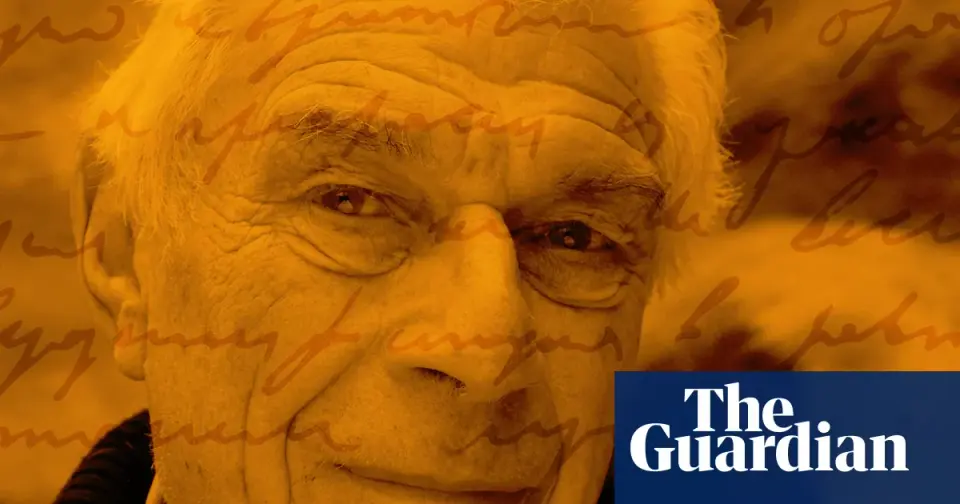
Marking the 100th anniversary of John Berger’s birth, a new biography by Tom Overton and a series of book recommendations have reignited discussion about the artist and critic’s enduring influence. While The Guardian highlights his interdisciplinary range and political activism, The Atlantic and ArtReview focus on his personal contradictions, particularly regarding gender and his 'foolish streak.'
Key points
- John Berger, the artist, novelist, and critic, would have turned 100 on November 5, 2026.
- Tom Overton’s new biography, 'John Berger: From Life,' was published to coincide with the centenary, based on 15 years of archive work.
- The Guardian recommends 'Ways of Seeing' (1972) as the essential entry point, noting its radical combination of art and social criticism.
- Berger won the 1972 Booker Prize for his novel 'G.', famously donating half the prize money to the British Black Panther movement.
- Critics note Berger’s collaborations with photographer Jean Mohr, including 'A Fortunate Man' and 'A Seventh Man,' as key works.
- The Atlantic argues Berger had a 'foolish streak' that could blind him to reality, while ArtReview highlights tensions between his public feminism and private life.
Background
John Berger died in 2017 at age 90. His work spans art criticism, fiction, and political polemic. The 2026 centenary has prompted reissues of his work by Bloomsbury and new critical assessments. Previous archive coverage is unrelated to this cultural event.
How outlets are covering it
The Guardian presents a celebratory view, emphasizing Berger’s humane and idiosyncratic contributions across six decades. In contrast, The Atlantic’s Sebastian Smee acknowledges Berger’s influence but criticizes his 'foolish streak,' suggesting his convictions sometimes blinded him. ArtReview’s Sophie van Well Groeneveld offers a more critical lens, pointing to contradictions between Berger’s public stance on the female gaze and his private infidelities, as well as the exclusion of women’s domestic labor in his early works. openDemocracy focuses on his political legacy, highlighting his anti-imperialist and pro-Palestinian views, which Barnett describes as a 'spiritual trustee' of the outlet’s values.
Why it matters
Berger’s centenary forces a re-evaluation of his legacy beyond his iconic 1972 TV series. The new biography and critical essays reveal a complex figure whose political activism and artistic innovation are inseparable from personal and professional contradictions. This debate impacts how contemporary art criticism and political activism are understood in the 21st century.
What to watch
Publishers are reissuing Berger’s works, including a new edition of 'And Our Faces, My Heart, Brief as Photos' with an introduction by Simon McBurney. Further critical analysis of his archive, particularly the recovered writings of his partner Anya Berger, may offer new insights into his creative process.
- Where to start with: John Berger The Guardian
- He Was Hugely Influential. He Also Had a Foolish Streak. The Atlantic
- A trilogy of John Berger pieces on the centenary of his birth openDemocracy
- Comment | John Berger at 100: why the writer and artist's legacy is as vital as ever The Art Newspaper
- ‘John Berger: From Life’ by Tom Overton, Reviewed ArtReview
Want the full story? Read the original reporting
Read on The Guardian