
Betye Saar, the Assemblage Artist Who Reimagined Black Stereotypes, Dies at 99
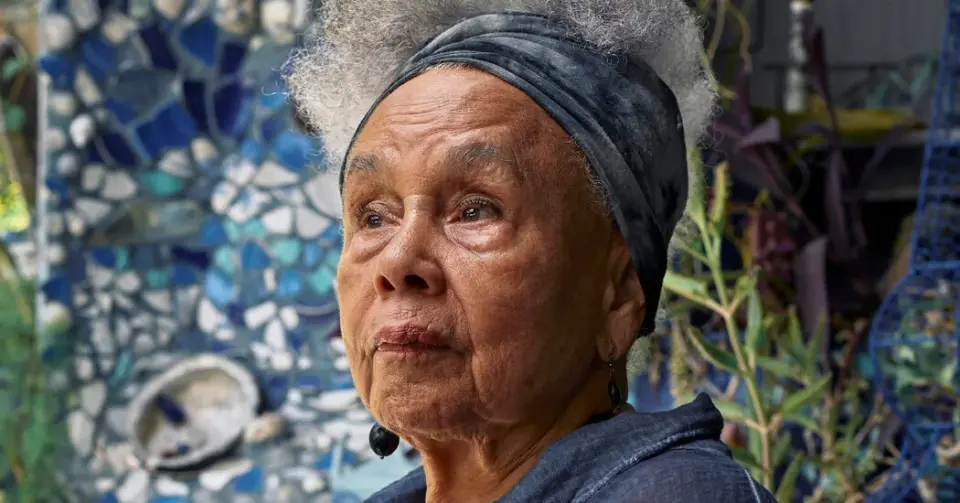
Betye Saar, a pioneering California assemblage artist known for subverting racist imagery through works like 'The Liberation of Aunt Jemima,' has died at age 99 in Los Angeles. She passed away in her sleep just days before her 100th birthday. Saar’s career, spanning from the 1960s to the 2020s, involved transforming derogatory objects into powerful symbols of resistance and empowerment, influencing generations of artists and sparking the Black women’s movement.
Key points
- Betye Saar died on Sunday in Los Angeles at the age of 99, confirmed by her publicist Hannah Gottlieb-Graham and gallerist Julie Roberts.
- She was a leading figure in California assemblage art, using found objects to confront stereotypes about Black women and the history of slavery.
- Her 1972 work 'The Liberation of Aunt Jemima,' featuring a mammy figurine armed with a rifle and grenade, was credited by activist Angela Davis with inspiring the Black women’s movement.
- Saar continued creating art into her late 90s, including a 2024 exhibition at Roberts Projects and a 2024 installation at the Huntington Library.
- Her work is held in over 80 international museum collections, and she was the subject of solo exhibitions at the MoMA, Prada Foundation, and Scottsdale Museum of Contemporary Art.
Background
Saar’s death follows a period of renewed public attention as she approached her 100th birthday in July 2026. In late June 2026, she expressed a desire to focus on creating new art rather than reflecting on her legacy. Her career began in the 1950s with design work, transitioning to fine art and assemblage in the 1960s after being inspired by Joseph Cornell’s work. She lived in Laurel Canyon, Los Angeles, from 1962 until her death, maintaining a studio where she continued to work daily into her 90s.
How outlets are covering it
The New York Times emphasizes Saar’s role in upending Black stereotypes through her dreamy memento boxes and armed Aunt Jemima images. The Los Angeles Times provides a comprehensive overview of her life, highlighting her use of found objects from garage sales and flea markets, her influence on artists like David Hammons and Houston Conwill, and her personal life, including her marriage to Richard Saar and her three daughters. The Daily Beast focuses on her impact on the Black women’s movement, citing Angela Davis’s credit of 'The Liberation of Aunt Jemima' as a catalyst. AP News confirms her death at 99 but offers minimal detail due to paywall restrictions. All sources agree on the date of death and her age, but the LA Times offers the most detailed account of her artistic process and personal history.
Why it matters
Saar’s work redefined how racist imagery could be used in art, transforming symbols of servitude into symbols of power. Her influence extends beyond art, impacting social movements and inspiring subsequent generations of artists. Her continued creation of art into her 90s demonstrates a lifelong commitment to artistic expression and political activism.
What to watch
Saar’s legacy will continue through her extensive museum collections and the ongoing influence of her work on contemporary artists. Her 2024 exhibition 'Betye Saar: New Work' at Roberts Projects and her 2024 Huntington Library installation 'Drifting Toward Twilight' will remain as testaments to her late-career creativity. Tributes from the art world and public figures are expected to continue in the coming weeks.
- Betye Saar, Artist Who Upended Black Stereotypes, Dies at 99 The New York Times
- Betye Saar, a Los Angeles artist who transformed collections of bigoted bric-a-brac, has died Los Angeles Times
- Legendary Artist Dies Days Before Her 100th Birthday The Daily Beast
- Artist Betye Saar, whose work reflected Black identity, has died at 99 AP News
- Betye Saar, pioneering figure of Black arts movement, dies at 99 The Guardian
Want the full story? Read the original reporting
Read on The New York Times