
Betye Saar, the Assemblage Artist Who Weaponized Stereotypes, Dies at 99
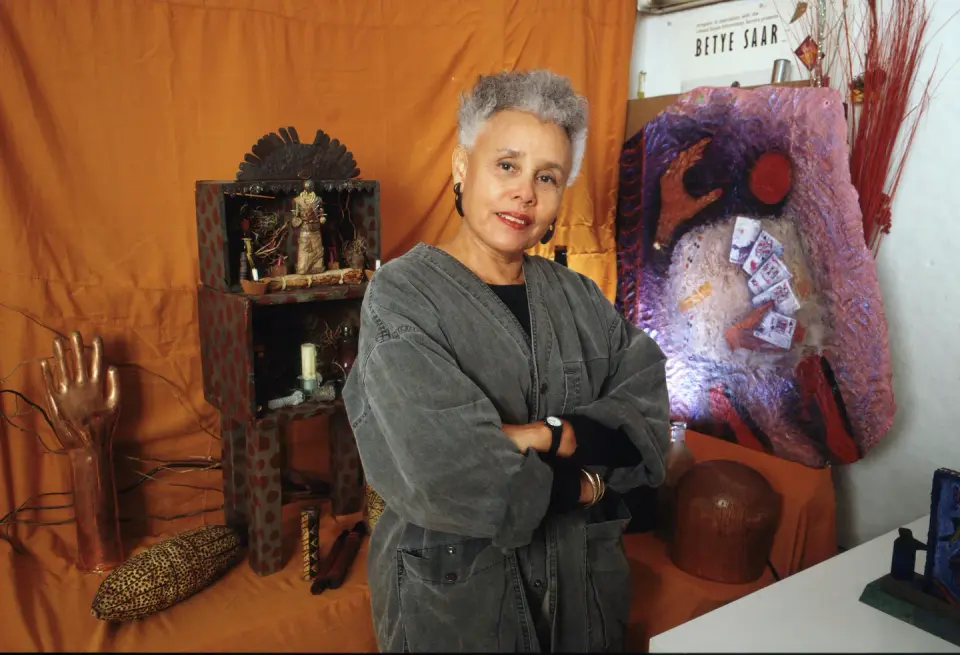
Betye Saar, a pioneering Los Angeles-based artist who transformed racist caricatures into powerful symbols of Black liberation, has died at age 99. Known for her 1972 work 'The Liberation of Aunt Jemima,' Saar used found objects to confront American racial history and female servitude. She became a major figure in the art world in 2019, just days before her 100th birthday, and her legacy continues to influence contemporary artists and institutions.
Key points
- Betye Saar died in Los Angeles on Sunday, aged 99, just days before her 100th birthday on July 30, 2026.
- Her 1972 assemblage 'The Liberation of Aunt Jemima,' which depicted the stereotypical 'mammy' figure holding a rifle and grenade, became an iconic symbol of Black empowerment and was credited by activist Angela Davis with spurring the Black women's movement.
- Saar’s practice involved scavenging flea markets and junk piles for objects like dolls, masks, and window frames, which she recontextualized to critique racism and explore spirituality, drawing inspiration from Joseph Cornell and Simon Rodia.
- She achieved major institutional recognition in 2019 with simultaneous exhibitions at the Museum of Modern Art in New York and the Los Angeles County Museum of Art, despite a career that began in interior design and printmaking.
- Saar’s work influenced a generation of artists, including Kerry James Marshall, Houston Conwill, and David Hammons, and her pieces are held in over 80 international museum collections.
Background
Our archive from July 2026 noted Saar’s death as a significant moment in contemporary art history, highlighting her role in reshaping Black female representation through found-object sculpture. The recent news confirms the details of her passing and expands on her late-career activities, including a 2024 exhibition at Roberts Projects and a 2026 induction into the American Academy of Arts and Letters.
How outlets are covering it
The Washington Post emphasizes Saar’s late-career resurgence and the critical acclaim of her 2019 exhibitions, noting her work’s 'spiritual yearning.' The Los Angeles Times provides a more detailed biographical narrative, highlighting her early career in design and her connection to the Black Arts Movement, while also noting her 1997 protest against Kara Walker’s MacArthur grant. The Guardian focuses on her global influence and her exploration of alternative religions and African diaspora spirituality. The Daily Beast article is unrelated to Saar and concerns a murder-suicide in Michigan, so it is excluded from the synthesis. All major outlets agree on the significance of 'The Liberation of Aunt Jemima' and her impact on contemporary art, but differ in emphasis: The Post highlights her critical reception, the LAT her personal history and family, and The Guardian her broader cultural and spiritual influences.
Why it matters
Saar’s death marks the end of an era for a figure who fundamentally changed how Black women and racial history are represented in art. Her work bridged the gap between personal memory and political protest, influencing not only artists but also public discourse on racial stereotypes, as seen in the 2020 retirement of the Aunt Jemima brand by Quaker Oats. Her legacy continues to shape contemporary art and social justice movements.
What to watch
Museum exhibitions and retrospectives are expected to continue honoring Saar’s work, with her pieces remaining in major collections worldwide. Her influence on younger artists and the ongoing relevance of her themes suggest that her impact will persist in art education and public discourse for years to come.
- Betye Saar, artist who shattered stereotypes of Black women, dies at 99 The Washington Post
- Betye Saar, a Los Angeles artist who transformed collections of bigoted bric-a-brac, has died Los Angeles Times
- Betye Saar, pioneering figure of Black arts movement, dies at 99 The Guardian
- Man Killed Wife and Six Children as Their Home Was Set Ablaze The Daily Beast
- Betye Saar, Artist Who Upended Black Stereotypes, Dies at 99 The New York Times
Want the full story? Read the original reporting
Read on The Washington Post