
Peter Max, the 'Flower Power' Painter Who Licensed Optimism to America, Dies at 88
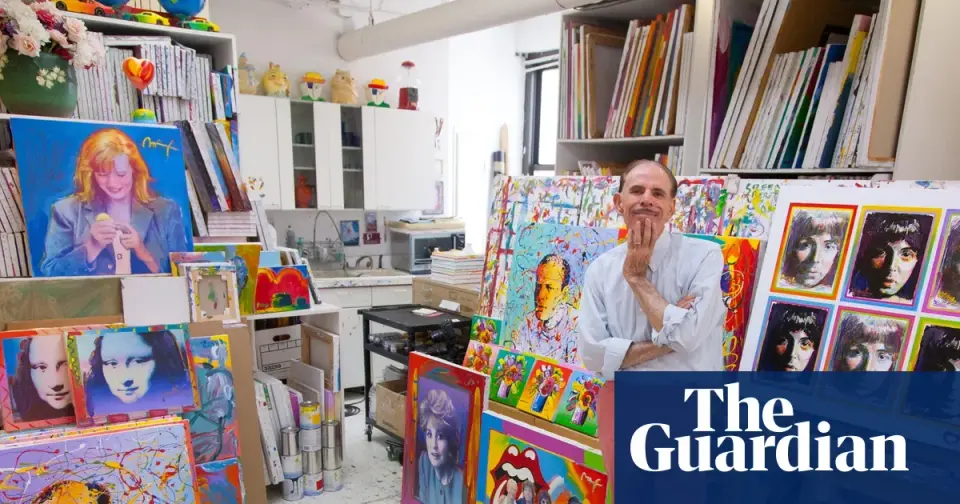
Peter Max, the graphic designer and painter whose vibrant, psychedelic imagery defined the 1960s 'flower power' movement, has died at age 88. Born in Berlin in 1937, Max fled Nazi Germany as an infant and settled in New York, where he became a cultural icon through his optimistic, color-saturated style. His work appeared on everything from postage stamps to cruise ships and was licensed across 70 product lines. While he faced legal issues, including a 1997 tax fraud conviction, and personal controversies, his art remained a staple of American pop culture for decades. He is survived by his son Adam and daughter Libra.
Key points
- Peter Max died on Monday at age 88; his son Adam Max confirmed the news but did not specify a cause, though The New York Times reported a yearslong struggle with dementia.
- Max’s career began in the 1960s, where his bold, colorful designs became synonymous with the 'flower power' movement, appearing on posters, furniture, and even the Manhattan Yellow Pages.
- He served as an official artist for major events including the Olympics, Super Bowl, and World Series, and his work adorned a Boeing 777 and a Norwegian Cruise Line ship.
- In 1997, Max pleaded guilty to tax fraud after conceving over $1 million in income, serving time in a work-release program and paying a $30,000 fine.
- Max was born Peter Max Finkelstein in Berlin and fled to Shanghai as a baby, later living in Tibet, Israel, and Paris before settling in New York at age 16.
Background
Our archive notes that Max was a high-profile figure who faced criticism for commercializing his art, yet remained a prolific creator who aimed to make the universe more beautiful. He was also known for his deep interest in Eastern spirituality, helping to popularize yoga in the US by bringing Swami Satchidananda Saraswati to America. Recent obituaries for other artists, such as Yayoi Kusama and Lucien Smith, highlight a period of significant losses in the art world, but Max’s unique position bridging high art and mass-market licensing sets him apart.
How outlets are covering it
The Guardian and AP News focus on Max’s cultural ubiquity and his son’s tribute to his warmth and creativity. The New York Times, however, emphasizes the commercial aspect of his career, describing him as a 'cultural seismologist' who franchised the counterculture’s idealism into a massive business success without traditional museum validation. While all outlets agree on his impact, the NYT highlights the tension between his artistic vision and the 'exploitation' of his image across 70 product lines, a point Max himself acknowledged in interviews.
Why it matters
Peter Max’s death marks the end of an era in American visual culture. His ability to translate the complex, often chaotic emotions of the 1960s into accessible, optimistic imagery helped shape the aesthetic of an entire generation. His career demonstrates the power of art to transcend gallery walls and become a part of everyday life, influencing everything from fashion to transportation. His legacy remains a testament to the enduring appeal of color and optimism in a complex world.
What to watch
The art world will likely see a surge in retrospectives and exhibitions celebrating Max’s work, as his influence on 1960s design is increasingly recognized by younger generations. His estate, including his extensive collection of works, may become a subject of interest for collectors and museums. Additionally, his son Adam Max and daughter Libra will likely manage his legacy and ensure his artistic vision continues to be shared with the public.
- Peter Max, psychedelic pop artist who epitomized flower power, dies aged 88 The Guardian
- The psychedelic pop artist Peter Max has died at 88, his son says AP News
- Peter Max, pop artist known for his colorful psychedelic style, dies at 88 Yahoo
- Peter Max Franchised the Cosmic ’60s Into Commercial Success, Without the Museum The New York Times
- Peter Max, known for groovy art that came to symbolize the 60s, dies at 88 Reuters
Want the full story? Read the original reporting
Read on The Guardian